

SAP & Oracle partner and support companies

Loading

Archives 2025

SAP

Your Guide to Robo Advisor Investment Strategies

Robo Advisor Investment Strategies

  • Diversified Portfolios: Spreads investments across various asset classes to reduce risk.
  • Automated Rebalancing: Adjusts portfolio allocations periodically to maintain target asset distribution.
  • Tax efficiency: Implements strategies like tax-loss harvesting to minimize tax liabilities.
  • Personalized Asset Allocation: Tailor’s investment mix to individual risk tolerance and financial goals.
  • Passive Investing: Focuses on long-term growth through index funds and ETFs.
  • Goal-Based Investing: Aligns investment strategy with specific financial objectives, such as retirement.

Your Investment Goals

Defining clear investment goals is a foundational step in any successful investment journey. It’s about knowing what you want to achieve with your money, which guides the strategy your investments will follow.

Common Financial Goals Include:

  • Retirement Savings: Building a nest egg to ensure a comfortable lifestyle in retirement.
  • Aggressive Growth: Seeking higher returns by taking on more risk, typically for those with a longer investment horizon.
  • College Savings: Saving for future education costs through plans like 529 college savings accounts.
  • Generating Income: Investing in assets that produce regular income, such as dividends from stocks or interest from bonds.
  • Sustainable Investing: Focusing on investments in companies with environmentally and socially responsible practices.
  • Tax Efficiency: Structuring investments in a way that minimizes tax liability and maximizes after-tax returns.

How Robo Advisors Can Tailor Strategies to Your Goals

Robo advisors use sophisticated algorithms to assess your risk tolerance and investment preferences, creating personalized portfolios that align with your specific goals.

Here’s how they do it:

  • Risk Assessment: Robo-advisors use an initial questionnaire to gauge your comfort with risk, investment timeline, and financial objectives and determine the right asset allocation.
  • Personalized Portfolios: Based on your inputs, they construct a diversified portfolio tailored to your goals, whether it’s growth-oriented, income-generating, or focused on sustainability.

Optimizing Returns with Automated Features:

  • Automated Rebalancing: Robo advisors continually monitor your portfolio, automatically making adjustments to maintain the target asset allocation. This ensures your investment strategy stays on track, even as market conditions change.
  • Tax-Loss Harvesting: This feature automatically sells investments that have experienced a loss with similar ones, offsetting taxes on capital gains and enhancing your portfolio’s after-tax returns.

By leveraging technology to tailor investment strategies and optimize returns, robo-advisors play a crucial role in helping investors achieve their diverse financial goals with greater precision and efficiency.

Exploring Strategies with Robo Advisors

Robo advisors offer a spectrum of strategies tailored to meet diverse investment goals. Here’s how they can support various objectives:

Maximizing Retirement Savings

Robo advisors can be specifically configured for retirement planning by:

  • Focusing on long-term growth with an emphasis on diversified portfolios.
  • Gradually shifting towards more conservative investments as the retirement date approaches, using a glide path strategy to manage risk.

Pursuing Aggressive Growth

For investors seeking high returns over shorter periods, robo advisors can:

  • Allocate a larger portion of the portfolio to stocks, especially in sectors with higher growth potential.
  • Utilize dynamic rebalancing to quickly adapt to changing market conditions, capturing growth opportunities.

Planning for Education Expenses

Robo advisors aid in saving for college expenses by:

  • Offering dedicated education savings accounts like 529 plans, with tax advantages and suitable investment choices.
  • Tailoring the investment mix to match the time horizon until funds are needed, ensuring the right balance between growth and risk.

Generating Steady Income

For those focused on income-generating investments, robo advisors can:

  • Invest in dividend-paying stocks, bonds, and other income-producing assets.
  • Balance the portfolio to provide regular income while preserving capital.

Investing with a Conscience: ESG Strategies

Sustainable investing through robo-advisors involves:

  • Selecting funds and assets that meet strict environmental, social, and governance (ESG) criteria.
  • Offering portfolios that align with ethical values without compromising on performance.

Optimizing for Tax Efficiency

Robo advisors enhance tax efficiency by:

  • Implementing tax-loss harvesting to offset gains with losses, reducing taxable income.
  • Allocating investments strategically across account types (taxable vs. tax-advantaged) based on their tax implications.

By leveraging robo advisors, investors can access sophisticated strategies that were once the domain of high-net-worth individuals or seasoned investors.

Whether the goal is to build a retirement nest egg, save for education, generate income, invest ethically, or minimize taxes, robo advisors offer tailored solutions to effectively navigate the complexities of the financial markets.

Choosing the Right Robo Advisor for Your Strategy

Selecting the ideal robo advisor is crucial to ensuring your investment strategy is executed precisely according to your financial goals and needs.

Here’s what to consider:

Factors to Consider:

  • Fees: Look for transparent fee structures that match your investment size and strategy. Lower fees are preferable, but value for service is key.
    • Management Fees: Typically, a percentage of assets under management (AUM).
    • Other Costs: Be aware of any additional costs, such as fund expenses and withdrawal fees.
  • Investment Options: Ensure the robo advisor offers a range of investment choices that suit your strategy.
    • Diverse Portfolios: For broad market exposure.
    • Specialized Investments: Like ESG funds for sustainable investing.
  • Special Features:
    • Tax Optimization: Tools like tax-loss harvesting can significantly impact after-tax returns.
    • Automatic Rebalancing: Keeps your portfolio aligned with your goals.
    • Access to Human Advisors: For when you need more personalized advice.

Tips on Comparing and Choosing Robo Advisors:

  • Define Your Needs: Clearly outline your investment strategy, including your risk tolerance, investment horizon, and specific goals.
  • Research and Compare: Look beyond just fees; evaluate the entire service offering, including portfolio options, performance history, and user experience.
  • Read Reviews: Customer testimonials and professional reviews can provide insights into a robo advisor’s reliability and performance.
  • Test the Waters: Many robo advisors offer a free trial period or the ability to view a hypothetical portfolio based on your preferences.

Choosing the right robo-advisor involves balancing costs, services, and features that align with your investment strategy.

By thoroughly researching and comparing your options, you can find a platform that not only meets your financial goals but also enhances your investing journey.

FAQs

What does having a Diversified Portfolio mean?

Spreading investments across various asset classes mitigates risk and reduces the impact of any single asset’s poor performance on the overall portfolio.

How does Automated Rebalancing work?

Periodically adjusts portfolio allocations to maintain a target asset distribution, ensuring the portfolio stays aligned with an investor’s risk tolerance and goals.

Why is tax efficiency important in investing?

It involves strategies like tax-loss harvesting to minimize tax liabilities, thereby increasing the investment portfolio’s net returns.

What is Personalized Asset Allocation?

Tailoring the investment mix to an individual’s risk tolerance and financial goals, creating a portfolio that matches the investor’s personal financial situation.

How does Passive Investing support retirement planning?

By focusing on low-cost index funds and ETFs that aim for long-term growth by tracking market indexes, minimizing costs and optimizing returns.,

Can you explain Goal-Based Investing?

Aligning investment strategy with specific financial objectives, such as retirement or education, and adjusting the strategy as those goals and timelines evolve.

Is it possible to change my investment strategy with a Robo Advisor?

Yes, adjustments can be made based on changes in goals or risk tolerance to ensure the investment strategy remains aligned with the investor’s needs.

What role do ETFs play in Robo Advisor strategies?

ETFs provide diversified exposure to various markets at lower costs and are extensively used in passive investing approaches to enhance portfolio diversification.

How do Robo Advisors ensure investments are tax-efficient?

Through implementing tax-loss harvesting, selecting tax-efficient funds, and strategically placing investments across different account types to optimize for tax implications.

Can Robo Advisors handle aggressive investment strategies?

Yes, they can tailor portfolios for higher risk and potential returns, based on the user’s expressed risk tolerance.

How often do Robo Advisors rebalance portfolios?

The frequency varies but is typically on a quarterly basis or triggered by significant market movements to ensure the portfolio remains in line with the investor’s strategy.

Are Robo Advisor strategies suitable for all types of investors?

Yes, they offer a range of strategies from conservative to aggressive, catering to diverse investor profiles and risk tolerances.

What makes Robo Advisors different from traditional investment methods?

Robo Advisors use algorithms for managing portfolios, providing lower fees, automated and personalized strategies, and often a more accessible platform for investors.

How can I track the performance of my investments with a Robo Advisor?

Robo Advisor platforms usually provide dashboards and reports that allow investors to monitor investment performance and make informed decisions.

What should I consider when choosing a Robo Advisor?

Consider the range of investment strategies offered, associated fees, measures for ensuring tax efficiency, and the ability to customize the portfolio to your needs.

you may be interested in this blog here:-

ABAP Development Environment in the Cloud
Master Your Salesforce Classes Journey

Demystifying database Oracle Architecture 12c

SAP

Evaluating Robo Advisor Performance for Retirement

Evaluating Robo Advisor Performance and Reliability for Retirement

Historical Performance: Compare against benchmarks and similar investment strategies.

Fees vs. Value: Assess the cost relative to performance and services offered.

User Reviews: Look for feedback from current and former clients.

Regulatory Compliance: Ensure the Robo Advisor is registered with relevant financial authorities.

Customer Support: Evaluate the responsiveness and helpfulness of support staff.

Security Measures: Check for strong data protection and cybersecurity practices.

Adaptability: Consider how well the Robo Advisor adjusts strategies in varying market conditions.

Introduction

The landscape of retirement planning is rapidly evolving, with robo-advisors emerging as a pivotal tool for investors seeking to secure their financial future.

These digital platforms offer automated investment services that reshape how individuals approach retirement savings.

Given this growing reliance, thoroughly assessing a robo advisor’s performance and reliability cannot be overstated.

Selecting the right robo advisor involves more than just convenience; it’s about entrusting your long-term savings to a platform that delivers consistent performance and steadfast reliability.

Robo Advisor Performance

Robo Advisor Performance encompasses several key aspects that investors need to consider:

  • Historical Returns: The track record of returns that the robo advisor has generated for its clients. While past performance does not indicate future results, it can provide insights into how effectively the robo-advisor navigates market conditions.
  • Risk Management Strategies: It is crucial how the robo advisor mitigates risk, particularly through downturns. Effective risk management ensures the portfolio’s volatility aligns with the investor’s risk tolerance.
  • Portfolio Diversification: Diversification is a fundamental principle in investing that robo advisors apply by spreading investments across various asset classes to reduce risk and enhance potential returns.

Interpreting Historical Performance Data:

  • Historical data should be viewed as part of a broader evaluation. Consider when returns were generated and compare it to relevant benchmarks.
  • Look at the performance across different market conditions to gauge the robo advisor’s adaptability and resilience.
  • Assess the consistency of returns about the level of risk taken, as this balance is key to sustainable long-term growth for retirement savings.

Understanding these performance metrics and their implications for future investments is critical in choosing a robo advisor that aligns with your retirement planning objectives.

Security Features of Robo Advisors

In the digital age, the security of online investment platforms like robo-advisors is paramount. Investors entrust not only their money but also their personal and financial data to these platforms.

Here’s a look at the security measures you can expect:

  • Encryption: Robo advisors use advanced encryption protocols to secure data transmission, ensuring your sensitive information is protected from unauthorized access.
  • Two-Factor Authentication (2FA): This adds an extra layer of security by requiring a second form of verification beyond just a password, significantly reducing the risk of account breaches.
  • Regular Security Audits: Many robo-advisors undergo periodic security evaluations by independent third parties to identify and rectify potential vulnerabilities.
  • Data Privacy Policies: Reputable robo advisors have transparent policies detailing how they protect user data and guarantee privacy.

The Significance of Robust Security Protocols:

  • Choosing a robo advisor with comprehensive security measures is crucial for the safety of your retirement savings. It protects your financial assets and guards against identity theft and fraud.
  • Investors should prioritize platforms that demonstrate a strong commitment to security, reflecting their capability to safeguard assets over the long term.

Customer Service Quality

While robo-advisors are automated, customer service remains critical, especially for addressing concerns and providing support.

  • Role of Customer Service: Effective customer service can significantly enhance the user experience, providing clarity and assistance with platform features, investment strategies, and account management issues.
  • Availability: Look for robo advisors that offer support when you need it, whether through live chat, phone, email, or even in-person meetings for more complex queries.
  • Responsiveness: Timely support is crucial, especially in dynamic market conditions or when urgent issues arise. Evaluate how quickly a robo-advisor responds to inquiries and resolves problems.
  • Depth of Support Provided: The best robo advisors offer technical support, educational resources, and personalized advice, helping you make informed investment decisions.

Criteria for Evaluating Customer Service Quality:

  • User Reviews and Testimonials: They can provide insights into the real-world experiences of other customers with the platform’s support team.
  • Response Times: Assess how long it takes for the service team to respond to inquiries and the efficiency of their problem-solving process.
  • Comprehensive Support: High-quality customer service goes beyond troubleshooting; it includes providing detailed investment guidance and educational resources.

In choosing a robo advisor for your retirement planning, consider both the security features and the quality of customer service. These aspects ensure a secure, supportive, and user-friendly investing experience.

Regulatory Compliance and Industry Standards

Regulatory compliance is paramount in the robo-advising industry, serving as a keystone for investor trust and protection.

Robo advisors, like all financial institutions, are subject to strict regulatory oversight to ensure they operate fairly and transparently.

  • Understanding Compliance: For example, Robo advisors in the United States are typically registered with the Securities and Exchange Commission (SEC) and must adhere to the same regulations as traditional financial advisors. This includes compliance with the Investment Advisers Act of 1940, among other regulatory standards.
  • Verifying Compliance: Investors should:
    • Check Registration: You can find the robo advisor on regulatory websites like the SEC’s Investment Adviser Public Disclosure (IAPD) portal.
    • Read the Form ADV: This document details the advisor’s business, investment strategies, fees, and disciplinary history. It’s a critical resource for assessing a robo advisor’s compliance and operational integrity.
  • Implications for Investor Protection: Compliance ensures that robo advisors are acting in the best interests of their clients, safeguarding assets, and maintaining transparent practices. It’s a crucial factor in protecting your retirement savings from fraud and mismanagement.

Conducting Due Diligence

Due diligence is critical before entrusting a robo advisor with your retirement portfolio. It thoroughly examines the robo advisor’s operations, philosophy, and historical performance to ensure they align with your financial goals and values.

  • Reviewing Official Documentation and Regulatory Filings:
    • Scrutinize the Form ADV and other regulatory filings for insights into the advisor’s practices and potential red flags.
    • Assess the transparency and completeness of disclosed information.
  • Analyzing the Advisor’s Investment Philosophy and Methodology:
    • Understand how the robo advisor constructs portfolios and manages assets. Does their approach align with your risk tolerance and investment philosophy?
    • Evaluate the asset classes and investment products used. Are they diversified and well-suited to your retirement planning needs?
  • Checking for Any Past Legal Issues or Controversies:
    • Investigate whether the robo advisor has faced regulatory penalties, customer complaints, or legal disputes. Such issues could indicate risks to your investments.
    • Utilize resources like the Better Business Bureau (BBB) and consumer review websites for additional background checks.

Conducting thorough due diligence is essential for ensuring that the robo advisor you choose can manage your retirement savings effectively and operate with integrity and transparency.

This process helps safeguard your investment and ensures your retirement planning is reliable.

FAQs

How do I evaluate the Historical Performance of a Robo Advisor?

Look at the Robo Advisor’s track record, comparing its returns to relevant benchmarks and similar investment strategies over various market conditions to gauge its effectiveness.

What do Fees vs. What does value mean when choosing a Robo Advisor?

Evaluate whether the fees charged by the Robo Advisor are justified by its performance and the range of services it offers, including investment management, tax optimization, and customer support.

Why is User Reviews important in assessing a Robo Advisor?

User reviews can provide insight into the client experience, including satisfaction with investment outcomes, ease of use, and the quality of customer service, helping you gauge the Robo Advisor’s reliability and performance.

What should I look for in terms of Regulatory Compliance?

Ensure the Robo Advisor is registered with financial regulatory authorities, such as the SEC in the United States, indicating it adheres to industry standards and regulations.

How can Customer Support quality impact my experience with a Robo Advisor?

High-quality customer support can significantly enhance your experience, providing clarity and assistance with your investment strategy, account management, and any issues.

What Security Measures should a Robo Advisor have in place?

To protect your personal and financial data from unauthorized access, check for robust cybersecurity practices, including encryption, secure servers, and two-factor authentication.

Why is Adaptability an important feature for a Robo Advisor?

Adaptability reflects a Robo Advisor’s ability to adjust investment strategies in response to market changes, ensuring your portfolio remains optimized for performance in various economic environments.

How do I compare Robo Advisors’ investment strategies?

Review the investment philosophy and algorithms each Robo Advisor uses, comparing how they approach asset allocation, risk management, and market fluctuations to find one that aligns with your retirement goals.

Can I trust Robo Advisor projections for my retirement savings?

While projections can be useful for planning, they’re based on assumptions and historical data, so viewing them as estimates rather than guarantees is important.

What role does a Robo Advisor’s technology platform play in its performance?

The technology behind a Robo Advisor, including its software algorithms and user interface, directly impacts its efficiency in managing portfolios and the user experience.

How important is a Robo Advisor’s transparency about fees and strategies?

Transparency is crucial, as it affects your understanding of how your investments are managed and what costs you incur, influencing your trust and satisfaction with the service.

Should I consider a Robo Advisor’s scalability for future investments?

Yes, consider whether the Robo Advisor can accommodate your growing investment needs over time, including handling larger portfolios and offering more complex financial planning services.

How do I assess the tax efficiency of a Robo Advisor’s strategy?

Examine the Robo Advisor’s approach to tax-loss harvesting and asset location, assessing how well it minimizes tax liabilities and maximizes after-tax returns.

Is the ease of use of a Robo Advisor’s platform important?

A user-friendly platform makes managing your investments easier, accessing financial information, and adjusting your retirement planning as needed.

What contingency plans should a Robo Advisor have for operational failures or breaches?

Look for Robo Advisors with clear policies on data backup, disaster recovery, and customer compensation in case of operational failures or security breaches, ensuring your investments are protected.

What is SAP Service Cloud?

Navigating SAP Basis Migration: A Comprehensive Guide

SCM Modules In Oracle Apps R12

Prepare to Transform the SAP Core Infrastructure


SAP

Comparing Robo Advisors to Traditional Financial Advisors

Comparing Robo Advisors to Traditional Financial Advisors

  • Robo Advisors offer lower fees than traditional financial advisors.
  • Robo Advisors provide automated portfolio management; traditional advisors offer personalized advice.
  • Traditional advisors excel in complex financial planning; robo advisors in straightforward investment management.
  • Robo Advisors are accessible 24/7; traditional advisors are available during business hours.
  • Traditional financial advisors may offer more investment options beyond standard portfolios.

Introduction To Robo Advisors

Definition and How Robo Advisors Work

Robo advisors are digital platforms providing automated, algorithm-based financial planning services with little human supervision.

They gather clients’ information about their financial situation and future goals through an online survey. Then, using this data, they offer advice and automatically invest client assets.

The Technology Behind Robo Advisors

The core of robo advisors’ functionality is rooted in complex algorithms, machine learning, and artificial intelligence (AI).

These technologies enable robo-advisors to process vast amounts of data to make investment decisions, rebalance portfolios, and accurately predict future market trends.

Machine learning allows these platforms to improve their investment strategies over time based on new data and changing market conditions.

Typical Services Offered by Robo Advisors

Robo advisors typically provide a range of services that include:

  • Automatic portfolio rebalancing
  • Tax-loss harvesting
  • Retirement planning
  • Asset allocation
  • Access to diversified investment portfolios

These services are designed to optimize the investor’s financial outcomes while minimizing taxes and fees.

Key Advantages of Robo Advisors

The main benefits of using robo-advisors include:

  • Cost: They often have lower fees than traditional financial advising services, making them an affordable option for many investors.
  • Accessibility: Being online platforms, they are accessible 24/7, allowing users to check their investments or make changes at any time.
  • Simplicity: Robo advisors simplify the investment process, making it easy for individuals with little to no investment experience to start growing their wealth.
  • Efficiency: Automated systems manage investments more systematically and can react quickly to market changes.

What are Traditional Financial Advisors

What are Traditional Financial Advisors

Definition and The Role of Traditional Financial Advisors

Traditional financial advisors help individuals manage their finances and plan for their future. Unlike robo advisors, they provide personalized advice based on face-to-face meetings and discussions, tailoring their services to each client’s needs and circumstances.

The Human Touch: Personalization and Relationship in Financial Planning

The human element is a significant advantage of traditional financial advisors. They build personal relationships with their clients, offering customized advice that considers the client’s emotions, life changes, and complex financial situations. This personal touch can be crucial for clients going through significant life events or those with unique financial scenarios.

Typical Services Offered by Traditional Financial Advisors

Services offered by traditional financial advisors often encompass:

  • Personalized financial planning and advice
  • Estate planning
  • Risk management
  • Tax planning and optimization
  • Retirement planning

These services are comprehensive and tailored to the individual’s long-term financial health.

Key Advantages of Traditional Advisors

The primary benefits of working with traditional advisors include:

  • Personalized Advice: They offer customized financial planning tailored to each client’s needs.
  • Complex Financial Planning: Traditional advisors excel in navigating complex financial situations, offering strategies that an automated service might not.
  • Human Interaction: Discussing financial matters face-to-face adds trust and understanding to the advisor-client relationship.
  • Flexibility: They can adapt plans and strategies based on changing life circumstances or financial goals.

In summary, the choice between robo-advisors and traditional financial advisors hinges on the investor’s preferences for cost, accessibility, simplicity, and personalized service.

Robo advisors offer an efficient and low-cost entry point for those new to investing or with straightforward financial goals. In contrast, traditional advisors shine in providing bespoke advice and managing complex financial planning needs, thanks to their personal touch and in-depth understanding of individual client situations.

Fee Structures of Robo Advisors

Overview of Common Fee Structures for Robo Advisors

Robo advisors have democratized access to investment management through their cost-effective fee structures. They typically employ straightforward, transparent pricing models to appeal to a broad spectrum of investors.

Percentage of Assets Under Management (AUM)

The most common fee structure among robo-advisors is a percentage of the assets under management. Fees typically range from 0.25% to 0.50% of AUM annually. This means that if you invest $10,000 with a robo advisor charging 0.25%, you would pay $25 per year in management fees.

Subscription Models

Some robo-advisors opt for a subscription model, charging a flat monthly or annual fee regardless of account size. This model can be particularly cost-effective for investors with larger balances, as the fee doesn’t scale with the investment size.

Additional Costs to Consider

Beyond the direct fees charged by robo advisors, investors should be mindful of other potential costs:

  • Fund Fees: Investments made into ETFs or mutual funds carry their expense ratios, separate from the robo advisor’s management fee.
  • Withdrawal Fees: Some platforms may charge fees for withdrawals or account closures.

Comparing Fees Across Popular Robo Advisor Platforms

When comparing robo advisors, it’s crucial to look beyond the headline management fee and consider the total cost of investing, including fund fees and additional charges.

Platforms vary widely in their pricing structures and the additional services they offer in exchange for those fees, such as tax-loss harvesting or financial planning services.

Fee Structures of Traditional Financial Advisors

Overview of Common Fee Structures for Traditional Advisors

Traditional financial advisors offer personalized investment advice and financial planning services, with fee structures varying significantly from one advisor to another.

Percentage of AUM

Like robo advisors, many traditional advisors charge a fee based on a percentage of assets under management, often ranging from 1% to 2%. This fee structure aligns the advisor’s incentives with the client’s success but can be costlier, especially for larger portfolios.

Fixed Fees

Some advisors charge a fixed fee for their services, a one-time charge for a specific financial plan, or an annual fee covering ongoing advice. Fixed fees provide clarity and predictability for both the advisor and the client.

Hourly Rates

Advisors offering consultation on an hourly basis charge for the time spent advising or managing specific aspects of a client’s financial situation. This model can be economical for clients seeking advice on particular issues rather than comprehensive management.

Commission-Based Fees

Commission-based advisors earn money through commissions on their clients’ financial products. While this can lower direct costs, it may lead to potential conflicts of interest if the advisor is incentivized to recommend specific products.

The Impact of Fees on Investment Returns Over Time

Regardless of the fee model, it’s vital to understand the long-term impact of advisory fees on investment returns.

Higher fees can significantly erode the compounding effect of investments over time, making fee structure a critical consideration in choosing between robo-advisors and traditional financial advisors.

Direct Comparison Between Robo Advisors and Traditional Financial Advisors

Side-by-Side Comparison of Fees

  • Robo Advisors generally charge between 0.25% and 0.50% of AUM annually. Additional costs may include fund fees, though many robo-advisors select low-cost funds.
  • Traditional Financial Advisors: Fees range from 1% to 2% of AUM annually, with some offering fixed, hourly, or commission-based pricing. Potential for higher costs due to personalized services.

Breakdown of Services Offered about Fees

  • Robo Advisors: Provide automated portfolio management and tax optimization strategies like tax-loss harvesting and automatic rebalancing. Some platforms offer financial planning tools and advice via digital interfaces.
  • Traditional Financial Advisors: Offer comprehensive financial planning, including retirement planning, estate planning, tax advice, and personalized investment strategies. Human advisors can provide nuanced advice based on complex personal circumstances.

Case Scenarios: When is One More Cost-Effective than the Other?

  • Robo Advisors: These are more cost-effective for individuals with straightforward financial situations, those starting with smaller investment amounts, or investors who prefer a hands-off approach.
  • Traditional Financial Advisors: This can be more cost-effective for individuals with complex financial situations, higher net worth requiring personalized strategies, or those who value direct, personal advice.

Choosing the Right Advisor for Your Needs

Factors to Consider Beyond Fees

  • Investment Goals: Determine whether your goals require the personalized touch of a traditional advisor or if they can be met through the automated strategies of a robo-advisor.
  • Level of Service Needed: Assess whether you need comprehensive financial planning or if portfolio management is your primary requirement.
  • The complexity of Financial Situation: Complex situations, including estate planning or managing multiple income sources, may benefit more from a traditional advisor.

Questions to Ask Before Choosing an Advisor

  • What is your fee structure, and how will it impact my investment returns over time?
  • Can you detail the range of services you provide and how they align with my financial goals?
  • How do you personalize investment strategies for individual clients?
  • What is your approach to financial planning, and how do you adapt to changes in the market or my circumstances?

The Role of Personal Preference and Comfort in the Decision-Making Process

Ultimately, the choice between a robo-advisor and a traditional financial advisor is also a matter of personal preference and comfort.

Some investors might value the efficiency and lower cost of robo-advisors, while others might prioritize personalized advice and relationships with traditional financial advisors.

Evaluating your comfort level with digital platforms, your desire for direct interaction, and your confidence in automated vs. human advice will guide your decision to the option that best fits your needs and investment style.

5 Major Differences Between Robo Advisors and Human Advisors

  1. Cost Structure:
    • Robo Advisors typically charge lower fees, often based on a percentage of assets under management (AUM), with rates ranging from 0.25% to 0.50%. Some may also offer a flat monthly fee, regardless of portfolio size.
    • Human Advisors: Generally charge higher fees, ranging from 1% to 2% of AUM annually. They may also offer fixed-fee, hourly, or commission-based pricing structures.
  2. Investment Management Approach:
    • Robo Advisors: These companies utilize algorithms and artificial intelligence (AI) to manage portfolios, automatically rebalancing and adjusting investments based on market conditions and investors’ goals.
    • Human Advisors: Offer personalized investment strategies, considering the broader context of an individual’s financial situation, preferences, and life goals. They can adapt strategies based on nuanced understanding and personal interactions.
  3. Accessibility and Interaction:
    • Robo Advisors: These are available 24/7 via online platforms, allowing investors to check their portfolios, adjust their investment preferences, and access financial planning tools anytime.
    • Human Advisors: These providers provide a more traditional, face-to-face advisory experience, with meetings scheduled during business hours. However, many now offer digital communication options as well.
  4. Services and Support:
    • Robo Advisors: Focus mainly on portfolio management, with some offering additional services like tax-loss harvesting and retirement planning. Direct human support may be limited or available through customer service channels.
    • Human Advisors: Offer various financial planning services, including estate planning, tax advice, insurance planning, and more personalized support during financial decisions or market volatility.
  5. Personalization and Complexity:
    • Robo Advisors: Best suited for straightforward investment management and those with simpler financial situations. The level of personalization is based on the input from online questionnaires.
    • Human Advisors: Excel in managing complex financial situations, offering customized advice that considers intricate aspects of an individual’s financial life, including family dynamics, business interests, and legacy planning.

These differences highlight the distinct advantages and potential limitations of robo-advisors and human advisors, guiding individuals in choosing the advisory service that best fits their financial needs, preferences, and complexity.

FAQs

What are the main differences between robo-advisors and traditional financial advisors?

Robo advisors use algorithms for automated portfolio management, often resulting in lower fees and 24/7 accessibility. Traditional advisors provide personalized advice, excel in complex financial planning, and may offer more diverse investment options.

How do robo-advisors manage my investment portfolio?

Robo advisors automatically allocate and rebalance your investments based on your risk tolerance and financial goals, using sophisticated algorithms and machine learning.

Can traditional financial advisors offer more personalized investment strategies?

Traditional advisors tailor investment strategies to your unique financial situation, goals, and preferences, offering a more customized approach than robo-advisors.

Are robo-advisors more cost-effective than traditional advisors?

Generally, yes. Robo advisors typically charge lower fees because they automate many processes, while traditional advisors may charge higher rates for personalized services.

How do traditional advisors add value compared to robo-advisors?

Traditional advisors offer in-depth, personalized financial planning, including estate planning, tax advice, and handling of complex financial situations, providing value through expert judgment and personalized advice.

Can I access my robo-advisor at any time?

Yes, robo advisors are accessible 24/7 via online platforms, allowing you to check your portfolio, make adjustments, or contact customer service anytime.

Do traditional financial advisors have more investment options?

Often, yes. Traditional advisors may have access to a broader range of investment products, including exclusive or custom investment opportunities not available through robo-advisors.

How do I choose between a robo-advisor and a traditional financial advisor?

To decide which type of advisor is best for you, consider your financial goals, need for personalized advice, complexity of your financial situation, and budget for advisor fees.

Can robo-advisors help with retirement planning?

Many robo-advisors offer retirement planning services, using algorithms to create and manage a portfolio that meets clients’ retirement goals.

Do traditional financial advisors offer more hands-on service during market volatility?

Yes, they can provide personalized advice and reassurance during market downturns, helping you make informed decisions based on your investment strategy.

Are there any hidden fees with robo advisors?

While robo-advisors are known for their low-cost structure, it is important to read the fine print regarding additional fees, such as fund or withdrawal fees.

How do I communicate with a traditional financial advisor?

Communication with a traditional advisor typically happens through scheduled meetings, phone calls, or emails, allowing for direct, personalized interaction.

Can robo-advisors automatically adjust my portfolio based on market changes?

Yes, robo advisors continually monitor your portfolio and the markets, automatically rebalancing to maintain your desired asset allocation.

What kind of support do robo-advisors offer?

Most robo-advisors provide customer support through digital channels, and some may offer access to human advisors for questions or further financial planning.

Is a traditional financial advisor worth the cost?

For individuals with complex financial situations or those who prefer a personalized relationship with their advisor, the cost can be justified by the tailored advice and comprehensive planning services offered.

you may be interested in this blog here:-

SAP Consulting | Ayoshya Technologies

SAP ABAP on HANA Interview Questions: Mastering the Essentials

Unleashing the Power of Search Help Exit in SAP ABAP

Unlocking SAP Implementation Partners Success: The Essential Role

SAP

Asset Allocation Strategies for Retirement with Robo Advisors

Asset Allocation Strategies for Retirement with Robo Advisors

  • Diversification Across Asset Classes: Spreads investments among stocks, bonds, and other assets to manage risk.
  • Age-Based Allocation: Adjusts the ratio of stocks to bonds to become more conservative as retirement nears.
  • Automatic Rebalancing: Ensures portfolio stays aligned with target allocation over time.
  • Tax-Efficient Investing: Places assets in accounts based on tax impact to optimize after-tax returns.
  • Goal-Oriented Strategies: Tailor’s asset allocation to specific retirement goals and timelines.
  •  

Introduction

Asset allocation plays a pivotal role in retirement planning, serving as the backbone of a strategic approach to investing for one’s golden years.

It involves dividing investments across various asset classes—like stocks, bonds, and cash—to balance risk and reward in a way that aligns with an individual’s retirement timeline and financial goals.

Enter robo advisors, digital platforms that revolutionize how investors manage their asset allocation.

These automated advisors use sophisticated algorithms to tailor investment portfolios to individual needs, making strategic asset allocation more accessible and effective for retirement savers at all levels.

By leveraging robo advisors, individuals can optimize their retirement savings with precision and ease, ensuring their investments are working hard towards securing a financially stable retirement.

The Importance of Asset Allocation in Retirement Planning

Asset allocation is the strategic distribution of assets in an investment portfolio across various asset classes. This distribution is crucial because it fundamentally influences the portfolio’s risk and return profile.

Here’s why asset allocation is indispensable in retirement planning:

Balancing Risk and Return: Proper asset allocation helps balance the risk of loss with the potential for investment return. By diversifying investments across different asset classes, which react differently to market conditions, investors can reduce the impact of market volatility on their retirement savings.

Aligning with Retirement Goals: Tailoring asset allocation to fit one’s retirement goals ensures that the investment strategy works towards the desired outcome, whether capital preservation closer to retirement or growth in the early years of saving.

Adapting to Life Stages: As individuals move closer to retirement, their risk tolerance typically decreases. A well-considered asset allocation strategy considers this, adjusting the investment mix to become more conservative and protect against significant market downturns as one approaches retirement.

Robo advisors enhance the asset allocation process for retirement by offering personalized, dynamic portfolio management that aligns with these principles.

They ensure investors are well-positioned to meet their long-term retirement objectives while managing risk effectively.

Asset Allocation Models for Retirement

When planning for retirement, selecting the right asset allocation model is crucial. This choice depends on your risk tolerance, time horizon, and financial goals.

Let’s explore the three primary models:

Conservative Portfolios:

    • These portfolios prioritize capital preservation, essential for those nearing retirement or preferring minimal risk.
    • They feature higher allocations to bonds and fixed-income securities, which offer steady, predictable returns.
    • Stocks might still be part of the mix but in smaller proportions to reduce volatility.
  •  
  • Balanced Portfolios:
    • Aimed at achieving moderate growth with manageable risk, balanced portfolios offer a middle ground.
    • They typically employ a 50/50 mix of stocks and bonds, though this ratio can adjust slightly depending on market conditions and the investor’s situation.
    • Ideal for those with a medium-term time horizon, looking for growth but wary of high volatility.
  • Growth-Oriented Portfolios:
    • These portfolios are designed for long-term growth, making them suitable for younger investors or those with a higher risk tolerance.
    • They feature higher allocations to stocks, which, despite their volatility, offer the potential for higher returns over the long run.
    • Bonds and fixed-income securities are included for diversification but comprise a smaller portion of the portfolio.

How Robo Advisors Manage Asset Allocation

Robo advisors streamline the asset allocation process through automation, tailoring each investor’s portfolio to their unique profile:

  • Automated Process: Upon signing up, investors complete a questionnaire to assess their financial situation, goals, and risk tolerance. Robo advisors use this information to automatically determine the optimal asset allocation, selecting and managing investments that align with the investor’s profile.
  • Role of Algorithms:
    • These algorithms are crucial in evaluating key factors such as risk tolerance, investment time horizon, and financial goals. They can process vast amounts of data to create personalized retirement strategies, adjusting the asset mix to match the investor’s evolving needs.
    • As conditions change—whether due to market fluctuations, a shift in the investor’s financial situation, or a change in retirement goals—the robo advisor automatically rebalances the portfolio to maintain the desired asset allocation.

Robo advisors offer a dynamic, responsive approach to retirement planning. They allow investors to benefit from a tailored asset allocation strategy that evolves with their needs.

By leveraging sophisticated algorithms, these digital platforms can optimize asset allocation to balance risk and reward, helping investors navigate the path to a secure retirement.

Adjusting Asset Allocations with Robo Advisors

Robo advisors are designed to adapt your investment strategy over time, ensuring your portfolio remains aligned with your evolving needs and goals.

Here’s how they manage this crucial aspect of retirement planning:

  • Age: As you approach retirement, the need for capital preservation becomes more prominent. Robo advisors automatically shift your investment mix towards more conservative assets, like bonds, to lower the risk of significant losses.
  • Risk Tolerance: Your comfort level with risk may change due to personal circumstances or economic factors. Robo advisors recalibrate your portfolio to match your current risk tolerance, ensuring you’re comfortable with your investment strategy.
  • Market Conditions: Robo advisors respond adeptly to market volatility, adjusting asset allocations to protect your investments during downturns or to take advantage of growth opportunities in rising markets.
  • Proximity to Retirement: Utilizing a glide path strategy, robo advisors gradually reduce your portfolio’s risk level as you approach retirement. This ensures a smoother transition from accumulation to preservation, helping secure your financial future.

The Benefits of Using Robo Advisors for Asset Allocation in Retirement

Robo advisors offer several advantages for managing asset allocation in retirement planning:

  • Automation and Ease of Use: Robo advisors eliminate the guesswork and manual effort required to maintain an optimal asset allocation. With robo advisors, you can set your retirement goals and let the platform do the heavy lifting.
  • Continuous Monitoring and Rebalancing: Your investment portfolio is not set in stone. Robo advisors continuously monitor your portfolio and the markets, automatically adjusting to keep your strategy on track with your retirement goals and adapting to market changes.
  • Sophisticated Asset Allocation Strategies: Previously, advanced asset allocation strategies were mainly accessible to investors with significant resources or wealth. Robo advisors democratize access to these strategies, allowing a wider range of investors to benefit from professional-grade financial planning.

By leveraging the capabilities of robo-advisors, investors can enjoy a more tailored, responsive approach to retirement planning. This modern tool simplifies asset management, making navigating the journey to a secure and prosperous retirement easier.

Choosing the Right Robo Advisor for Your Retirement Asset Allocation Strategy

Selecting the ideal robo advisor for retirement planning involves more than just picking the most popular option.

Here’s how to make a choice that aligns with your financial goals:

Tips on Selecting a Robo Advisor:

  • Consider Fees: Look for a robo advisor with a fee structure that won’t erode your savings over time. While lower fees are attractive, balance cost with the quality of service and features offered.
  • Evaluate Available Assets: Ensure the robo advisor offers many investment options. A diverse selection allows for a more tailored asset allocation that can adapt to your changing needs.
  • Assess Customization Options: Your financial situation and goals are unique. Choose a robo advisor that allows you to personalize your investment strategy, catering to specific retirement goals and risk tolerance.
  • Review Account Minimums: Some robo-advisors have minimum account requirements. Select one that matches your current investment capacity and growth expectations.

The Importance of Transparency and User-Friendly Interfaces:

  • Transparency: Opt for a robo advisor that provides clear, upfront information about its fee structure, investment strategies, and performance history. Understanding how your money is managed is crucial for trust and confidence in the service.
  • User-Friendly Interfaces: A straightforward and intuitive platform is vital for regularly monitoring and understanding your investments. The ability to easily adjust your asset allocation or investment preferences directly impacts your retirement planning success.

Choosing the right robo-advisor involves carefully analyzing how well its features, fees, and user experience align with your retirement planning objectives.

Researching and selecting a platform that offers the right blend of affordability, diversity, and ease of use can significantly enhance your ability to achieve your long-term retirement goals.

FAQs

What is the importance of Diversification Across Asset Classes in retirement planning?

Diversification spreads investments among asset classes like stocks, bonds, and real estate, reducing risk by ensuring that a decline in one type of asset doesn’t disproportionately affect your entire portfolio.

How does Age-Based Allocation work with Robo Advisors?

Age-based allocation automatically adjusts the mix of assets in your portfolio, typically shifting from a higher concentration of stocks to more bonds as you approach retirement. This strategy aims to reduce risk as your investment horizon shortens.

What role does Automatic Rebalancing play in maintaining my retirement portfolio?

Automatic Rebalancing periodically adjusts your portfolio to match your original target allocation, ensuring that your investment strategy remains consistent with your risk tolerance and retirement goals despite market fluctuations.

Can you explain Tax-Efficient Investing and its benefits?

Tax-efficient investing strategically places investments in tax-advantaged accounts (like Roth IRAs for tax-free growth or traditional IRAs for tax-deferred growth) to minimize tax liabilities and enhance the after-tax return of retirement savings.

What are Goal-Oriented Strategies in Robo Advisor asset allocation?

Goal-oriented strategies tailor your asset allocation to meet specific retirement objectives, such as a desired retirement age or income level, by selecting the appropriate mix of assets to achieve your targeted outcomes.

How do I select the right asset allocation strategy for retirement with a Robo Advisor?

Consider your retirement timeline, financial goals, and risk tolerance. Robo Advisors often offer questionnaires to help identify an asset allocation strategy that aligns with these factors.

What happens if my risk tolerance changes over time?

If your risk tolerance changes, you can update your preferences in the Robo Advisor platform, and it will adjust your asset allocation to better suit your new risk level.

Is it possible to have a customized asset allocation for unique retirement goals?

Yes, many Robo Advisors allow for customization within their goal-oriented strategies to accommodate unique retirement goals, offering personalized advice based on your specific situation and objectives.

How does a Robo Advisor determine the best tax-efficient strategy for me?

Robo Advisors use information about your income, investment horizon, and account types to determine the most tax-efficient asset placement to optimize your after-tax investment growth.

Can I manually adjust my asset allocation with a Robo Advisor?

While Robo Advisors are designed to automatically manage asset allocation, some may offer the option to manually adjust your investment preferences within certain guidelines.

What safeguards do Robo Advisors have in place during market downturns?

Robo Advisors employ strategies like diversification and automatic rebalancing to mitigate risks during market downturns, aiming to protect your retirement savings from significant losses.

How often does a Robo Advisor rebalance my retirement portfolio?

The frequency of rebalancing varies by Robo Advisor but typically occurs at least annually or when your portfolio deviates significantly from its target allocation.

Do Robo Advisors consider inflation in their retirement planning strategies?

Yes, Robo Advisors factor in inflation when planning for retirement by selecting investments expected to outpace inflation over the long term, helping to preserve the purchasing power of your savings.

Can Robo Advisors manage assets across multiple accounts for retirement?

Many Robo Advisors can manage assets across various account types, including individual retirement accounts (IRAs), 401(k)s, and taxable accounts, ensuring a cohesive asset allocation strategy.

What steps should I take if I’m unsatisfied with my current asset allocation strategy?

If you’re unsatisfied with your strategy, review your investment goals and risk tolerance, and consult with your Robo Advisor to make adjustments that better align with your retirement objectives.

What is SAP Service Cloud?

Navigating SAP Basis Migration: A Comprehensive Guide

SCM Modules In Oracle Apps R12

Prepare to Transform the SAP Core Infrastructure 

SAP

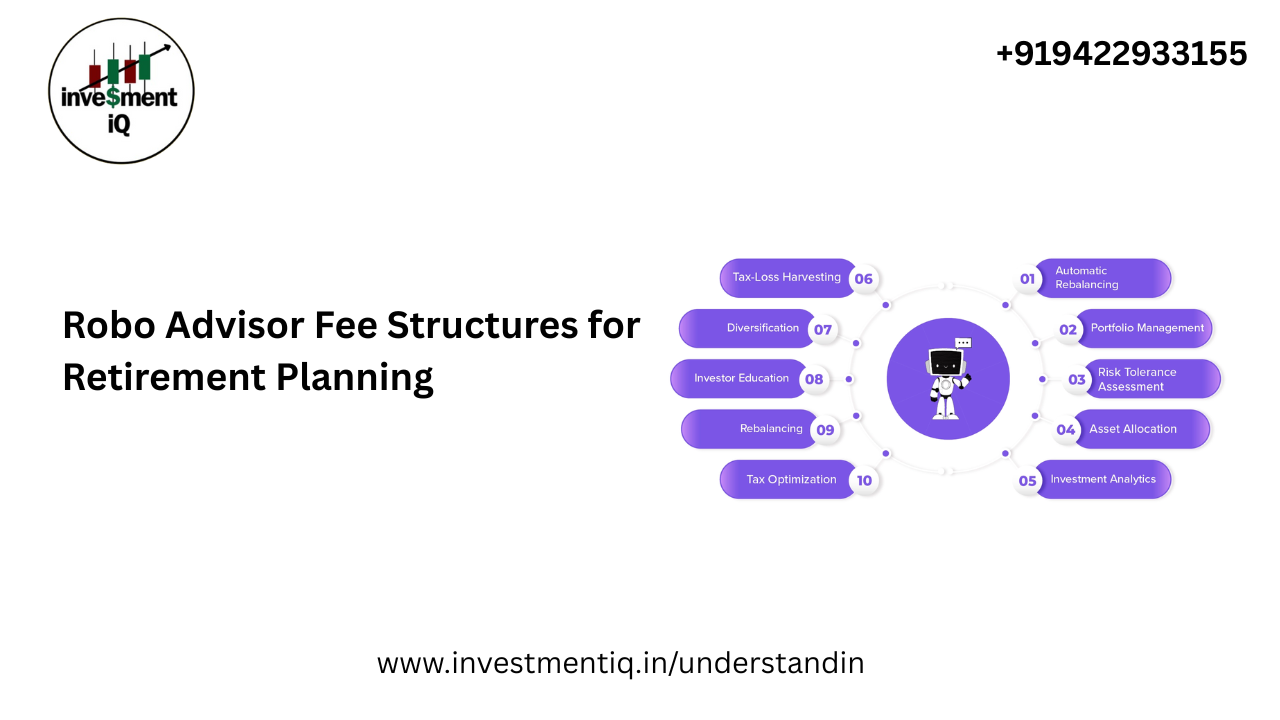
Robo Advisor Fee Structures for Retirement Planning

Robo Advisor Fee Structures for Retirement Planning

  • Percentage of Assets Under Management (AUM): A fee based on a percentage of your total account balance, typically ranging from 0.25% to 0.50% annually.
  • Flat Fee: A fixed yearly fee, regardless of account size, suitable for larger portfolios.
  • Tiered Pricing: Fees vary based on investment levels, potentially decreasing as assets grow.
  • Subscription Model: A monthly or annual fee for access to the Robo Advisor’s services.
  •  

Introduction

Robo advisors have revolutionized retirement planning by offering automated, algorithm-driven investment advice accessible to investors at all levels.

These digital platforms simplify the process of building and managing a retirement portfolio, making financial planning more accessible and efficient.

However, an essential aspect of utilizing robo-advisors effectively involves understanding their fee structures.

Knowing the different fees charged can significantly influence the long-term growth of your retirement savings, highlighting the importance of choosing a robo advisor that aligns with your financial goals and budget.

Learning about Robo Advisor Fees

Robo advisors streamline the investment process, but it’s crucial to comprehend the fees involved.

These fees can vary widely between providers and directly impact the value of your investments over time.

Types of Fees Associated with Robo Advisors:

  • Management Fees: Typically, a percentage of your assets under management (AUM) covers the cost of investment management and advice.
  • Service Fees include charges for account maintenance, access to human advisors (if available), and other administrative services.
  • Additional Costs: Beyond the basic fees, robo advisors may also incur costs such as:
    • Fund Fees: Expenses associated with the underlying investment funds in your portfolio.
    • Withdrawal Fees: Charges for taking money out of your account, though not common among all robo advisors.

The Impact of These Fees on Investment Returns Over Time:

  • Fees, even small percentages, can compound and significantly reduce your portfolio’s growth potential over decades.
  • For example, a 1% management fee might seem minor annually but can reduce your portfolio’s value by tens of thousands of dollars over a 30-year investment horizon.
  • Understanding and minimizing these fees without compromising service quality is crucial for maximizing retirement savings.

Comparison of Popular Robo Advisors’ Fee Structures

When comparing the fee structures of well-known robo advisors, it’s essential to consider the explicit costs and any unique pricing models that could affect your investment strategy over the long term.

Specific Fees Charged by Each Robo Advisor:

  • Management Fees: Most robo advisors charge a percentage of assets under management (AUM), typically ranging from 0.25% to 0.50%.
  • Service Fees: Look for fixed monthly or annual service fees that could significantly impact smaller accounts.
  • Additional Costs: Be aware of fund fees for the ETFs or mutual funds selected by the robo advisor, as these can vary.

Unique Fee Structures or Discounts Offered:

  • Tiered Pricing: Some robo advisors reduce their percentage fee as your account balance grows.
  • Promotional Offers: Initial fee waivers or reduced fees for the first year can be enticing, but remember to plan for the long-term costs.

Case Studies:

  • Case Study 1: An investor with a $50,000 portfolio is charged a 0.25% AUM fee instead of a 0.50% fee, illustrating the long-term impact on growth.
  • Case Study 2: The effect of a $10 monthly service fee on a $5,000 investment account, showcasing how fixed fees can disproportionately affect smaller portfolios.

Impact of Fees on Long-Term Retirement Savings

Understanding how fees compound over time and reduce your investment earnings is crucial in selecting a robo advisor.

Detailed Analysis:

  • Even small fee differences can have a significant impact over decades. For example, a 0.25% fee increase can considerably reduce your portfolio’s value over 30 years.
  • This reduction occurs because fees are taken out annually, diminishing the capital available to grow through compound interest.

Illustrating the Compounding Effect of Fees:

  • Consider using online calculators or software to model the impact of various fee structures on your retirement savings.
  • A chart comparing the growth of a $100,000 investment over 30 years at different fee levels (e.g., 0.25% vs. 0.50% vs. 1%) can vividly illustrate how fees erode potential earnings.

Key Takeaways:

  • The lower the fees, the more of your investment returns you can keep. This is especially important in retirement planning, where every dollar counts.
  • You can ensure more efficient savings growth over time by carefully choosing a robo advisor with a fee structure that aligns with your investment amount and retirement goals.

Understanding and comparing the fee structures of different robo-advisors is critical in choosing the best platform for your retirement planning needs. It’s not just about the costs today but how those costs will affect your investment’s growth over the long term.

Tips for Choosing a Cost-Effective Robo Advisor

Tips for Choosing a Cost-Effective Robo Advisor

Selecting a robo advisor that aligns with your financial goals without eating into your savings with high fees is crucial. Here’s how to strike the right balance:

  • Look for Robo Advisors with Fee Caps: Some platforms cap their fees at a certain account size, meaning you won’t pay more beyond that cap regardless of how much your investment grows. This can be particularly beneficial for larger portfolios.
  • Consider Fee Waivers or Reductions: Some robo-advisors offer fee reductions or waive them entirely for new customers or accounts with balances over a certain threshold. These offers can significantly lower the cost of investing, especially in the early years.
  • Evaluate the Overall Value:
    • Assess what you’re getting for the fees you’re paying. Does the robo advisor offer features like tax-loss harvesting or automatic rebalancing that could increase your net returns?
    • Compare the costs against the convenience, technology, and potential returns. Sometimes, paying slightly higher fees might be justified by superior service or advanced features that align with your investment strategy.

Additional Considerations When Evaluating Fees

Regarding robo-advisor fees, there’s more to consider than just the amount. Understanding the nuances can help you make an informed decision:

  • Transparency is Key:
    • Ensure the robo advisor discloses all fees upfront, including management fees, fund fees, and any other charges. This transparency is crucial in avoiding any unexpected costs down the line.
  • Balancing Cost with Service:
    • A cheaper robo advisor might offer fewer services or less personalized advice. Consider whether the services provided are adequate for your investment needs and worth the cost.
    • Remember, a slightly higher fee for a service that offers comprehensive features and better potential returns may be more beneficial in the long run.
  • Impact on Retirement Goals and Strategies:
    • Reflect on how the fees impact your specific retirement goals. For instance, if your strategy maximizes tax efficiency, a robo advisor offering sophisticated tax-loss harvesting might align more with your objectives, even at a slightly higher fee.
    • Consider how each fee might affect your ability to reach your desired retirement outcome. A lower-cost option might be appealing, but ensure it doesn’t compromise the quality of investment management or the potential growth of your retirement savings.

Choosing the right robo-advisor involves carefully analyzing fees, transparency, services offered, and how all these factors align with your retirement planning goals.

By considering these aspects, you can select a platform that meets your financial planning needs and offers good value for your investment.

FAQs

What are the main types of fee structures Robo Advisors uses for retirement planning?

  • Percentage of Assets Under Management (AUM)
  • Flat Fee
  • Tiered Pricing
  • Subscription Model

How does the Percentage of Assets Under Management (AUM) fee work?

This fee is a percentage of your total account balance, usually between 0.25% and 0.50% annually, automatically deducted from your account for the Robo Advisor’s services.

What is a Flat Fee structure?

A Flat Fee structure involves paying a fixed annual fee for Robo Advisor services, which does not change with the account size. This makes it ideal for larger investment accounts.

Can you explain Tiered Pricing in Robo Advisor fees?

Tiered Pricing means the fees you pay vary based on the level of your investments. As your assets grow, the percentage you pay in fees may decrease, offering potential savings for larger accounts.

What does a Subscription Model entail for Robo Advisor services?

Under a Subscription Model, you pay a monthly or annual fee for access to the Robo Advisor’s services, regardless of the size of your investment portfolio.

Which fee structure is most cost-effective for small investors?

For small investors, a Subscription Model or a lower AUM fee percentage can be more cost effective, as these structures can minimize fees relative to the investment size.

How does the fee structure impact my retirement savings over time?

The fee structure you choose can significantly impact the growth of your retirement savings over time. Lower fees allow more of your money to remain invested and compound, potentially leading to greater asset growth.

Are there any additional fees I should be aware of with Robo Advisors?

Some Robo Advisors may charge additional fees for services like fund expenses and transaction fees. It’s important to read the fine print to understand all possible charges.

How do I choose the right fee structure for my retirement planning?

Consider your investment amount, how actively you plan to manage your portfolio, and your specific needs for Robo Advisor services. Comparing different fee structures based on these factors can help you choose the most suitable one.

Can I switch between fee structures if my investment strategy changes?

Some Robo Advisors may allow you to switch between fee structures as your investment size or strategy changes. You should check with your provider for any restrictions or fees associated with changing plans.

How does the AUM fee structure affect investors with large portfolios?

Investors with large portfolios may find the AUM fee structure less favorable as their fees will be higher in absolute terms. Exploring flat fee or tiered pricing models may offer better value.

Is there a minimum investment requirement for different fee structures?

Some fee structures, especially tiered pricing or certain subscription models, might have minimum investment requirements. It’s essential to check these details before signing up.

How transparent are Robo Advisors about their fee structures?

Reputable Robo Advisors are generally transparent about their fee structures, listing them clearly on their websites and user agreements. However, investors should still perform due diligence to understand all potential costs.

Do Robo Advisors offering flat fees provide the same services as those charging a percentage of AUM?

Services may vary between Robo Advisors with different fee structures. Those charging flat fees might offer a standard set of services, while AUM-based fees could be associated with more personalized management.

What steps should I take if I’m unsure which fee structure is best for me?

Consider consulting with a financial advisor to discuss your retirement planning needs and compare the costs and benefits of different Robo Advisor fee structures. This can help you select the best option for your financial situation and goals.

 
SAP

Retirement Goals and Risk Tolerance Robo Advisors

Your Retirement Goals and Risk Tolerance and Robo advisors

  • Define clear retirement goals to guide your investment strategy.
  • Assess risk tolerance to align investments with your comfort level.
  • Choose a Robo Advisor that customizes strategies based on your goals and risk tolerance.
  • Utilize Robo Advisors for features like automated rebalancing and tax-loss harvesting.
  • Review and adjust your Robo Advisor settings as your goals or risk tolerance change.

Defining Your Retirement Goals

The Significance of Setting Clear and Achievable Retirement Goals Defining your retirement goals is a crucial first step in planning for a secure future.

It provides direction and purpose to your saving and investment strategies, ensuring that every financial decision aligns with achieving your desired retirement lifestyle.

Steps to Identify and Prioritize Your Retirement Objectives

  1. Reflect on Your Desired Retirement Lifestyle: Consider what you want your retirement to look like, including where you’ll live, hobbies you’ll pursue, and any travel plans.
  2. Estimate Financial Needs: Based on your desired lifestyle, estimate the funds you’ll need to support yourself.
  3. Prioritize Goals: Not all retirement goals are equally important. Determine which objectives are must-haves and which are nice-to-haves.
  4. Create a Timeline: Assign realistic timelines to your goals to guide your investment and saving pace.

Examples of Common Retirement Goals

  • Maintaining Lifestyle: Ensuring you have enough income to support your current lifestyle into retirement.
  • Travel: Saving for travel plans and adventures you wish to embark on during retirement.
  • Healthcare: Planning for potential healthcare costs and long-term care needs.
  • Leaving a Legacy: Setting aside funds to support loved ones or contribute to charitable causes.

Learn Your Risk Tolerance

Explanation of What Risk Tolerance Means in the Context of Retirement Planning Risk tolerance is your ability and willingness to endure market volatility and the possibility of losing money on investments in exchange for potentially higher returns.

It’s a cornerstone of developing an investment strategy you’re comfortable with that will meet your retirement objectives.

Factors That Influence Individual Risk Tolerance

  • Age: Younger investors may have a higher risk tolerance due to the longer timeframe to recover from market downturns.
  • Income: Higher income can sometimes buffer against the impact of investment losses, potentially allowing for higher risk tolerance.
  • Financial Responsibilities: Those with greater financial obligations may be more risk-averse.
  • Psychological Comfort with Risk: Individual attitudes towards risk play a significant role; some people are naturally more inclined to take risks than others.

Tools and Methods to Assess Your Risk Tolerance Level

  • Online Questionnaires: Many financial platforms offer questionnaires designed to gauge your risk tolerance by assessing your financial situation, goals, and emotional reactions to hypothetical market fluctuations.
  • Financial Advisor Consultations: A professional can help evaluate risk tolerance through detailed discussions and analysis.
  • Personal Reflection: Analyzing your reactions to past market downturns can provide insights into your risk tolerance.

Understanding your risk tolerance and defining clear retirement goals are foundational to crafting a retirement plan that suits your needs.

This clarity guides the choice of investments and using robo advisors to effectively automate your saving and investment strategies.

The Impact of Goals and Risk Tolerance on Retirement Planning

How Retirement Goals and Risk Tolerance Shape Your Investment Strategy

  • Your retirement goals define the “what” of your retirement plan—what you aim for, such as a certain lifestyle, travel plans, or leaving an inheritance.
  • Risk tolerance determines the “how”—how you’ll invest to achieve those goals without stepping outside your comfort zone.

The Importance of Aligning Your Retirement Plan with Your Risk Tolerance

  • Ensuring Comfort: Aligning your plan with your risk tolerance ensures you’re comfortable with your investment strategy, avoiding unnecessary stress.
  • Building Confidence: Knowing your investments align with your goals and what you’re willing to risk builds confidence in your retirement strategy.

Robo Advisors and Personalized Retirement Planning

Overview of How Robo Advisors Work Robo advisors utilize algorithms to create personalized investment strategies that align with your retirement goals and risk tolerance, offering a hands-off approach to retirement planning.

Features of Robo Advisors That Benefit Retirement Planning

  • Automated Portfolio Rebalancing: Keeps your investment strategy on track with your goals and risk tolerance by automatically adjusting your portfolio’s asset allocation.
  • Tax-Loss Harvesting: Minimizes taxes on investment gains, which can increase your retirement savings over time.
  • Retirement Income Strategies: Plans for the distribution phase of your retirement, ensuring you have a steady income stream.

Setting Realistic Retirement Saving Targets


Identifying Your Retirement Needs Start by estimating the annual income you’ll need in retirement to support your desired lifestyle. Consider all sources of retirement income, including social security, pensions, and savings.

Calculating Your Saving Target Subtract your expected income (social security, pensions) from your annual retirement needs to determine how much you’ll need to withdraw from savings each year. Use a retirement calculator to factor in inflation and investment growth to set a total savings target.

Adjusting for Risk Tolerance

  • If you have a lower risk tolerance, you might aim for a higher savings target to compensate for potentially lower investment returns.
  • Conversely, if you’re more risk-tolerant, you might be comfortable with a slightly lower savings target and expect higher investment returns.

Setting realistic retirement saving targets is a dynamic process that should be revisited regularly, especially as goals evolve or one nears retirement.

Robo advisors can play a crucial role in this process, offering tools and features that adjust your savings and investment strategies to stay on track toward your retirement goals.

Evaluating Risk Tolerance Levels and Choosing a Robo Advisor

Criteria for Choosing a Robo Advisor

  • Alignment with Retirement Goals and Risk Tolerance: Select a robo advisor that offers customized strategies based on your specific retirement objectives and how much risk you’re willing to accept.
  • Investment Options and Features: Look for features like tax-loss harvesting, automated rebalancing, and diversified investment options that match your needs.
  • Fees and Costs: Consider the robo advisor’s fees and ensure they are reasonable and transparent so they don’t erode your savings over time.

Case Studies: Impact of Risk Tolerance on Robo Advisor Selection

  • Case Study 1: Conservative Investor:
    • Scenario: Emma, nearing retirement, prefers a conservative investment approach to preserve her savings.
    • Robo Advisor Choice: She chooses a robo advisor specializing in bond-heavy portfolios with automated rebalancing to minimize risk.
  • Case Study 2: Aggressive Investor:
    • Scenario: Jack is willing to take on more risk early in his career for potentially higher returns.
    • Robo Advisor Choice: He opts for a robo advisor that emphasizes stock investments and offers aggressive growth strategies.

Choosing the right robo advisor requires carefully evaluating your risk tolerance and retirement goals.

By selecting a platform that aligns with your financial objectives and comfort level with risk, you can better tailor your retirement planning to meet your needs.

Customizing Investment Strategies with Robo Advisors

Robo advisors offer a flexible and dynamic approach to investment strategy customization. They ensure that your portfolio meets your initial retirement goals and risk tolerance and adapts to changes over time.

Customizing to Meet Specific Retirement Goals and Risk Tolerance

  • Initial Setup: When you first engage with a robo advisor, you’ll complete a detailed questionnaire. This assesses your financial situation, retirement goals, and risk tolerance, providing the initial data needed to craft your personalized investment strategy.
  • Personalization Features: Robo advisors use algorithms to select investment options that align with your goals. For example:
    • For Growth: If your goal is long-term growth and you have a high-risk tolerance, the robo advisor might allocate a larger portion of your portfolio to stocks.
    • For Stability: Conversely, a higher allocation to bonds might be recommended if you seek stability or are closer to retirement.
  • Diversification: Beyond adjusting asset classes, robo advisors ensure your investments are spread across different sectors and geographies, matching your personalized risk tolerance and retirement objectives.

Adjusting Settings Over Time

  • Life Changes: Significant life events, such as a career change, inheritance, or an adjustment in retirement plans, might necessitate reassessing your investment strategy. Robo advisors typically allow you to update your information and adjust your investment approach accordingly.
  • Market Changes: In response to market volatility, your robo advisor can automatically rebalance your portfolio to maintain your desired risk level without veering off course from your long-term goals.
  • Regular Reviews: It’s a good practice to regularly review your investment strategy with your robo advisor, ensuring it remains aligned with your current goals and risk tolerance. Many platforms offer annual check-ups or alerts to encourage this review process.

Interactive Tools and Support

  • Educational Resources: Many robo-advisors provide tutorials and articles to help you understand various investment strategies and how they relate to retirement planning.
  • Customer Support: For more personalized adjustments or understanding complex scenarios, robo advisors often offer support through financial experts or customer service teams.

By leveraging the customization and adaptability of robo advisors, you can ensure your investment strategy remains in sync with your evolving retirement goals and risk preferences, paving the way for a more secure and tailored retirement planning experience.

FAQs

What does defining clear retirement goals entail for my investment strategy?

Defining clear retirement goals involves specifying your desired retirement age, lifestyle, and the financial resources needed to support this lifestyle. This clarity guides your investment strategy by determining how much you need to save and invest and the level of risk you might need to take to achieve these goals.

How do I assess my risk tolerance for investment purposes?

Assessing your risk tolerance involves evaluating how comfortable you are with the possibility of losing money in the short term for the potential of higher returns in the long term. Consider factors like your investment timeline, financial situation, and emotional response to market fluctuations to determine risk tolerance.

Why is choosing a Robo Advisor that customizes strategies based on my goals and risk tolerance important?

Choosing a Robo Advisor who tailors strategies to your specific goals and risk level is crucial because it ensures that your investment approach aligns with your financial objectives and is comfortable with risk. This personalization can help you grow your retirement savings effectively while keeping you comfortable with your investment decisions.

How do automated rebalancing and tax-loss harvesting features of Robo Advisors benefit me?

Automated rebalancing ensures your investment portfolio stays aligned with your targeted asset allocation, helping manage risk. Tax-loss harvesting seeks to minimize taxes on investment gains by offsetting them with losses, potentially increasing the net growth of your retirement savings.

Why is it necessary to regularly review and adjust my Robo Advisor settings?

Your financial situation, goals, and risk tolerance can change over time due to various factors, such as career progression, family changes, or shifts in financial markets. Regularly updating your Robo Advisor settings ensures that your investment strategy aligns with your current circumstances and goals.

Can Robo Advisors adapt to significant changes in my financial goals?

Yes, Robo Advisors can adapt to significant changes in your financial goals. You can update your goals and financial information in the Robo Advisor platform, and it will adjust your investment strategy accordingly to reflect your new objectives.

What happens if my risk tolerance changes?

If your risk tolerance changes, update this information in your Robo Advisor settings. The Robo Advisor will then adjust your investment portfolio to match your new comfort level with risk, ensuring that your investments align with your preferences.

How do I determine my retirement financial needs?

Determining your retirement financial needs involves estimating your future living expenses, accounting for inflation, and considering any income sources you might have in retirement, such as social security or pensions. This calculation helps set a savings goal that your investment strategy can achieve.

What should I do if market volatility makes me uncomfortable with my current investment risk level?

If market volatility affects your comfort with your investment risk level, consider reassessing your risk tolerance and possibly adjusting your investment strategy through your Robo Advisor settings to a more conservative approach until you feel comfortable again.

How do I start with a Robo Advisor if I’m unsure about my retirement goals or risk tolerance?

If you’re unsure about your retirement goals or risk tolerance, many Robo Advisors offer tools and questionnaires to help you evaluate your financial situation and preferences. These can guide you in setting initial parameters, which can be adjusted as you gain clarity over time.

Can a Robo Advisor suggest changes to my investment strategy based on economic trends?

While Robo Advisors primarily focuses on long-term strategies tailored to your goals and risk tolerance, some offer features that consider broader economic trends and market conditions when suggesting adjustments to your investment strategy.

How can inflation affect my retirement savings, and how can Robo Advisors help?

Inflation can reduce the purchasing power of your retirement savings over time. Robo Advisors help by investing in assets that have the potential to grow at a rate that outpaces inflation, aiming to preserve or increase the real value of your savings.

How can I ensure my Robo Advisor investment strategy is diversified?

Robo Advisors typically ensure diversification by investing in various asset classes and securities. You can review your portfolio’s holdings through the Robo Advisor platform to confirm it’s diversified across different types of investments, reducing risk.

What happens to my investments if I suddenly need to withdraw some of my retirement savings?

If you need to withdraw a portion of your retirement savings, you can typically do so from your Robo Advisor account. Be aware of potential tax implications and how the withdrawal might affect your long-term retirement goals. Your Robo Advisor may also assist in adjusting your strategy post-withdrawal.

How do I communicate changes in my life circumstances to my Robo Advisor?

You can update your Robo Advisor with changes in your life circumstances, such as a new job, marriage, or financial inheritance, by adjusting your profile settings and financial information on the Robo Advisor platform. This ensures that your investment strategy remains aligned with your current situation.

What is SAP ECC (ERP Central Component)?

Top 10 Software Training Institutes in hyderabad:

8 Best Salesforce Developer Certifications In 2024

SAP HANA vs SAP S/4 HANA

SAP

Robo Advisors for Retirement Planning – How Do They Work

Robo Advisors for Retirement Planning

  • Automate savings and investment strategies tailored to retirement goals.
  • Offer lower fees than traditional financial advisors, increasing cost-efficiency.
  • Provide data-driven, personalized investment advice based on user inputs.
  • Feature automated portfolio rebalancing and tax-loss harvesting to optimize returns.
  • Facilitate easy access and simplicity in managing retirement plans.
  • May lack the nuanced advice human advisors offer in complex financial situations.

Robo Advisors

Definition and Operational Basics of Robo Advisors Robo advisors are digital platforms that offer automated, algorithm-driven financial planning services with minimal human supervision.

Users input their financial information and goals, and the robo-advisor provides tailored investment advice and portfolio management.

These platforms typically invest in a mix of stocks, bonds, and other assets, adjusting the portfolio based on the user’s risk tolerance and investment horizon.

The Evolution of Robo Advisors in the Financial Industry

  • Early Stages: Originated in the late 2000s, targeting tech-savvy, younger investors seeking low-cost investment solutions.
  • Growth Phase: Rapid adoption due to their convenience, affordability, and innovative approaches to investing.
  • Today: Widely accepted by a diverse investor base, continuously evolving with advancements in technology and financial theory.

General Advantages and Limitations of Using Robo Advisors

  • Advantages:
    • Cost-Effective: Lower fees compared to traditional financial advisors.
    • Accessibility: 24/7 access to investment management and advice.
    • Simplicity: User-friendly interfaces make investing straightforward.
  • Limitations:
    • Limited Personalization: May not fully account for complex financial situations.
    • Overreliance on Algorithms: Potential risks in unprecedented market conditions.
    • Emotional Engagement: Lack of the human touch some investors prefer for reassurance during volatility.

Robo Advisors for Specific Goals

The Concept of Personalized Financial Planning Through Robo Advisors Robo advisors revolutionize financial planning by making it personalized and accessible.

They analyze personal data to deliver bespoke advice and strategies that align closely with individual financial aspirations and lifestyle objectives.

How Robo Advisors Can Be Customized for Different Financial Objectives

  • Tailored Portfolios: Adjust asset allocation to match specific goals and timelines.
  • Dynamic Adjustments: Continually refine investment strategies based on changing market conditions and life events.

Saving for Education

  • By implementing dedicated education savings plans, like 529 plans in the U.S., robo-advisors can optimize contributions and investments to meet future tuition costs.

Building an Emergency Fund

  • Designate a portion of assets for liquid investments, ensuring funds are readily available for unforeseen expenses.

Investment Strategies for Major Purchases (Home, Car)

  • Set up goal-specific accounts with targeted investment strategies, focusing on capital preservation and growth over a defined period.

Importance of Setting Clear Financial Goals for Effective Robo Advisor Utilization

  • Goal Identification: Clearly defining financial objectives is crucial for creating an effective strategy.
  • Customization: Detailed goals allow for more tailored advice and investment management.
  • Monitoring Progress: Regularly reviewing goals with the robo advisor’s help ensures adjustments are made as necessary, keeping the strategy aligned with changing needs and market conditions.

Robo advisors represent a significant shift in how individuals approach personal finance. They offer tools for detailed goal planning and investment management across a spectrum of needs, from education funding to retirement savings.

Their evolving capabilities and increasing sophistication in handling diverse financial objectives underscore their growing role in the personal finance ecosystem.

Robo Advisors for Retirement Planning

Detailed Exploration of How Robo Advisors Cater to Retirement Planning Robo advisors offer a streamlined approach to retirement planning, automating the process of savings and investment to meet long-term financial security needs

. They leverage algorithms to create personalized retirement strategies, considering the user’s current financial situation, expected retirement age, and lifestyle aspirations.

Assessing Retirement Needs and How Robo Advisors Can Automate Savings and Investment Strategies

  • Data Analysis: Initially, they analyze extensive personal financial data, including current savings, income, and expected retirement needs.
  • Strategy Automation: Based on this analysis, robo advisors automatically devise a savings and investment plan, focusing on long-term growth and sustainability.

Features of Robo Advisors That Benefit Retirement Planning

  • Automated Portfolio Rebalancing: They continuously adjust asset allocation within the portfolio to maintain the desired risk level, which is crucial for managing market volatility as retirement approaches.
  • Tax-Loss Harvesting: This feature helps optimize investments’ tax efficiency, potentially increasing the net retirement savings.
  • Retirement Income Strategies: Robo advisors can also plan for the distribution phase, strategizing withdrawals tax-efficiently to ensure a steady retirement income.

Comparing Robo Advisors to Traditional Retirement Planning Methods

  • Cost-Effectiveness: Robo advisors often come with lower fees than human financial planners.
  • Accessibility: They provide round-the-clock access to your retirement planning, unlike traditional methods that require appointments.
  • Adaptability: By leveraging technology, robo-advisors can swiftly adjust strategies in response to market changes, which may take longer than traditional planning.

Customizing Robo Advisors for Retirement

Step-by-Step Guide on Setting Up a Robo Advisor for Retirement Planning

  1. Assessment: Begin with a thorough assessment of your financial status, retirement goals, and risk tolerance.
  2. Platform Selection: Choose a robo-advisor platform that aligns with your retirement objectives and offers automated rebalancing and tax optimization features.
  3. Account Setup: Follow the platform’s process for setting up an account and entering your financial details and retirement goals.
  4. Strategy Review: Examine the proposed retirement strategy to ensure it aligns with your expectations and adjust if necessary.

Selecting the Right Robo Advisor: Factors to Consider Based on Retirement Goals

  • Investment Options: Look for diverse investment opportunities that align with your retirement horizon and risk tolerance.
  • Fees and Costs: Consider the platform’s fees and how they impact your potential retirement savings.
  • Customer Support: Ensure the platform offers robust support, including access to human advisors if needed.

Integration with Existing Retirement Accounts and Pensions

  • Most robo advisors can integrate with existing retirement accounts, such as 401(k)s or IRAs and pensions, providing a holistic view of your retirement finances.
  • Considering all your retirement income sources, this integration allows for more accurate retirement planning and strategy optimization.

Robo advisors represent a significant advancement in retirement planning. They offer personalized, automated strategies that can adapt to changing financial landscapes.

By understanding how to customize and effectively use these digital platforms, you can take control of your retirement planning and work towards achieving your long-term financial goals.

Benefits and Limitations of Using Robo Advisors for Retirement Planning

In-depth Analysis of the Benefits

  • Ease of Use and Accessibility: Robo advisors simplify retirement planning with user-friendly platforms accessible anywhere, anytime. This digital approach fits seamlessly into the modern investor’s lifestyle.
  • Lower Costs: They generally charge lower fees than traditional financial advisors. This cost-effectiveness stems from automated processes, making professional financial planning more affordable.
  • Data-Driven Investment Decisions: Robo-advisors leverage vast amounts of market data and sophisticated algorithms to offer investment strategies tailored to the user’s specific retirement goals and risk tolerance.

Discussion on Limitations

  • Lack of Personalized Advice in Complex Situations: While robo-advisors excel in standard investment scenarios, they may fall short in providing custom advice for more complex financial situations unique to retirement planning.
  • Dependence on Algorithms and Historical Data: The reliance on past data and preset algorithms might not always perfectly predict future market conditions, potentially affecting long-term investment outcomes.
  • Managing Expectations with Automated Advising: Users must understand the capabilities and limitations of robo-advisors, recognizing that while they are powerful tools, they do not replace the nuanced understanding of a human advisor in certain situations.

The Future of Retirement Planning with Robo Advisors

Predictions for Technological Advancements and Their Impact on Retirement Planning

  • Integrating more advanced AI and machine learning technologies will greatly enhance investment strategies’ predictive accuracy and personalization. This could lead to more dynamic retirement portfolios that can adapt in real time to market changes.
  • Developments in natural language processing might improve the interaction between users and robo advisors, making financial advice more accessible and understandable to a broader audience.

The Potential for More Personalized and Adaptive Retirement Planning Solutions

  • Future iterations of robo-advisors are anticipated to offer a deeper level of customization, accounting for various personal factors, including changing health concerns, fluctuating income levels, and even socio-economic conditions affecting retirement savings.
  • The possibility of integrating robo-advisors with broader financial ecosystems, including banking, insurance, and healthcare, suggests a future where retirement planning is part of a comprehensive, interconnected financial management system. This holistic approach could offer unprecedented support in achieving retirement readiness, addressing both financial and lifestyle aspects of retirement planning.

The trajectory of robo advisors in retirement planning is marked by a continuous evolution towards more sophisticated, user-centric solutions.

As technology advances, the role of robo advisors is set to become even more integral. They offer tools that streamline the investment process and enrich the retirement planning experience with deeper insights and foresight.

FAQs

What are robo advisors, and how do they assist in retirement planning?

Robo advisors are digital platforms that utilize algorithms to manage your savings and investment strategies, focusing on achieving your retirement goals. They automate the process of investing by offering personalized advice and maintaining your portfolio based on the financial information you provide.

How do the fees for robo-advisors compare to those of traditional financial advisors?

Robo advisors typically charge lower fees than traditional financial advisors. This cost advantage can result in more of your money being invested towards your retirement, potentially leading to greater long-term savings.

In what ways do robo-advisors offer personalized investment advice?

Based on your input information, such as financial goals, risk tolerance, and investment timeline, robo-advisors provide data-driven, personalized investment strategies designed to align with your specific retirement objectives.

Can robo-advisors manage my investment portfolio automatically?

Yes, robo advisors automatically handle tasks like portfolio rebalancing and tax-loss harvesting to help optimize your investment returns, all while aiming to keep your portfolio aligned with your retirement goals.

What makes robo-advisors accessible and simple to use for managing retirement plans?

Robo advisors offer a user-friendly interface that simplifies the management of your retirement savings. They provide easy access to your investment strategy and performance, making keeping track of your retirement planning straightforward.

Are there any limitations to the advice that robo-advisors can offer?

While robo-advisors are effective for automated investment management, they may not provide the depth of advice a human advisor would offer in more complex financial situations or when nuanced guidance is needed.

Do robo-advisors adjust investments based on market changes?

Robo advisors continuously monitor the market and automatically adjust your investment portfolio in response to changes, aiming to protect and grow your retirement savings in alignment with your goals.

How do robo-advisors help in achieving long-term retirement goals?

By automating savings and investing based on personalized strategies, robo advisors aim to efficiently grow your retirement funds over time, adjusting as necessary to meet your long-term objectives.

What types of accounts can I manage with a robo-advisor?

Most robo-advisors allow you to manage various account types, including individual retirement accounts (IRAs), Roth IRAs, and personal investment accounts, catering to different retirement planning needs.

Is it difficult to set up a retirement plan with a robo-advisor?

Setting up a retirement plan with a robo advisor is generally straightforward. After creating an account, you’ll be guided through a process to define your retirement goals and risk tolerance, which the robo advisor will use to create your personalized investment strategy.

Can robo-advisors adjust to changes in my financial situation or goals?

Yes, you can update your financial information and retirement goals anytime, and the robo advisor will adjust your investment strategy accordingly to stay on track with your new objectives.

How secure is my information and money with robo advisors?

Robo advisors use advanced security measures to protect your personal and financial information. Your investments are also typically held in accounts insured by a government agency, providing an additional layer of safety.

What should I consider when choosing a robo advisor for retirement planning?

Consider factors like fees, services offered, security measures, ease of use, and how well the robo advisor’s investment philosophy matches your retirement planning goals.

Can robo-advisors assist with tax implications related to retirement savings?

Many robo-advisors include features like tax-loss harvesting, which can help minimize the taxes you owe on investment gains, thereby potentially increasing the efficiency of your retirement savings growth.

How do I get started with a robo advisor for my retirement planning?

To begin, research and select a robo advisor that fits your needs. You will then typically complete a questionnaire about your financial situation and goals. Based on your responses, the robo-advisor will propose a retirement plan and start managing your investments according to that strategy.

You may be interested in:

Understanding the Role of a SAP Finance Control Consultant

Financial Functional Consultant Roles and Responsibilities

Oracle Interview Questions and Answers

SAP

Affordable CRM solutions in 2024

Affordable CRM solutions

  • HubSpot CRM: Free; ideal for startups and small businesses.
  • Zoho CRM: Tiered pricing; great for scalability.
  • Freshsales: Freemium model; AI-driven insights for growth.
  • Bitrix24: Comprehensive suite; free for a basic all-in-one solution.
  • Insightly: Basic plan for SMEs; combines CRM and project management.

These solutions provide a mix of affordability, essential features, and scalability options for various business sizes and needs.

Introduction

CRM (Customer Relationship Management) solutions are crucial in today’s business environment.

They enable businesses to maintain robust connections with customers. The key for small—to medium-sized enterprises (SMEs) or startups is finding affordable CRM solutions that don’t compromise on essential features.

This guide highlights CRM platforms that offer significant value, ensuring businesses can effectively manage customer relationships without spending a fortune.

What are CRM Solutions

CRM solutions are central to managing a company’s interactions with current and potential customers.

By incorporating functionalities such as:

  • Customer data management: Organizing customer information in a central, accessible location.
  • Interaction tracking: Recording customer engagement to provide context for future interactions.
  • Lead management: Streamlining the process from potential customer interest to sale.

The impact of employing CRM solutions extends beyond operational efficiency; it deeply influences customer relationships. Utilizing CRM systems helps transform customer data into actionable insights, enhancing:

  • Marketing efforts: Tailoring campaigns to match customer preferences.
  • Customer service: Personalizing interactions to meet customer expectations.
  • Sales strategies: Focusing on leads with the highest conversion potential.

For SMEs and startups, the challenge lies in finding CRM platforms that balance cost with functionality. The goal is to identify solutions that provide the necessary tools for growth without imposing financial strain.

Criteria for Selecting an Affordable CRM

Selecting the right CRM involves understanding key factors that align with your business needs without overspending.

Consider the following:

  • Pricing: Look for clear, transparent pricing structures without hidden fees. Affordability is key, especially for new businesses.
  • Scalability: Your chosen CRM should grow with your business. As your needs expand, it should support more users and additional features.
  • Ease of Use: An intuitive interface and straightforward navigation are crucial. It reduces the time and resources spent on training.
  • Available Features: Ensure the CRM has the essential features you need, such as contact management, email integration, and analytics.

Balancing cost with functionality ensures you don’t pay for features you won’t use but still have what you need to succeed.

Top Affordable CRM Solutions for SMEs and Startups

  • HubSpot CRM: Known for its free plan, HubSpot CRM offers a wide range of features at no cost, making it an ideal starting point for businesses exploring CRM tools. It includes contact management, email marketing tools, and reporting features.
  • Zoho CRM: Zoho’s tiered pricing model accommodates businesses as they grow. It offers automation, multichannel support, and analytics, making it versatile for different business needs.
  • Freshsales: Emphasizing a freemium model, Freshsales provides businesses with AI-driven insights, email integration, and a user-friendly interface, catering to high-growth businesses looking for scalable solutions.
  • Bitrix24: Offers a comprehensive suite of tools for free, appealing to businesses needing an all-in-one solution. It combines CRM functionalities with project management, communication, and website-building tools.
  • Insightly: Focusing on SMEs that need both CRM and project management capabilities, Insightly’s basic plan supports essential CRM functions integrated with project tracking features.

These CRM platforms offer a range of options for SMEs and startups, emphasizing affordability, scalability, and essential functionalities.

Comparing Affordable CRM Solutions

When evaluating HubSpot CRM, Zoho CRM, Freshsales, Bitrix24, and Insightly.

It’s essential to weigh pricing against features and consider which business types they’re most suited for.

  • HubSpot CRM shines for startups and SMEs with its free tier. It offers a robust set of tools for customer relationship management without initial cost, making it highly accessible.
  • Zoho CRM stands out for its scalability, supporting businesses as they grow with its flexible pricing model. It’s ideal for companies that expect to scale their operations and require a CRM that grows with them.
  • Freshsales appeals to businesses keen on leveraging AI for sales insights, with its freemium model providing a cost-effective entry point for SMEs focused on growth.
  • Bitrix24 is best suited for businesses looking for an all-in-one solution, offering a comprehensive suite of tools for CRM, project management, and collaboration at no cost.
  • Insightly offers specific advantages for project-driven SMEs, integrating CRM features with project management tools in its basic plan.

User experiences and satisfaction greatly vary depending on the CRM’s specific needs and usage. HubSpot CRM is often praised for its ease of use and comprehensive free features, while Zoho CRM users highlight the platform’s customization capabilities.

Freshsales’ AI features receive positive feedback for effectively prioritizing leads, whereas Bitrix24 is noted for its extensive suite of tools despite a steeper learning curve.

Insightly, users appreciate the dual focus on CRM and project management, though some desire more advanced CRM features.

Implementing Your Chosen CRM Solution

Effective implementation of a CRM solution involves several key steps:

  • Staff Training: Ensure your team is fully versed in using the CRM’s features through comprehensive training sessions. This can involve in-house training or utilizing online resources and webinars offered by the CRM provider.
  • Data Migration: Carefully plan the migration of your existing customer data into the new CRM system. This might require cleaning up the data beforehand to ensure accuracy and usefulness.
  • Customization: Tailor the CRM to fit your specific business processes and workflows. This may involve setting up custom fields, creating automated workflow rules, and configuring the dashboard to display relevant information.

Common Challenges: One of the main hurdles in CRM implementation is the team’s resistance to change, which can be mitigated by involving them in the selection process and ensuring they understand the benefits.

Another challenge is the complexity of migrating existing data, which requires meticulous planning and, in some cases, the assistance of IT professionals or services provided by the CRM vendor.

By carefully selecting a CRM that fits your business needs and planning for a smooth implementation process, SMEs can significantly improve customer relationship management, leading to better customer experiences and business growth.

FAQs

What makes HubSpot CRM ideal for startups?

HubSpot CRM offers a free plan with essential features for managing customer relationships, making it accessible for startups on limited budgets.

How does Zoho CRM’s tiered pricing benefit businesses?

Zoho CRM’s tiered pricing allows businesses to scale their CRM solution as they grow, ensuring they only pay for the features they need.

Why choose Freshsales for business growth?

Freshsales provides AI-driven insights and a freemium model, supporting businesses in prioritizing and nurturing leads effectively for growth.

What does Bitrix24 offer to small businesses?

Bitrix24 offers a comprehensive suite of tools, including CRM, project management, and communication, free for basic use, making it a versatile choice for small businesses., including CRM, project management, and communication, and it is

How does Insightly support SMEs?

Insightly’s basic plan combines CRM functionalities with project management features, catering specifically to the needs of SMEs.

Can I integrate HubSpot CRM with other tools?

Yes, HubSpot CRM can integrate with many tools, enhancing its utility without requiring manual data transfers.

Is Zoho CRM suitable for industries with specific needs?

Yes, Zoho CRM offers extensive customization, making it adaptable to the unique requirements of various industries.

What kind of businesses can benefit most from Freshsales?

Businesses focused on sales growth, and lead management will find Freshsales’ AI insights particularly beneficial.

How user-friendly is Bitrix24 for first-time CRM users?

Bitrix24 is designed with a focus on usability. It offers an intuitive interface and easy navigation for first-time CRM users.

Does Insightly offer integration with other business tools?

Yes, Insightly integrates with a variety of business tools, including email platforms and productivity suites, streamlining workflow.

What support options are available for HubSpot CRM users?

HubSpot provides extensive support through online resources, community forums, and customer service channels.

Can I customize the sales pipeline in Zoho CRM to fit my process?

Absolutely, Zoho CRM allows for full customization of the sales pipeline to match your specific sales process.

What are the limitations of Freshsales’ free plan?

The free plan of Freshsales offers basic CRM features, with more advanced features available in paid tiers.

Is Bitrix24 a good option for managing remote teams?

Yes, Bitrix24’s comprehensive suite includes communication and project management tools, making it ideal for managing remote teams.

How does Insightly help in project delivery?

Insightly provides project tracking tools that help businesses manage deliverables, timelines, and milestones effectively.

How to use SOQL and SOSL?

Mastering Customer 360 in Salesforce

Elevating User Experiences: Unleashing Advanced UI Elements and Custom Controls in SAPUI5


SAP

How Robo Advisors Work – Behind The Dashboard

How Robo Advisors Work

  • Investors complete a questionnaire assessing risk tolerance and financial goals.
  • Algorithms create a personalized investment portfolio based on the responses.
  • Portfolios are diversified across various asset classes for risk management.
  • Robo advisors automatically rebalance the portfolio to maintain target asset allocation.
  • Continuous monitoring ensures the investment strategy aligns with market conditions and the investor’s objectives.
  • AI and machine learning optimize portfolio performance over time.Robo advisors have revolutionized the way we approach investment management.

These digital platforms use algorithms to provide personalized financial planning services with minimal human supervision.

This is making investing more accessible and cost-effective for individuals worldwide.

  • What is a Robo Advisor?
    • A digital platform that uses sophisticated algorithms to manage investments.
    • Designed to offer personalized financial advice based on individual risk tolerance and financial goals.
  • Historical Background and Evolution
    • Originated in the late 2000s, gaining popularity as a transparent and low-cost investment alternative.
    • Evolved with AI and machine learning advancements, enhancing their predictive performance and user experience.
  • Key Differences Between Robo Advisors and Traditional Financial Advisors
    • Cost: Robo advisors typically charge lower fees than traditional advisors.
    • Accessibility: Available 24/7 with services provided online.
    • Personalization: It uses algorithms to tailor investment strategies, though it may offer less customization in complex scenarios than human advisors.

How Robo-Advisors Work

Robo-advisors automate the investment process using sophisticated algorithms to manage your portfolio based on your financial goals, risk tolerance, and time horizon.

Here’s how they typically operate in practical terms:

  1. Initial Assessment: When you sign up for a robo-advisor, you’ll complete a detailed questionnaire. This gathers information on your financial situation, investment goals, risk tolerance, and how long you plan to invest.
  2. Portfolio Allocation: The robo-advisor uses an algorithm to suggest a diversified investment portfolio based on your responses. This portfolio usually consists of low-cost index or exchange-traded funds (ETFs) matching your risk profile.
  3. Automatic Investing: Once you approve the suggested portfolio, the robo-advisor automatically invests your funds across the selected assets.
  4. Continuous Monitoring and Rebalancing: Robo-advisors continuously monitor your portfolio, automatically rebalancing it to maintain the target asset allocation. This ensures your investment strategy stays aligned with your goals over time.
  5. Tax Optimization: Many robo-advisors offer tax-loss harvesting, a strategy that sells investments at a loss to offset capital gains tax on other investments, enhancing your portfolio’s tax efficiency.

Are There Different Robo-Advisor Algorithms?

Yes, there are different algorithms that robo-advisors use, each designed to optimize various aspects of investment management:

  • Modern Portfolio Theory (MPT) Algorithms: These algorithms focus on diversification and risk management, aiming to construct a portfolio that offers the highest expected return for a given level of risk by spreading investments across different asset classes.
  • Goal-Oriented Algorithms: These are tailored to specific financial goals, such as retirement savings or a down payment on a house. They adjust the asset allocation based on the time horizon and risk level associated with the goal.
  • Tax Optimization Algorithms: These algorithms are designed to minimize taxes through strategies like tax-loss harvesting, aiming to improve overall investment returns after taxes.
  • Artificial Intelligence and Machine Learning Algorithms: Some advanced robo-advisors use AI and machine learning to analyze market data, predict trends, and adjust investment strategies dynamically. These algorithms can learn and adapt from historical data, potentially improving decision-making processes.

In summary, robo-advisors simplify the investment process, making it accessible and tailored to individual investor needs.

By leveraging various algorithms, they can offer personalized portfolio management, continuous optimization, and tax efficiency, catering to novice and experienced investors seeking a hands-off approach to growing their wealth.

The Role of Artificial Intelligence and Machine Learning

Integrating Artificial Intelligence (AI) and Machine Learning into robo-advisors is a game-changer, elevating the sophistication and effectiveness of these digital platforms.

  • How AI Enhances the Capabilities of Robo Advisors
    • AI powers the core of robo-advisors, enabling them to rapidly analyze vast amounts of data, make predictions about market trends, and execute trades at optimal times. This level of analysis and execution would be challenging, if not impossible, for human advisors to replicate with the same speed or accuracy.
  • Machine Learning’s Role in Refining Investment Strategies Over Time
    • Machine learning algorithms learn from historical data, improving predictions and decisions over time. The more a robo advisor operates, the better it becomes at tailoring investment strategies to meet the investor’s specific goals and risk tolerance, enhancing the potential for better returns.

Advantages of Using Robo Advisors

Robo advisors offer a suite of benefits that make them an attractive option for investors, particularly when compared to traditional financial advisors.

  • Cost-effectiveness Compared to Human Advisors
    • With lower operational costs, robo-advisors can offer their services at a fraction of the price of human advisors. They typically charge a lower percentage of assets under management (AUM) and often have lower account minimums, making them accessible to a broader range of investors.
  • Accessibility and Ease of Use
    • Robo advisors are available 24/7, allowing investors to check their investments, adjust their risk tolerance, and withdraw or deposit funds at any time from anywhere. The platforms are designed with user experience in mind, ensuring that even those new to investing can easily navigate them.
  • Continuous Monitoring and Automatic Rebalancing
    • One of the standout features of robo-advisors is their ability to continuously monitor investment portfolios and automatically rebalance them as needed. This ensures that the investor’s portfolio remains aligned with their investment goals and risk tolerance, adapting to any shifts in the market.
  • Personalized Investment Strategies
    • Despite being automated, robo-advisors offer a high degree of personalization. By using the initial questionnaire to understand the investor’s financial situation and goals, robo-advisors can create tailored investment strategies designed to meet individual needs, which is often considered a benefit of human advisors alone.

The intersection of technology and financial advisory through robo-advisors represents a significant leap forward in making investment management more accessible, affordable, and tailored to the individual investor.

By leveraging the power of AI and machine learning, robo-advisors are democratizing investment advice and continuously enhancing their service offerings to provide personalized, strategic investment management.

Considerations and Limitations

While robo-advisors have transformed the landscape of investment management, investors should be aware of several considerations and limitations before committing to this technology-driven approach.

  • Limitations in Handling Complex Financial Situations
    • Robo advisors excel at managing straightforward investment portfolios. Still, they may struggle to navigate complex financial situations, such as estate planning, tax optimization across multiple income sources, or managing large investment portfolios with intricate requirements.
  • The Level of Personalization vs. Human Advisors
    • Although robo-advisors offer personalized investment strategies based on algorithms, the depth of personalization might not match that of a human advisor. Human advisors can consider nuanced aspects of a client’s life and financial picture in their recommendations, something that an algorithm may not fully replicate.
  • Security and Privacy Considerations
    • With the rise of digital services comes the increased risk of data breaches and cyber-attacks. While robo-advisors generally employ high-level security measures, the reliance on digital platforms raises concerns about privacy and data security that investors must consider.

Choosing the Right Robo Advisor

Selecting the right robo-advisor requires careful consideration of various factors to ensure the platform aligns with your financial goals, risk tolerance, and personal preferences.

  • Factors to Consider When Selecting a Robo Advisor
    • Fees and Costs: Compare the fees charged by different robo advisors, including management fees and any additional costs for specific services.
    • Investment Options: Look for a robo advisor that offers a wide range of investment options and asset classes to ensure a diversified portfolio.
    • User Experience: Consider the platform’s ease of use, including the onboarding process, dashboard interface, and access to customer support.
    • Performance History: Review the performance history of the robo advisor, keeping in mind past performance is not indicative of future results.
    • Security Measures: Ensure the robo advisor has robust security measures to protect your personal and financial information.
  • Comparison of Leading Robo Advisors in the Market
    • Before making a decision, compare several leading robo advisors to understand how they differ in their approach, services, and fees. Consider platforms like Betterment, Wealthfront, and Vanguard Personal Advisor Services, each known for specific strengths such as user-friendly interfaces, advanced tax-loss harvesting, or the integration of human advisory services.

Choosing the right robo-advisor involves a thorough evaluation of your financial needs and a detailed comparison of potential advisors.

By considering the above factors, investors can make an informed decision that best suits their investment goals and personal circumstances, navigating both the benefits and limitations of robo-advisory services.

The Future of Robo Advisors

The trajectory of robo-advisors points towards a future where they become even more integrated into the fabric of financial planning and investment management.

Robo-advisors’ capabilities are expected to expand as technology advances, enabling them to offer more sophisticated, intuitive, and personalized advisory services.

  • Emerging Trends in Robo Advisory Services
    • Holistic Financial Planning: A shift towards offering comprehensive financial planning services that cover aspects beyond investment advice, such as debt management, insurance, and retirement planning.
    • Socially Responsible Investing: There is an increasing focus on ESG (Environmental, Social, and Governance) criteria, which allows investors to align their portfolios with their ethical values.
    • Hybrid Models: A growing trend is blending digital and human advice, offering clients the best of both worlds – the efficiency and accessibility of robo advisors with the personalized touch of human financial advisors.
  • Potential Developments in AI and How They Could Impact Robo Advisors
    • Advanced Personalization: Future AI developments could enable robo advisors to understand and predict client needs with greater accuracy, tailoring advice not just to financial data but to life stages, goals, and even behavioral patterns.
    • Improved Decision-Making Algorithms: With advancements in AI and machine learning, algorithms could make more nuanced investment decisions, factoring in a wider range of variables and market conditions.
    • Enhanced Security Features: As AI technology advances, so will cybersecurity measures. Future robo-advisors will likely employ more sophisticated data encryption and fraud detection algorithms, providing an even higher level of security for users’ financial information.

The future of robo-advisors is bright, with emerging trends and technological advancements poised to make them even more central to personal finance management.

Top five mistakes to avoid

When selecting a robo-advisor, making an informed choice is crucial to ensure the platform aligns with your financial goals and needs.

Here are the top five mistakes to avoid and what to consider instead:

1. Overlooking Fees and Costs

Mistake: Not paying close enough attention to the robo-advisor’s fee structure can vary significantly and impact your investment returns over time.

Consideration: Compare the all-in costs, including management fees, fund expenses, and any additional charges for services like tax-loss harvesting. Even small differences in fees can substantially affect your portfolio’s growth over the long term.

2. Ignoring Investment Options and Asset Allocation

Mistake: Choosing a robo-advisor without evaluating the diversity and types of investment options they offer or how they allocate assets within portfolios.

Consideration: Look for a robo-advisor that offers a wide range of investment options that suit your risk tolerance and financial goals. Ensure their asset allocation strategy is transparent and aligns with your investment philosophy, whether it’s global diversification, inclusion of alternative investments, or a focus on ESG criteria.

3. Neglecting Tax Strategy

Mistake: Overlooking the tax optimization strategies employed by the robo-advisor can significantly increase your after-tax returns.

Consideration: Assess whether the robo-advisor offers tax-efficient investing features such as tax-loss harvesting or considers the tax implications of asset location across taxable and tax-advantaged accounts. Effective tax management can enhance your portfolio’s net performance.

4. Disregarding Customer Service and Support

Mistake: Underestimating the value of customer service and the availability of support when questions or issues arise with your investment account.

Consideration: Evaluate the robo-advisor’s customer support options, including the availability of human advisors, responsiveness of customer service, and access to financial planning services. Even if you opt for an automated service, reliable support can be crucial for addressing concerns and making informed decisions.

5. Failing to Research the Robo-advisor’s Track Record and Security Measures

Mistake: Not conducting due diligence on the robo-advisor’s historical performance, security protocols, and regulatory compliance.

Consideration: Investigate the robo-advisor’s track record, seeking transparency in their investment strategies and historical returns. Examine their security measures to protect your personal and financial information, including data encryption and fraud protection practices. Lastly, they must be registered with the appropriate regulatory bodies, which adds a layer of investor protection.

By avoiding these common mistakes and making thoughtful considerations, you can choose a robo-advisor well-suited to your investment style, financial objectives, and risk tolerance, positioning yourself for a more successful and satisfying investing experience.

FAQs

What is a robo advisor?

A robo-advisor is a digital platform that uses algorithms to manage your investments based on risk tolerance and financial goals.

How do robo-advisors create investment portfolios?

After you complete a questionnaire about your financial goals and risk appetite, the robo advisor uses algorithms to tailor a personalized investment portfolio.

What types of investments do robo-advisors use?

Robo advisors typically invest in various asset classes, including stocks, bonds, ETFs, and sometimes commodities and real estate, to ensure portfolio diversification.

How often do robo-advisors rebalance portfolios?

Robo advisors periodically rebalance your portfolio to ensure it stays aligned with your target asset allocation and risk level.

Do robo-advisors adjust strategies based on market changes?

Yes, robo advisors continuously monitor the market and can adjust your investment strategy to align with changing market conditions and your financial objectives.

How do AI and machine learning improve robo-advisors?

AI and machine learning enable robo advisors to analyze vast amounts of data, learning from market trends to optimize your portfolio’s performance over time.

Can I set my investment time horizon with a robo advisor?

You can specify your investment time horizon in the initial questionnaire, and the robo advisor will tailor your portfolio accordingly.

Are robo-advisors suitable for retirement planning?

Many robo-advisors offer retirement planning services, creating portfolios that aim to grow your savings and meet your financial needs in retirement.

What is the minimum investment for a robo advisor?

Minimum investments vary by platform, with some robo advisors requiring no minimum investment, making them accessible to a wide range of investors.

How do robo-advisors charge fees?

Robo advisors typically charge a percentage of the assets under management (AUM) as a fee, often lower than traditional financial advisor fees.

Can I withdraw my money from a robo advisor at any time?

Yes, you can usually withdraw your funds anytime, but it’s important to check for any withdrawal fees or conditions.

Do robo-advisors offer tax optimization strategies?

Many robo advisors provide tax-loss harvesting and other tax optimization strategies to help minimize your tax liabilities.

Can I trust a robo-advisor with my money?

Robo advisors are generally considered safe as they are regulated entities. However, it’s crucial to research and choose a reputable platform.

How do I get started with a robo-advisor?

Getting started involves choosing a robo advisor, completing the investment profile questionnaire, and funding your account.

Can I have both a robo-advisor and a human financial advisor?

Yes, some investors choose to use both for different aspects of their financial planning, leveraging a robo-advisor’s efficiency and a human advisor’s personalized advice. 

SAP

Benefits of Using Robo Advisors

Benefits of Using Robo Advisors

  • Lower fees compared to traditional financial advisors.
  • Automated portfolio management for efficient investment.
  • Easy access and user-friendly interfaces for all investor levels.
  • Minimal account balance requirements, making investing more accessible.
  • Diversification and risk management through sophisticated algorithms.

Introduction to Benefits of Robo advisors

Robo-advisors have transformed the investment landscape, offering a digital approach to managing portfolios that aligns with the needs of modern investors.Their growth in popularity reflects a broader shift towards automation in financial planning. They appeal to those looking for a savvy, hassle-free way to invest.

Robo-Advisors

  • Definition: At their core, robo-advisors are platforms that use artificial intelligence (AI) and sophisticated algorithms to manage investment portfolios. They simplify financial planning by automating asset allocation based on the user’s risk tolerance and financial goals.
  • Types of Robo-Advisors:
    • Full-service: These platforms offer comprehensive investment management, using AI to oversee strategic and daily operational aspects of portfolio management.
    • Half-service: Aimed at supporting decision-making, they provide investment recommendations but leave the final choices to the user.
    • Self-service: Typically offered by banks and traditional financial institutions venturing into FinTech, self-service offers advice without direct asset management.
    • Hybrid: Combining the best of both worlds, hybrid advisors use automated algorithms for portfolio management while offering access to human financial advisors for personalized advice.

Key Benefits of Using Robo-Advisors

  • Low Fees and Cost-effectiveness: Compared to traditional financial advisors, robo-advisors stand out for their affordability. They charge lower management fees by leveraging technology, allowing investors to save on costs and potentially increase their returns.
  • Automated Portfolio Management:
    • Regular monitoring and rebalancing are part of the package, ensuring that portfolios remain aligned with investors’ goals despite market volatility.
    • AI-driven strategies automatically adjust investments to match the user’s risk profile and financial objectives.
  • Ease of Use:
    • Robo-advisors shine in their simplicity and accessibility. With minimal account balance requirements, they open the door to investing for a wider audience, from beginners to those with limited capital.
    • The user-friendly interfaces of these platforms make navigating investment options straightforward, removing barriers to entry for many potential investors.
  • Diversification and Risk Management:
    • By spreading investments across various asset classes and geographies, robo-advisors naturally mitigate risk through diversification.
    • Their algorithms are designed to build portfolios that can withstand market fluctuations, providing a balanced approach to investment that aims to protect and grow the investor’s capital over time.

By integrating these elements into your financial strategy, robo-advisors offer a dynamic, responsive way to manage investments that align with the goals and lifestyles of contemporary investors.

Who Should Consider Using a Robo-Advisor?

Robo-advisors have democratized the investment landscape, making them suitable for a broad spectrum of individuals.

Here’s who stands to benefit the most:

  • Investors Preferring a Hands-Off Approach: If the thought of constantly monitoring stock prices and market trends sounds daunting, a robo-advisor might be for you. These platforms excel in managing investments autonomously, applying sophisticated algorithms to make decisions that align with your long-term financial goals. This approach is especially beneficial for those who wish to invest without becoming experts in the financial markets.
  • Newcomers to Investing: Robo-advisors’ simplicity and guidance are invaluable for novices. These platforms often include educational resources to help users understand investing basics, making them a welcoming entry point for those unfamiliar with the investment world.
  • Cost-Conscious Investors: Individuals concerned about the high fees associated with traditional financial advisors will find the low-cost structure of robo-advisors appealing. By minimizing expenses, these platforms ensure that a larger portion of your investment goes towards building your wealth.
  • Those with Straightforward Financial Situations: Individuals without complex financial planning needs (like estate planning or sophisticated tax strategies) may find that robo-advisors sufficiently address their investment goals.

electing the Right Robo-Advisor

Choosing the most appropriate robo-advisor involves a thoughtful evaluation of various factors to ensure that the service aligns with your financial needs and preferences:

  • Investment Goals: The first step is clearly defining your investment objectives. Whether you aim for long-term growth, save for specific milestones, or seek retirement income, your goals will dictate which robo-advisor features are most important to you.
  • Company Credibility and Track Record: Research the company behind the robo-advisor. Consider its history, reputation in the market, and portfolio performance over time. Trustworthiness and reliability are critical when entrusting a platform with your financial future.
  • Fees and Costs: Understand the fee structure, including management fees, fund expenses, and additional charges. Even small differences in fees can significantly impact your investment returns over time.
  • Investment Minimums: Some robo-advisors require a minimum investment to start. Ensure that this threshold aligns with your available capital and investment strategy.
  • Customization and Control: If you have specific preferences for your investment strategy, such as socially responsible investing or the ability to select individual stocks, look for a robo-advisor that offers these options.
  • Support and Resources: Consider the level of customer support and educational resources available. This can be particularly important for those new to investing or anyone with questions about their investments.
  • Integration with Other Financial Services: Some robo-advisors offer additional services like banking, lending, or financial planning. If consolidating your financial activities with one provider is important, check for these features.

Evaluating these factors will help you select a robo-advisor that meets your financial needs and complements your investment style and preferences, enabling you to achieve your financial goals.

Best Practices for Robo-Advisor Users

Follow these best practices to ensure you get the most out of your robo-advisor experience.

1. Set Clear Financial Goals

  • Specificity is Key: Define your financial goals in as much detail as possible. Instead of a broad objective like “increase wealth,” aim for specific targets such as “save $30,000 for a down payment in 5 years.”
  • Adjust Goals Over Time: Life changes, and so might your financial goals. Review and adjust them regularly to reflect your current situation and aspirations.

2. Understand the Investment Philosophy

  • Know the Strategy: Familiarize yourself with the investment strategies employed by your robo-advisor. This includes understanding the asset allocation, the risk management approach, and sector-specific strategies.
  • Alignment with Your Values: Ensure the robo-advisor’s approach matches your investment philosophy and risk tolerance. Some robo-advisors also offer socially responsible investing options if that aligns with your values.

3. Monitor Performance, But Don’t Micromanage

  • Regular Reviews: Schedule periodic reviews of your portfolio’s performance to ensure it’s on track to meet your financial goals. Quarterly or semi-annual reviews can be sufficient.
  • Avoid Overreacting: The market will fluctuate, but it’s important to maintain a long-term perspective and resist the urge to react to short-term market movements.

4. Stay Informed About Fees

  • Understand All Costs: Be fully aware of the fees associated with your robo-advisor, including management fees, fund expenses, and any additional costs for premium services.
  • Compare Fees: Periodically check how your robo-advisor’s fees compare to other services. Lower fees can significantly impact your investment growth over time.

5. Utilize Educational Resources

  • Leverage Learning Materials: Many robo-advisors offer educational resources to help you better understand investing. Use these materials to deepen your knowledge about financial markets, investing strategies, and how your investments work.
  • Ask Questions: If you have any questions about your investments or the platform’s features, don’t hesitate to contact customer service for clarification.

By following these practices, you can enhance your understanding and control over your investments, ensuring that your robo-advisor is a tool that truly works for you. Remember, the goal is to make informed decisions that align with your financial objectives, risk tolerance, and values.

FAQs

How do robo-advisors work?

Robo-advisors use algorithms to manage your investment portfolio based on your risk tolerance and goals, automatically adjusting your investments over time.

Can I trust robo-advisors with my money?

Yes, robo-advisors are typically registered as financial advisors and adhere to regulatory standards. They use encrypted, secure platforms to protect your information and investments.

Are robo-advisors better than human advisors?

Robo-advisors offer a more affordable and accessible option for investment management, especially suited for those with straightforward financial situations. Human advisors may be preferable for complex financial planning needs.

What fees do robo-advisors charge?

Robo-advisors usually charge a percentage of assets under management, often ranging from 0.25% to 0.50%, which is generally lower than traditional financial advisors.

How do I choose the right robo-advisor?

Consider factors like fees, services offered, minimum investment requirements, and the platform’s investment strategy to find a robo-advisor that aligns with your financial goals.

Can robo-advisors help with retirement planning?

Yes, many robo-advisors offer retirement planning services, helping you to allocate your investments appropriately for your retirement goals.

Do robo-advisors offer tax optimization strategies?

Many robo-advisors provide tax-loss harvesting and other strategies to help minimize your tax liabilities on investments.

How often do robo-advisors rebalance portfolios?

Robo-advisors typically automatically rebalance your portfolio in response to market changes or shifts in your financial situation, often quarterly or as-needed.

Can I use a robo-advisor if I’m a beginner investor?

Robo-advisors are an excellent option for beginners due to their easy-to-use interfaces, educational resources, and automated management.

What types of accounts can I open with a robo-advisor?

Most robo-advisors offer a variety of account types, including individual and joint taxable accounts, IRAs (traditional, Roth, SEP), and sometimes 401(k) management.

Is there a minimum investment for robo-advisors?

Yes, but it varies widely. Some robo-advisors have no minimum, while others may require a certain amount to start investing, ranging from $100 to several thousand dollars.

How do robo-advisors manage risk?

They assess risk tolerance through a questionnaire and use algorithms to allocate your investments across different asset classes to manage risk effectively.

Can I withdraw my money from a robo-advisor at any time?

Yes, you can typically withdraw your money anytime, but it’s important to consider any potential market losses or tax implications.

Do robo-advisors offer customer support?

Many robo-advisors provide customer support through various channels, including email, phone, and live chat, to assist with any questions or concerns.

How do I start investing with a robo-advisor?

The process is generally straightforward: You’ll complete a questionnaire about your financial goals and risk tolerance, and then the robo-advisor will create and manage your investment portfolio based on your responses. 

× How can I help you?