

SAP & Oracle partner and support companies

Loading

Archives March 2026

common SAP implementation mistakes
SAP

Common SAP Implementation Mistakes (And How to Avoid Them)

SAP (Systems, Applications, and Products) is one of the most powerful enterprise resource planning (ERP) tools used by businesses around the world to streamline operations, manage data, and enhance overall business efficiency. However, despite its vast benefits, SAP implementation can be a complex and challenging process, particularly for beginners. Many companies, in their haste to integrate SAP into their systems, fall into common traps that can lead to delays, cost overruns, and even system failure.

In this blog post, we’ll explore the most common SAP implementation mistakes, provide actionable tips to avoid them, and share industry insights to help both newcomers and company employees ensure a successful SAP adoption.

1. Not Defining Clear Objectives and Expectations

One of the most fundamental mistakes during SAP implementation is not setting clear goals from the very beginning. Without a defined roadmap, companies often struggle to measure progress and understand whether the system is truly addressing their needs.

Why It’s a Problem:
When objectives aren’t clearly outlined, the team may focus on the wrong features or lose sight of critical requirements. This leads to unnecessary customization, budget increases, and ultimately, the project may not meet the business’s needs.

How to Avoid It:
Start with a comprehensive assessment of your company’s goals. What specific problems do you want SAP to solve? Are you looking to improve inventory management, automate HR processes, or enhance financial reporting? Define measurable outcomes and make sure everyone in your organization understands the big picture. Involve key stakeholders early on to ensure the system aligns with both immediate and long-term needs.

Pro Tip: Create a detailed project plan with clear objectives, timelines, and accountability. This helps keep everyone on track.

2. Underestimating the Importance of Data Migration

Data migration is a critical step in SAP implementation, yet many companies underestimate its complexity. Migrating data from legacy systems to SAP requires precision, thoroughness, and a clear understanding of how the new system will interact with old data.

Why It’s a Problem:
Inaccurate or incomplete data migration can result in unreliable reports, errors in transactions, or even system crashes. A clean, well-structured data set is vital for the system to function properly.

How to Avoid It:
Conduct a thorough audit of your current data before the migration. Cleanse the data by removing duplicates, correcting errors, and standardizing formats. Then, work closely with your SAP implementation team to test the migration process multiple times before going live.

Pro Tip: Use data migration tools available within SAP to simplify the process, but always verify the results before finalizing the migration.

3. Overlooking Change Management and Employee Training

SAP systems can bring significant changes to how employees do their jobs. If change management is not properly addressed, employees may resist the new system, and adoption rates will be low. This leads to frustration, decreased productivity, and inefficiency.

Why It’s a Problem:
Without proper training, employees may struggle to use the new system efficiently, leading to mistakes, delays, and low morale. Poor change management can also increase the likelihood of employees reverting to old, inefficient methods.

How to Avoid It:
Implement a change management strategy that includes clear communication about the benefits of the new system, as well as training programs for all relevant staff members. Make training a continuous process, not a one-time event, to ensure employees feel confident in using the system.

Pro Tip: Consider using a “train-the-trainer” approach, where key users are trained in-depth and then become the go-to experts for their teams. This creates a supportive learning environment.

4. Skipping the Testing Phase

It’s tempting to rush the implementation process to meet deadlines, but skipping thorough testing can be disastrous. Testing is an essential part of ensuring that the SAP system works as expected across all areas of your business.

Why It’s a Problem:
Without adequate testing, critical bugs or system incompatibilities may remain hidden until it’s too late. This can result in system failures or serious disruptions in business operations.

How to Avoid It:
Devote sufficient time to various testing stages, including unit testing, integration testing, and user acceptance testing (UAT). Test every function, from basic data entry to complex reporting features. Encourage user feedback to uncover potential issues early.

Pro Tip: Use an iterative testing process to catch issues early. You can also leverage SAP’s built-in tools for testing and validation to speed up the process.

5. Neglecting to Monitor and Adjust Post-Implementation

Once your SAP system is up and running, the work is far from over. Many companies assume that after a successful go-live, everything will run smoothly, but the reality is that systems often need adjustments and fine-tuning.

Why It’s a Problem:
Post-implementation is where most optimization happens. If you fail to monitor system performance or gather feedback from users, you miss opportunities to improve the system and its alignment with business goals.

How to Avoid It:
Establish a post-implementation support plan that includes continuous monitoring, feedback loops, and regular system updates. Be ready to make changes based on user experiences and evolving business needs.

Pro Tip: Keep a dedicated support team available to quickly resolve any issues that arise after the system goes live. This will help minimize downtime and user frustration.

6. Ignoring the Need for Scalability

As your business grows, so will your data, processes, and user needs. If you don’t plan for scalability during the initial implementation, you might find yourself stuck with a system that can’t handle increased demands or new business requirements.

Why It’s a Problem:
If your SAP system isn’t scalable, you may encounter bottlenecks, slowdowns, or a need for costly upgrades down the line.

How to Avoid It:
When implementing SAP, ensure that the system is designed with future growth in mind. Work with SAP consultants who can help you plan for scalability and integration with other systems as your business expands.

Pro Tip: Leverage SAP’s cloud solutions for more flexibility and easier scalability as your business grows.

Conclusion: Setting Yourself Up for SAP Success

SAP implementation is no small feat, but with the right planning, the right team, and the right approach, your company can navigate the process smoothly and reap the rewards of this powerful ERP system. By avoiding these common mistakes, you set your business up for long-term success with improved efficiency, better data management, and enhanced decision-making capabilities.

If you’re ready to take your SAP knowledge to the next level, explore our range of advanced SAP training courses and resources. Whether you’re a beginner looking to build a solid foundation or an experienced professional aiming to enhance your skills, we have the perfect course for you.YOU MAY LIKE THIS

Top Skills Required to Excel as a SAP MM Consultant

Building Client Relationships: From Technical Expert to Trusted Advisor

Start Learning Now

What is AWS Lambda?A Beginner’s Guide to Serverless Computing in 2025

Java vs. Kotlin: Which One Should You Learn for Backend Development?

Where to Find Your Salesforce Organization ID

How Salesforce Stands Out from Other CRMs

SAP S/4HANA Migration Strategy overview for businesses
SAP

SAP S/4HANA Migration Strategy: What Every Business Must Know

Digital transformation is no longer a luxury — it’s a necessity. If your business is still relying on SAP ECC or legacy ERP systems, it’s time to pay attention: SAP S/4HANA is the future. But what does that mean for your company? How do you begin the migration process? And what are the benefits?

Whether you’re a decision-maker, an IT professional, or just getting started in enterprise systems, this guide will break down the fundamentals of SAP S/4HANA migration in plain, actionable terms. Let’s explore how this transition could unlock new levels of agility, efficiency, and long-term success for your organization.

💡 What is SAP S/4HANA?

SAP S/4HANA short for is the next-generation ERP platform developed by SAP. Built on the high-performance in-memory database HANA, it offers real-time data processing, streamlined workflows, and an intuitive user experience.

In short, it’s a massive leap from traditional ERP systems — not just an upgrade, but a transformation.

🚨 Why Now? The Urgency Behind Migration

SAP has announced that support for its legacy ERP systems (like ECC 6.0) will end by 2027 (extended support until 2030). This puts companies in a critical position — migrate soon or risk falling behind competitors and facing escalating costs for custom support.

But the urgency isn’t just about deadlines. It’s about opportunity.

📊 Market Trends and Industry Insights

  • 80% of organizations plan to move to SAP S/4HANA in the next 2 years (Source: SAPinsider, 2024).
  • Businesses that have already migrated report 30–50% improvements in operational efficiency.
  • Industries such as manufacturing, retail, and finance are leading the charge due to the platform’s predictive analytics, IoT integration, and simplified data models.

In other words, moving to S/4HANA isn’t just future-proofing — it’s future-building.

🧭 Understanding Your SAP S/4HANA Migration Strategy

There’s no “one-size-fits-all” approach to migration. Your strategy depends on your current landscape, business goals, and available resources. Here are the three most common strategies:

1. Greenfield Implementation

A fresh start. Ideal for companies wanting to redesign business processes and eliminate outdated customizations. Think of it as building a new house from scratch.

2. Brownfield Migration

A system conversion. Best for companies wanting to retain existing data and configurations while moving to S/4HANA. Like renovating an old house with modern materials.

3. Hybrid Migration

Combines both approaches, suitable for larger enterprises with complex needs. Some processes may be redesigned, others retained.

Pro Tip: Begin with an SAP Readiness Check to assess your current system’s compatibility and estimate the effort required.

✅ Key Benefits of SAP S/4HANA

  • Real-Time Data & Analytics: Instantly access insights across departments.
  • Simplified Architecture: Reduced data footprint and faster transactions.
  • Improved User Experience: Thanks to SAP Fiori, the intuitive interface increases adoption.
  • Automation & AI: Built-in intelligent technologies like RPA and predictive analytics.
  • Scalability: Whether you’re a growing startup or a global enterprise, S/4HANA grows with you.

📘 Real-World Example: Retail Success Story

A mid-sized retail chain in the UK recently migrated to S/4HANA using the brownfield approach. Within six months, they reported:

  • 42% reduction in inventory carrying costs
  • 28% improvement in order fulfillment time
  • Enhanced decision-making due to real-time customer demand data

This kind of transformation is not the exception — it’s becoming the norm.

🛠️ Practical Tips for Beginners

  1. Start Small, Think Big
    Don’t be overwhelmed. Begin with a pilot project or a single business unit before scaling.
  2. Involve All Stakeholders
    Migration is a team effort. Engage IT, finance, operations, and end-users early.
  3. Upskill Your Team
    Invest in SAP training for your staff. Familiarity with Fiori, HANA, and analytics tools is key.
  4. Choose the Right Partner
    Work with certified SAP consultants who have experience in your industry.
  5. Don’t Delay
    The sooner you start, the more flexibility you have in budgeting, planning, and execution.

🚀 Take the First Step Toward Transformation

The move to SAP S/4HANA is more than a technical upgrade — it’s a strategic decision that can shape your business’s future.

If you’re serious about future-proofing your operations and gaining a competitive edge, now is the time to act. And the best way to begin? Learn more.

📚 Ready to Deepen Your Knowledge?

Explore our SAP S/4HANA Learning Hub — with beginner-friendly courses, real-world case studies, and expert-led webinars designed to empower you at every stage of your migration journey.

👉 Start Learning Now ›

YOU MAY LIKE THIS

What is AWS Lambda?A Beginner’s Guide to Serverless Computing in 2025

Java vs. Kotlin: Which One Should You Learn for Backend Development?
Where to Find Your Salesforce Organization ID

How Salesforce Stands Out from Other CRMs

SAP Rollout Methodology
SAP

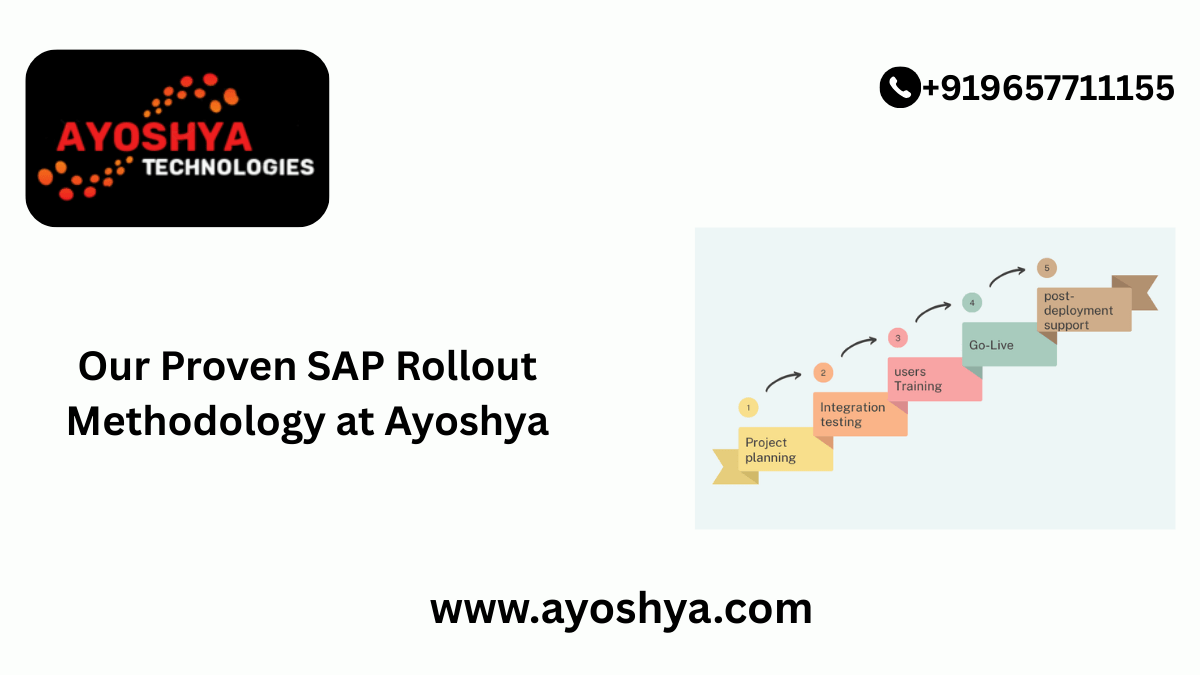
Our Proven SAP Rollout Methodology at Ayoshya: A Beginner’s Guide to Business Transformation

In today’s fast-paced digital economy, businesses are under constant pressure to adapt, scale, and stay competitive. For many organizations, this means turning to powerful enterprise solutions like SAP (Systems, Applications, and Products in Data Processing). But implementing SAP across multiple regions or business units isn’t as simple as flipping a switch — it requires a clear, tested methodology.

At Ayoshya, we’ve developed a proven SAP rollout methodology that not only ensures a smooth transition but also empowers organizations to maximize ROI, streamline operations, and unlock growth. Whether you’re a curious beginner or an employee looking to understand the SAP journey, this guide is for you.

What Is an SAP Rollout?

An SAP rollout refers to the process of deploying SAP software solutions from a central template to new business units, subsidiaries, or countries. Instead of reinventing the wheel for each rollout, organizations use a standardized framework tailored for global operations — and that’s where Ayoshya’s methodology comes into play.

Rollouts can range from implementing SAP in a newly acquired business unit to expanding into global markets with region-specific compliance and localization.

Why Is a Structured Rollout Methodology Important?

Rolling out SAP without a clear roadmap can lead to scope creep, budget overruns, user resistance, and compliance risks. Our structured methodology ensures:

  • Consistency across business units
  • Scalability for future growth
  • Reduced risk of delays or failures
  • High user adoption with localized training
  • Regulatory compliance in each region

By following a proven process, businesses can implement SAP more efficiently and effectively — with predictable outcomes and measurable benefits.

Ayoshya’s Proven SAP Rollout Methodology: Step-by-Step

Here’s how we do it:

1. Global Template Design

We start with a robust global template that includes best practices, standard business processes, and configurations that serve as the foundation for all future rollouts.

Example: A retail company operating in multiple countries uses a single SAP sales process template but localizes tax rules for each country.

2. Fit-Gap Analysis

Each region or business unit is assessed to identify where local needs deviate from the global template. We perform a Fit-Gap analysis to tailor the solution without compromising standardization.

Tip: Get key local stakeholders involved early to reduce friction and increase adoption.

3. Localization and Legal Compliance

Our team ensures that all regional regulations, such as tax laws, reporting standards, and language requirements, are fully integrated into the SAP system.

4. Data Migration & Testing

Legacy data is migrated into SAP using automated tools. Rigorous testing — including unit, integration, and user acceptance testing (UAT) — guarantees a bug-free go-live.

5. User Training and Change Management

We believe that technology adoption begins with people. Ayoshya provides in-depth user training and change management support tailored to each region’s needs and language.

6. Go-Live and Post-Go-Live Support

We provide 24/7 support during go-live and a post-implementation review to ensure everything runs smoothly. Continuous improvement is key.

Real-World Example: A Multinational Success Story

A global manufacturing company approached Ayoshya to roll out SAP S/4HANA across five continents. Using our methodology:

  • We reduced implementation time by 30%.
  • The client achieved consistent financial reporting worldwide.
  • Local teams reported a 95% satisfaction rate due to customized training.

Industry Insights and Trends: Why SAP Rollouts Are More Critical Than Ever

With digital transformation accelerating across industries, SAP rollouts are no longer just IT projects — they’re business transformation initiatives. Here’s why:

  • Cloud-first strategies are pushing companies to adopt SAP S/4HANA and SAP Cloud solutions.
  • Remote work and global collaboration demand unified systems.
  • Data-driven decision-making relies on centralized, real-time data — a core SAP advantage.
  • Compliance is non-negotiable in today’s global regulatory environment.

Practical Tips for Beginners

If you’re new to SAP or enterprise systems, here are some tips to get started:

  • Start with the basics: Learn what SAP does and how it’s used in your industry.
  • Understand your role: Whether you’re in finance, HR, or logistics, SAP likely has a module that touches your work.
  • Join the conversation: Engage with rollout teams, ask questions, and attend training sessions.
  • Explore learning resources: Ayoshya offers beginner to advanced SAP courses tailored for professionals like you.

Final Thoughts: Your Journey Begins Here

At Ayoshya, we believe that knowledge is the first step toward transformation. Our proven SAP rollout methodology doesn’t just implement software — it builds a bridge to efficiency, innovation, and long-term success.

Whether you’re a decision-maker planning your next expansion or an employee eager to upskill, there’s never been a better time to dive into the world of SAP.

👉 Explore our SAP learning resources and take the first step toward mastering enterprise transformation.

YOU MAY BE INTERESTED IN

What is AWS Lambda?A Beginner’s Guide to Serverless Computing in 2025

Java vs. Kotlin: Which One Should You Learn for Backend Development?

Where to Find Your Salesforce Organization ID

How Salesforce Stands Out from Other CRMs

SAP Job Skills for Beginners
SAP

Top 10 Skills You Need to Crack Your First SAP Job

Breaking into the world of SAP (Systems, Applications, and Products in Data Processing) can feel overwhelming—especially if you’re new to the tech or enterprise software industry. But here’s the truth: you don’t need to be a coding genius or have decades of experience to land your first SAP job.

What you do need is the right set of skills, a growth mindset, and a clear understanding of how SAP fits into the modern business world.

In this post, we’ll walk you through the top 10 essential skills you need to build a strong foundation, stand out to recruiters, and confidently take your first step into a high-demand, high-reward SAP career.

🚀 Why Choose SAP as a Career Path?

SAP powers over 75% of the world’s transaction revenue, serving global enterprises across industries. From supply chain management and finance to HR and customer experience, SAP is the digital backbone of countless organizations.

Why is this important for you?
Because SAP professionals are in high demand—and the market is only growing. Whether you’re a fresh graduate, an IT enthusiast, or someone considering a career switch, SAP offers long-term job security, great salary prospects, and global mobility.

🌟 Top 10 Skills to Crack Your First SAP Job

1. Understanding SAP Basics

Before diving into specific modules, learn what SAP is and how it works in real-world businesses. Understand core concepts like:

  • ERP (Enterprise Resource Planning)
  • Modules like SAP FICO (Finance), SAP MM (Materials Management), SAP SD (Sales & Distribution)
  • How different departments integrate through SAP

📘 Pro Tip: Start with SAP’s free open learning platform or beginner YouTube tutorials.

2. Domain Knowledge

Companies look for people who understand industry processes. For example:

  • Finance background? SAP FICO could be a great fit.
  • Logistics experience? SAP MM or WM might suit you.

🎯 The more you understand your industry, the easier it is to apply SAP concepts effectively.

3. Basic SQL and Database Concepts

SAP deals with large datasets. Knowing how data is stored, retrieved, and managed gives you an edge.

  • Learn basic SQL queries
  • Understand data tables, relationships, and joins

💡 You don’t need to be a data scientist—just enough to talk data confidently.

4. Analytical & Problem-Solving Skills

SAP roles often involve troubleshooting real-world issues—missing inventory, mismatched invoices, delayed shipments.

🧠 Cultivate your analytical mindset. Practice breaking problems down into steps, identifying patterns, and thinking in process flows.


5. SAP Navigation and GUI Knowledge

Get hands-on with the SAP GUI (Graphical User Interface). Learn how to:

  • Use transaction codes
  • Navigate between screens
  • Enter and process data

👨‍💻 Use trial versions or SAP Learning Hub for real-time practice.

6. Excel & Data Handling

SAP often integrates with Excel for reporting and data uploads.

📊 Learn:

  • VLOOKUP, pivot tables, and basic formulas
  • How to clean and format large datasets

Mastering Excel = major time-saver and credibility booster.

7. Communication & Documentation

SAP consultants often liaise between tech teams and business users. You’ll need to:

  • Translate tech speak into business language
  • Document requirements and test cases
  • Write clear emails and user guides

📝 Soft skills matter more than you think!

8. Certification or SAP Training

While not mandatory, certification can boost your credibility—especially as a beginner.

Look for:

  • SAP Certified Application Associate courses
  • Free beginner tracks on openSAP or official training partners

🎓 Certification shows commitment and increases your job visibility.

9. Adaptability & Willingness to Learn

SAP evolves constantly with cloud-based solutions like SAP S/4HANA, SAP Fiori, and SAP BTP. Stay curious and embrace lifelong learning.

🧭 Stay updated with blogs, SAP Community forums, webinars, and release notes.

10. Real-World Projects or Internships

Theory is great, but real experience makes you stand out. Try:

  • Freelance or student SAP projects
  • Volunteering with companies using SAP
  • Simulated case studies in online courses

💼 Use platforms like LinkedIn or local job boards to spot SAP internships.

🌍 Real-World Application: What SAP Jobs Look Like

SAP careers aren’t one-size-fits-all. Here are a few entry-level paths you can explore:

RoleDescriptionBest For
SAP End UserHandles day-to-day tasks on SAP (e.g. entering data, running reports)Beginners with industry knowledge
SAP Consultant (Functional)Customizes SAP solutions to meet business needsDomain experts & business analysts
SAP Technical Consultant (ABAP)Handles coding and customizationIT graduates & coders
SAP Support AnalystTroubleshoots issues and supports usersGood communicators with SAP basics

🔑 Final Thoughts: Your SAP Journey Starts Here

Breaking into SAP might seem like a big leap, but remember—every SAP expert started where you are right now. With the right skills, mindset, and a willingness to learn, you can absolutely crack your first SAP job and build a rewarding career in this high-impact industry.

🚀 Ready to go deeper?
Check out our beginner-friendly SAP courses and certifications designed to help you gain hands-on experience, industry recognition, and the confidence to land your dream job.

👉 Explore SAP Training Programs Now

YOU MAY LIKE THIS

Top Skills Required to Excel as a SAP MM Consultant

Building Client Relationships: From Technical Expert to Trusted Advisor

Simplified Business Workplace – Workflow Inbox in SAP R/3

Customizing SAP Modules
SAP

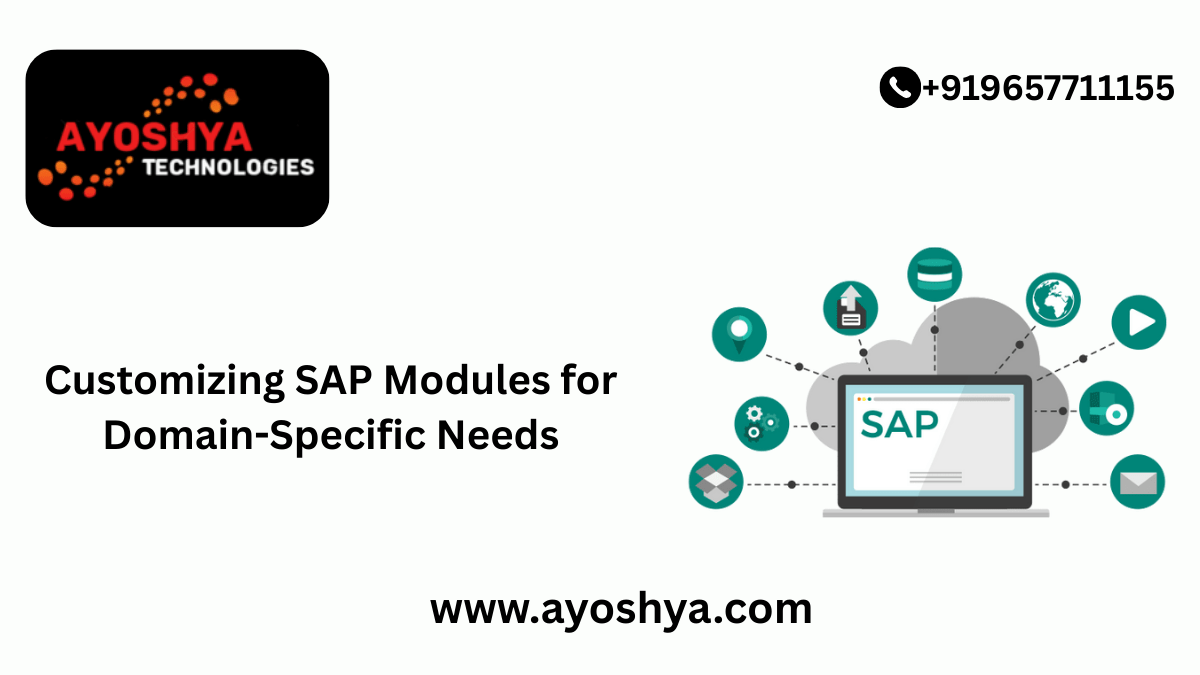
Customizing SAP Modules for Domain-Specific Needs: A Beginner’s Guide to Smarter Business Solutions

In today’s fast-paced digital economy, one-size-fits-all solutions just don’t cut it anymore—especially when it comes to enterprise resource planning (ERP). That’s where SAP customization steps in, offering businesses the flexibility to mold their SAP environment around their unique operational goals.

Whether you’re a company employee looking to optimize business processes or a curious learner eager to understand how global organizations run smoothly behind the scenes, this beginner-friendly guide will help you understand the value of customizing SAP modules for domain-specific needs.

🌟 What Is SAP and Why Does Customization Matter?

SAP (Systems, Applications, and Products in Data Processing) is one of the world’s leading ERP software providers, used by companies to manage everything from supply chains to human resources.

SAP is structured into various modules—like SAP FI (Finance), MM (Materials Management), SD (Sales and Distribution), and HR (Human Resources)—each designed to handle specific business functions. While the standard modules are robust, they aren’t always tailored to meet the specialized requirements of every industry or business.

Here’s where customization becomes key. Customizing SAP modules means modifying or extending functionalities to better align with the company’s specific goals, industry demands, and workflow processes.

💼 Real-World Example: SAP Customization in the Retail Sector

Let’s say you’re working in retail. The standard SAP Sales and Distribution module might help with order processing and shipping, but what if you also need integration with real-time POS (Point of Sale) data or customer loyalty systems?

A customized SAP solution could:

  • Track store-level sales in real time
  • Integrate with mobile apps or customer engagement platforms
  • Automate inventory restocking based on sales patterns

This kind of customization not only increases operational efficiency but also gives companies a competitive edge by responding to market trends faster than ever.

📊 Market Trends & Industry Insights: Why Now?

The demand for SAP customization is growing rapidly, especially as more industries adopt digital transformation strategies. Here are some reasons:

  1. Industry-Specific Requirements
    Healthcare, manufacturing, and financial services all have unique compliance and operational standards that generic SAP modules may not fully address.
  2. Customer-Centric Models
    In sectors like e-commerce and retail, businesses need agile systems that can adapt to personalized customer experiences—something only customization can offer.
  3. Cloud Migration and SAP S/4HANA
    With SAP’s shift to S/4HANA, companies are revisiting their ERP setups, making now the perfect time to rethink and realign their system architectures.

🛠️ Practical Tips for Getting Started with SAP Customization

You don’t need to be a software engineer to begin exploring the benefits of SAP customization. Here are some actionable steps for beginners:

  1. Understand Your Business Process
    Begin by mapping out your current workflows. Identify pain points or bottlenecks in your daily operations.
  2. Start Small
    Begin with a small customization, such as creating a custom report or adding a field to a user screen.
  3. Collaborate with SAP Consultants
    Work with experienced SAP professionals who understand both the technical and business sides of your industry.
  4. Stay Updated
    SAP frequently updates its modules. Staying current means your customizations remain compatible and effective.
  5. Use SAP Fiori for Custom UI
    SAP Fiori is a design system that allows users to create modern, role-based user interfaces—perfect for enhancing usability without altering core functions.

🤝 Who Benefits from SAP Customization?

Customizing SAP modules isn’t just for large corporations. It offers immense value across all business sizes and industries:

  • Manufacturing: Automate production schedules and quality control processes.
  • Healthcare: Integrate electronic health records and compliance tracking.
  • Finance: Tailor financial reporting for international regulations.
  • Logistics: Customize fleet tracking and warehouse management.

🚀 Unlocking Long-Term Success

When done correctly, SAP customization does more than just meet operational needs—it drives long-term value, increases employee productivity, and enhances customer satisfaction.

Businesses that invest in customized SAP systems often see improved ROI, streamlined workflows, and stronger decision-making through better data analytics.

“Customization isn’t about reinventing the wheel. It’s about making sure the wheel fits your vehicle perfectly.”


✅ Ready to Go Further?

SAP is a vast ecosystem, and customization can open the door to better business performance and innovation. If you’re ready to explore advanced customization techniques, check out our range of SAP training courses and resources designed for all levels—from beginner to expert.

Whether you’re an aspiring SAP consultant or a company leader looking to future-proof operations, we’ve got a learning path tailored for you.

📣 Call to Action

👉 Start your SAP customization journey today!
Visit our Advanced SAP Learning Hub for curated courses, hands-on tutorials, and expert advice. Let’s build smarter, faster, and future-ready solutions together.

YOU MAY LIKE THIS

What is AWS Lambda?A Beginner’s Guide to Serverless Computing in 2025

Java vs. Kotlin: Which One Should You Learn for Backend Development?
Where to Find Your Salesforce Organization ID

How Salesforce Stands Out from Other CRMs

SAP real project training
SAP

How Ayoshya Trains SAP Professionals for Real Projects

Are you a beginner looking to break into the world of SAP but unsure where to start? Or maybe you’re part of a company seeking better, hands-on training for your employees? Whether you’re a curious learner or a decision-maker, understanding how Ayoshya trains SAP professionals for real-world projects can help you or your team build a future-proof skill set in today’s competitive digital economy.

In this blog, we’ll walk you through the fundamentals of SAP training, highlight key market trends, and explain how Ayoshya’s unique approach turns theory into practical experience—making professionals job-ready from day one.

What is SAP, and Why Does It Matter?

SAP (Systems, Applications, and Products in Data Processing) is one of the most widely used ERP (Enterprise Resource Planning) tools in the world. From logistics and supply chain to finance and human resources, SAP integrates all business processes into a single system.

Here’s the catch: SAP is not just for IT professionals anymore. Today, businesses need people across departments to understand how to work within SAP environments—creating a huge demand for well-trained SAP professionals.

According to recent industry reports, the global SAP market is expected to grow significantly, with organizations investing heavily in digital transformation. That means one thing: Skilled SAP professionals are in high demand.

The Gap Between SAP Training and Real-World Projects

Many training programs focus on textbook knowledge. You might learn the SAP interface, the module names, or maybe even how to execute a few basic transactions—but when you step into a real company environment, it feels like being thrown into the deep end.

This is where Ayoshya steps in.

Ayoshya’s Hands-On Approach: Real Training for Real Projects

At Ayoshya, we believe that true mastery doesn’t come from theory—it comes from doing the work.

1. Project-Based Learning Environment

Our training is built around real-world business scenarios. Instead of practicing on generic data, learners work on simulated client projects that mimic actual challenges they’ll face in the job market. Whether it’s configuring SAP FICO for a finance department or managing logistics in SAP MM, students get hands-on experience from the very beginning.

2. Mentorship from Industry Experts

Our trainers are not just instructors—they’re SAP consultants with years of industry experience. They guide learners through each project, offering insider tips, best practices, and personal feedback that makes a big difference.

3. End-to-End Process Exposure

We don’t stop at teaching just one module. Our curriculum is designed to expose learners to the end-to-end SAP process—from business requirement gathering to deployment. This makes them versatile and better prepared to contribute in cross-functional roles.

4. Tools and Resources Like the Pros Use

Students learn how to use key tools and utilities used in real corporate SAP environments, such as:

  • Solution Manager
  • SAP GUI & Fiori
  • Business Process Documentation
  • Testing and Validation Tools

Why Beginners and Companies Choose Ayoshya

Whether you’re an individual or part of a company upskilling its workforce, Ayoshya stands out for three simple reasons:

✅ Realistic Training

Every learner is treated like a team member working on live projects—not a passive student.

✅ Industry-Relevant Skills

We track current market trends and update our modules based on what employers are actually looking for.

✅ Confidence Building

We train with interviews and mock assessments that build confidence and help learners land jobs faster.

Practical Tips for Beginners Getting Started with SAP

  1. Start with One Module: Begin with a core area like SAP FICO (Finance), SAP MM (Materials Management), or SAP SD (Sales and Distribution). Understand how it fits into the larger ERP ecosystem.
  2. Learn the Business Process: Don’t just memorize steps—learn why each transaction matters in the business context.
  3. Practice Daily: SAP is a tool best learned through repetition. Make it a habit.
  4. Join a Supportive Community: Engage with peers, join forums, or attend webinars hosted by Ayoshya to stay updated and connected.
  5. Track Job Descriptions: See what skills are trending on job boards and tailor your learning accordingly.

Real-World Example: From Learner to SAP Consultant

Take the story of Priya, a commerce graduate with zero IT background. She joined Ayoshya’s SAP FICO training course. Within three months, she had worked on two mock implementation projects, learned how to conduct client requirement sessions, and prepared real-time reports. She aced her interviews—and today, she works as an SAP Analyst in a multinational company.

“Ayoshya didn’t just teach me SAP—they trained me to work like a consultant from day one.”Priya K., SAP FICO Consultant

What’s Next? Your First Step Toward a Successful SAP Career

The SAP ecosystem is rich with opportunity, but breaking in requires more than just academic knowledge—it requires real experience.

At Ayoshya, we don’t just prepare you to pass a certification. We prepare you for success on the job, in real companies, solving real problems.

🚀 Ready to Start Your Journey?

Explore our beginner-friendly SAP programs, real-time project training, and personalized mentorship options. Whether you’re looking to change careers, upskill, or improve your team’s performance—Ayoshya has the tools and the training to help you succeed.

👉 Visit our course catalog and enroll today!

YOU MAY LIKE THIS

Top Skills Required to Excel as a SAP MM Consultant

Building Client Relationships: From Technical Expert to Trusted Advisor

Simplified Business Workplace – Workflow Inbox in SAP R/3

SAP Project Lifecycle phases from blueprint to go-live
SAP

SAP Project Lifecycle: From Blueprint to Go-Live (A Beginner’s Guide)

Thinking about getting into SAP or just trying to make sense of what happens in an SAP implementation project? You’re not alone. For many company employees and curious minds, the SAP project lifecycle can feel like learning a new language. But here’s the truth: once you understand the phases, you’ll see how powerful—and logical—it all really is.

Whether you’re an aspiring SAP consultant, a company decision-maker, or someone exploring career opportunities in enterprise software, this guide will help you grasp the core structure of the SAP project lifecycle, its importance in today’s business landscape, and how you can position yourself for success.

🌐 What is the SAP Project Lifecycle?

The SAP Project Lifecycle is the structured process companies follow when implementing an SAP system. It starts with planning and designing (Blueprinting) and ends with Go-Live and support. Think of it as the journey of building a smart digital house for a business—where every phase is essential to making the system work seamlessly.

This lifecycle typically follows the ASAP (Accelerated SAP) Methodology, a tried-and-true framework SAP developed to help projects run efficiently.

🚀 Why Should You Care About the SAP Lifecycle?

With digital transformation taking center stage, SAP is a global leader in enterprise resource planning (ERP) software. Over 90% of Forbes Global 2000 companies run SAP. That’s massive.

Whether you’re a business owner, IT specialist, or operations employee, understanding the SAP lifecycle helps you:

  • Collaborate better with project teams
  • Identify risks early
  • Increase the chances of a successful implementation
  • Build a valuable, in-demand skill set

🔍 The 5 Key Phases of the SAP Project Lifecycle

Let’s break down the lifecycle into simple, relatable phases:

1. Project Preparation

This is the groundwork phase. Teams define goals, set expectations, form project teams, and outline the scope and timelines.

Tip: Just like laying the foundation before building a house, the more time you spend here planning, the smoother things will go later.

Activities:

  • Project charter creation
  • Budgeting and resource planning
  • Initial project team onboarding

2. Business Blueprint

Here, consultants and company experts map out “how the business works” and decide “how it should work in SAP.”

Example: A retail company explains its inventory process. The SAP team then designs a blueprint to digitize and optimize that process within the SAP system.

Activities:

  • Conducting workshops with business users
  • Documenting current vs. future processes
  • Creating the Business Blueprint document

3. Realization

This is where the actual configuration and customization of the SAP system happens, based on the blueprint.

Think of this as building the house based on the blueprint you just drew.

Activities:

  • Configuring SAP modules (e.g., Finance, Sales, HR)
  • Developing custom reports or interfaces
  • Unit and integration testing

4. Final Preparation

Before launch, teams perform user training, final tests, and data migration. It’s the dress rehearsal before opening night.

Tip: Train end users well—it’s the key to adoption and success.

Activities:

  • Conducting user acceptance testing (UAT)
  • Master data load and validation
  • Creating user manuals and training documents

5. Go-Live and Support

Launch day! The system goes live, and employees start using SAP for daily tasks. A hypercare period follows to resolve any issues.

Real-World Insight: Many companies set up a “war room” during Go-Live week to offer real-time support and minimize disruptions.

Activities:

  • System cutover and launch
  • Monitoring system performance
  • Providing ongoing support and optimization

📈 Industry Trends: Why SAP Skills Matter Now

  • Global SAP job market is booming, with roles in functional consulting, technical development, analytics, and project management.
  • SAP S/4HANA adoption is growing fast, and many companies are either migrating or planning to.
  • Digital transformation budgets are increasing across industries, and SAP is at the heart of many of these initiatives.

💡 Practical Tips for Beginners

  1. Start Small – Begin by learning one SAP module like SAP FI (Finance) or MM (Materials Management).
  2. Get Hands-On – Use free SAP demo environments or trial accounts to explore the UI and workflows.
  3. Use Real-Life Scenarios – Relate SAP processes to what you already know. For example, managing payroll? That’s SAP HCM.
  4. Stay Updated – Follow SAP blogs, attend webinars, and join forums like SAP Community Network (SCN).
  5. Invest in Learning – A good course can shortcut months of confusion.

🌟 Take Your First Step Toward SAP Success

The SAP project lifecycle might sound complex, but now that you know the roadmap, it’s just a matter of learning the terrain. Whether you’re an employee trying to understand your company’s transformation, or a beginner eyeing a high-growth tech career—SAP is a powerful tool to add to your skillset.

🎯 Ready to go deeper?
Check out our SAP learning courses and certification paths designed specifically for beginners and professionals looking to level up. From hands-on projects to real-world case studies, we’ve got you covered.

🧠 Final Thoughts

Understanding the **SAP Project Lifecycle—from Blueprint to Go-Live—**is more than a tech topic. It’s a window into how world-class businesses run efficiently and scale sustainably.

In today’s economy, being SAP-literate is a smart career and business move. Don’t wait until Go-Live to get started—start now, and build a future-ready you.

What is AWS Lambda?A Beginner’s Guide to Serverless Computing in 2025

Java vs. Kotlin: Which One Should You Learn for Backend Development?

Where to Find Your Salesforce Organization ID

How Salesforce Stands Out from Other CRMs

× How can I help you?