
SAP & Oracle partner and support companies

Loading

Archives 2025

different SAP modules
SAP

Different SAP Modules Explained: Which One Suits You?


  1. Thinking about diving into SAP but feeling overwhelmed by all the modules and acronyms? You’re not alone. SAP (Systems, Applications, and Products in Data Processing) is a powerful tool used by companies worldwide to manage their business processes. The good news? There’s an SAP module for everyone—whether you’re from a finance, HR, logistics, sales, or even programming background.

In this guide, we’ll break down the most popular SAP modules in simple terms, show you how they’re used in real businesses, and help you figure out which one best matches your skills, goals, and passions. Whether you’re a recent graduate, an employee looking to upskill, or someone exploring tech for the first time, this blog will help you make an informed first move.


🌍 Why SAP Modules Matter in Today’s Job Market

Before diving into the specifics, let’s talk about why learning SAP in 2025 is such a smart choice.

SAP is the backbone of thousands of global businesses, from Nike and Coca-Cola to government agencies and startups. As organizations increasingly shift to data-driven, cloud-based operations, SAP remains critical for managing everything from payroll and procurement to manufacturing and customer service.

Industry Trends Driving SAP Demand:

  • Digital transformation across industries
  • Cloud migration with SAP S/4HANA
  • Increased automation in finance, HR, and supply chain
  • Growing demand for SAP-certified professionals in hybrid work environments

The bottom line? SAP isn’t just for tech pros—it’s for everyone looking to grow in a digital-first world.


🧩 The Most Popular SAP Modules (And Who They’re For)

Here’s a breakdown of the most in-demand SAP modules, who should learn them, and where they’re commonly used.

1. SAP FI (Financial Accounting)

Best for: Accountants, finance graduates, and professionals in bookkeeping
Used in: Every industry—from retail and manufacturing to government

SAP FI helps companies manage financial transactions like balance sheets, tax reporting, and bank reconciliations. It’s a go-to for anyone working in finance who wants to level up their career with automation and analytics skills.

🧠 Real-life tip: If you’ve worked with Excel spreadsheets and monthly closings, you’ll love the structure and clarity SAP FI brings.


2. SAP CO (Controlling)

Best for: Cost analysts, finance professionals, and budget planners
Used in: Manufacturing, logistics, project management

This module complements SAP FI and focuses on internal cost reporting and planning. It’s ideal for anyone responsible for budgeting, tracking spending, and optimizing resource use.

📊 Fun fact: Companies use SAP CO to figure out where they’re overspending and how to boost profitability.


3. SAP MM (Materials Management)

Best for: Logistics professionals, supply chain managers, procurement staff
Used in: Retail, manufacturing, warehousing

SAP MM is all about inventory, purchasing, and warehouse management. If you’ve worked in procurement or logistics—or even in a warehouse—you’ll find this module incredibly relevant.

🏭 Real-life scenario: A retail chain uses SAP MM to automate stock replenishment when inventory runs low.


4. SAP SD (Sales and Distribution)

Best for: Sales professionals, order processing specialists, CRM staff
Used in: E-commerce, B2B, and wholesale distribution

SAP SD handles everything from order processing and shipping to billing and customer service. It’s a great fit if you’re coming from a sales background or want to work closely with customers.

🛒 Practical example: Think of an online store processing thousands of orders—SAP SD helps streamline that entire workflow.


5. SAP HCM (Human Capital Management) / SAP SuccessFactors

Best for: HR professionals, recruiters, learning & development specialists
Used in: All industries with large workforces

This module manages everything related to employees—payroll, recruitment, training, benefits, and more. Today, many companies are shifting to SAP SuccessFactors, the cloud-based version.

👥 Relatable tip: If you enjoy working with people, optimizing teams, or handling employee data, this is your zone.


6. SAP PP (Production Planning)

Best for: Manufacturing engineers, operations managers, planners
Used in: Automotive, pharma, and heavy industries

SAP PP helps manage production workflows, scheduling, and resource planning. It’s ideal if you’re into optimizing production lines or reducing bottlenecks.

⚙️ Quick use case: A car company uses SAP PP to plan the daily output of its assembly line while tracking materials.


7. SAP ABAP (Advanced Business Application Programming)

Best for: Software developers, coders, tech-savvy learners
Used in: IT services, system customization, app development

SAP ABAP is the programming language used to build or customize SAP applications. If you’re already comfortable with Java, Python, or C++, you’ll pick up ABAP quickly.

💻 Pro tip: Many companies hire ABAP developers to create custom reports and features not available in standard SAP.


🔎 So… Which SAP Module Is Right for You?

Here’s a quick reference guide:

Your BackgroundRecommended SAP Module
Finance, accountingSAP FI, SAP CO
Procurement, supply chainSAP MM, SAP PP
Sales, CRMSAP SD
HR, people operationsSAP HCM / SuccessFactors
Software developmentSAP ABAP

Still unsure? Start with a free orientation course to explore multiple modules and see what clicks!


💬 Real-World Example: From Admin to SAP Analyst

Let’s meet David. He was working in admin support for a logistics company, dealing with purchase orders and vendor follow-ups. After taking an intro course in SAP MM, he upskilled, got SAP certified, and moved into a higher-paying role as an SAP Procurement Analyst.

Today, he automates workflows he used to manage manually—and enjoys more flexibility and recognition.

🚀 How to Take Your First Step Toward SAP Mastery

Starting with SAP doesn’t require a tech degree. Here’s what to do next:

✅ Explore Beginner-Friendly Courses

Check out our SAP learning portal with certified, beginner-friendly courses across modules.

✅ Get Hands-On Practice

Choose programs that offer access to SAP demo systems so you can apply what you learn in real-time.

✅ Network and Stay Updated

Join online SAP communities, attend webinars, and follow SAP career trends to stay ahead of the curve.

🎯 Final Thoughts

SAP is more than a software—it’s a gateway to career growth, financial independence, and industry relevance in 2025 and beyond. With multiple modules tailored to different interests and skills, there’s an SAP path for everyone.

YOU MAY BE INTERESTED IN

How to Debug any Work Item in SAP Workflow?

Integration with SAP Systems and Workflows

Salesforce vs SAP: Choosing the Champion for Your CRM Needs

SAP career in 2025
SAP

Why SAP Is Still a Top Career Choice in 2025

If you’ve been exploring career paths that offer long-term security, global opportunities, and high earning potential, SAP should be on your radar. Even in 2025, SAP (Systems, Applications, and Products in Data Processing) continues to be a top career choice—not just for IT professionals, but also for business analysts, finance experts, supply chain specialists, and more.

In this post, we’ll break down why SAP is still in demand, what makes it relevant across industries, and how you can take your first steps toward mastering this powerful platform. Whether you’re a fresh graduate, a mid-career professional, or a company employee looking to upskill, this guide will help you understand why SAP is still a smart move.

What Is SAP, Really?

Let’s keep it simple: SAP is a suite of enterprise software solutions that helps businesses manage key processes—like finance, logistics, HR, and supply chain—in a unified system.

Imagine a company running multiple departments: sales, inventory, finance, and customer service. Without SAP, these departments might use different tools that don’t talk to each other. With SAP, everything is connected in real-time, leading to smarter decisions, better productivity, and reduced errors.

SAP is used by over 90% of Fortune 500 companies. That alone should tell you how trusted and integral this platform is.

Why SAP Is Still Thriving in 2025

1. The Rise of Digital Transformation

In the past few years, digital transformation has gone from a buzzword to a necessity. Post-pandemic, companies are racing to adopt cloud-based, AI-driven, and data-centric platforms—and SAP is at the center of this change.

SAP’s cloud solutions like SAP S/4HANA Cloud, SAP Business Technology Platform, and SAP SuccessFactors are driving business innovation worldwide.

2. Industry Versatility

SAP isn’t just for tech companies. It’s widely used in industries like:

  • Manufacturing (for supply chain and production)
  • Retail (for inventory and customer insights)
  • Healthcare (for patient and data management)
  • Finance (for accounting and compliance)
  • Government (for budgeting and resource planning)

This versatility means that learning SAP opens doors to multiple industries, allowing you to choose a field you’re passionate about.

3. Global Demand, Local Relevance

SAP professionals are in demand across the globe—from Germany and the U.S. to India, the UAE, and Australia. With remote work becoming the norm, this career offers both mobility and stability.

SAP also offers local language support and compliance features, making it the go-to choice for multinational operations.

4. High Salaries and Career Growth

SAP roles often come with generous compensation packages. Depending on your expertise and location, SAP consultants can earn anywhere between $70,000 to $150,000+ per year.

Popular SAP roles in 2025 include:

  • SAP Functional Consultant (e.g., SAP FI, MM, SD)
  • SAP Technical Consultant (ABAP, BASIS, HANA)
  • SAP Project Manager
  • SAP Business Analyst

As companies scale their SAP usage, the need for skilled professionals is only growing.

Real-World Applications: A Quick Example

Meet Priya, a mid-level finance manager at a retail company. Her team used Excel for managing financial data, but it led to frequent errors and delays in reporting. After her company adopted SAP S/4HANA Finance, Priya learned the basics of SAP and transitioned into an SAP FICO Consultant role.

Now she not only ensures real-time financial reporting but also earns a higher salary and leads cross-functional projects.

Like Priya, thousands of professionals are upskilling in SAP to future-proof their careers.

Tips to Get Started with SAP (Even If You’re a Beginner)

✅ Choose a Core Module Based on Your Background

  • From finance? Start with SAP FICO
  • From HR? Try SAP SuccessFactors
  • Into logistics or operations? Learn SAP MM or SAP SD

✅ Take Certified Courses

Enroll in structured SAP training programs with hands-on labs and real-world scenarios. Certification from SAP or trusted learning platforms can give your resume a big boost.

✅ Practice on a Demo System

Many courses offer SAP sandbox environments where you can test what you learn. It’s like learning to drive in a safe parking lot before hitting the road.

✅ Join SAP Communities

Sites like SAP Community, LinkedIn groups, and Reddit’s r/SAP are great places to network, ask questions, and stay updated.

SAP for Company Employees: Why Upskilling Internally Pays Off

If you’re already working in a company that uses SAP, you’re sitting on a goldmine of opportunity. Learning SAP internally means:

  • Faster promotions
  • Better cross-department collaboration
  • Strategic insight into business operations
  • Added value to your current role

Many companies even sponsor SAP certifications—so ask your manager or HR department about upskilling programs.

Final Thoughts: SAP Isn’t Going Anywhere

SAP has proven its relevance for over 50 years—and in 2025, it’s only getting stronger. With businesses doubling down on automation, cloud infrastructure, and intelligent enterprise systems, SAP remains the cornerstone of enterprise tech.

Whether you’re a complete beginner or an experienced professional looking to level up, now is the time to invest in your SAP skills.

Take the First Step Toward Your SAP Career Today

Ready to explore a future-proof career path? Visit our [Learning Portal] to browse SAP courses tailored for beginners and experienced learners. Our expert-led programs offer certifications, practical training, and career support to help you succeed.

🎯 Don’t wait for the future—build it with SAP today.

YOU MAY BE INTERESTED IN

Triggering Workflow using Business Transaction Events

The Tech Tamer: Conquering the Monsters of Technical Troubleshooting

SAP Institutes in Ameerpet with Elearning Solutions 

SAP

Playing Sherlock Holmes to detect CONVT_CODEPAGE runtime error mystery

Playing Sherlock Holmes to detect CONVT_CODEPAGE runtime error mystery. As of late we had our unicode redesign alongside Ehp7. One of our group work, which is utilized for transferring mass information from a record in application server to Drain framework, irregularly beginning giving runtime mistake.

Special case : CX_SY_CONVERSION_CODEPAGE

Reason: During change of a text from code page ‘4110’ to code page ‘4102’, one of the accompanying happened:

  • characters were found that can’t be dislpayed in one of the code pages, or
  • the change couldn’t be performed for another explanation

Playing Sherlock Holmes to detect CONVT_CODEPAGE runtime error mystery: The landfill looked like underneath.

4110 to codepage 4102

The landfill occurred at READ explanation.

CONVT_CODEPAGE Conversion error

The issue was bizarre, as it worked for the vast majority of records however unloaded for some not many. That is to say, the code turns out really great for most extreme cases yet couldn’t deal with a few explicit situations. I took a gander at the text record which was stacked to application server minutely. Be that as it may, nothing dubious was apparent to open eyes.

CX_SY_CONVERSION_CODEPAGE

Since a large portion of the records were stacked effectively, I wanted to explore this document more to sort out what was different in this record from rest which stacked accurately. To my best of luck, this example record had only 3 lines, for me to look over. Yet at the same time, I saw as nothing off-base.

Not certain why, might be blaze of Mr Holmes , I considered opening this record utilizing Microsoft Succeed. Opened a clear succeed document. Document – > Open – > txt record.

4

The second I hit ‘Open’, look what I found!! Exceptional characters treasure which I was chasing after. Some way or another, the maker of this document wound up putting a few extraordinary characters (might be Chinese) which our program couldn’t deal with.

Unknown characters

When you realize the underlying driver, finding arrangement was easy decision. Our business expert immediately erased the unique characters and once again ran the work. Blast!! everything stacked effectively.

As an ABAPer, I thought, our program ought to have been savvy to the point of dealing with such straightforward exemption. I, did an ‘F4’ on ‘OPEN DATASET’ catchphrases and saw as the beneath archives. I probably seen it many time, however interestingly I went through each words to comprehend what it implied. I needed to comprehend, how the framework would act when we consolidate the watchwords determined in sap report.

6

Alternative 1.
I tried explicitly specifying UTF-8, but got the same dump.
OPEN DATASET p_file FOR INPUT IN TEXT MODE ENCODING UTF-8 SKIPPING BYTE-ORDER MARK.

Alternative 2.
Then I tried replacing ‘ENCODING DEFAULT’ by ‘ENCODING NON-UNICODE‘.
OPEN DATASET p_file FOR INPUT IN TEXT MODE ENCODING NON-UNICODE.

Bingo.. It worked!!!

8

Troubleshoot screen shows that SAP thinks about the exceptional characters as space. In this way, no issue.
Is this a correct way? I didn’t know and I don’t know till date. Might be some master in this space can toss some light. What I could do best was run Broadened Linguistic structure Check and Code Examiner. Not even one of them gave any advance notice or mistake. Ideally SAP likes it..

Be that as it may, previously being in UNICODE framework, is it great practice to OPEN document utilizing NON-UNICODE encoding? Not certain..

Elective 3.
I additionally took a stab at adding the catchphrase ‘Disregarding Change Mistakes’.
OPEN DATASET p_file FOR Contribution to TEXT MODE ENCODING DEFAULT Disregarding Change Blunders.

The document didn’t dump in that frame of mind also. SAP took care of the change.

Debugging

Investigate screen shows that the extraordinary person is perused as ‘#’ at runtime. Likewise note that the extraordinary person ‘#’ and the Tab separator ‘#’ appears to be identical.

Presently, I was pondering, will the SPLIT AT TAB (separator) explanation give wrong result. Look how it acts in Troubleshoot.

10

Despite the fact that it didn’t dump, however the Overlooking Transformation Blunders would add those undesirable ‘#’, assuming we load the information to Drain Framework.

For the present, I accept Elective 2 is alright, however I’m not completely mindful on the off chance that we ought to utilize it or not.

YOU MAY BE INTERESTED IN

Triggering Workflow using Business Transaction Events

The Tech Tamer: Conquering the Monsters of Technical Troubleshooting

SAP Institutes in Ameerpet with Elearning Solutions 

SAP

Just a key and two clicks for ALV consistency check

ALV consistency check

ALV consistency check. I actually recollect, when one of my leader did a survey of my most memorable deliverable in ALV report; it was over in 1 moment. He came and clicked something and showed the irregularities in my report. Requested that I fix them and get back to him for the audit. I was so astounded. I gave my earnest exertion for over seven days for the turn of events and somebody tracked down issues in it in 1 minute or less. Huh!!!

There we had leads like him who showed us how to fish. My lead believed me should discover that stunt forever. He maintained that me should get the issue settled and ask him, how he sorted it out? I did according to his arrangement. He was glad to share that squeezing Movement + RIGHT Double tap on a region in the ALV Matrix Control in which no table lines are shown (scroll right or base to find the compartment space) would get the job done.

ALV Consistency

Execute your report. Look down or right to discover some unfilled space in the holder. The regions set apart with stars above are your place to keep your cursor. At the same time press SHIFT and Double tap your right mouse button. Check, the irregularities. You wouldn’t believe how canny this basic consistency check is. It would get many issues which we would miss if we somehow managed to physically check the code.

Commonly, that’s what engineer feel assuming the report is shown effectively, they are great. Assuming your report is simply to show, you may be fine. Be that as it may, assuming you have some activity in your report, for example, drill down or exchange call or some other activity. Your report could dump in some situation at run time. One of our report used to dump underway framework for just a few specific obscure cases and we couldn’t reproduce it. SHIFT + Double tap got the job done. It pin-pointed the issue which we believed was great to overlook.

SAPYard ALV Consistency
www.sapyard.com ALV Consistency Check

The above report yield looks great. Be that as it may, see the irregularity. It looks minor yet it isn’t right. The field name is ‘MATNR’ however designer has wrongly named it in the field list as ‘MATERIAL’. Right the field index and your consistency really take a look at passes.

www.sapyard.com ALV Consistency

See one more illustration of the irregularity report.

www.sapyard.com ALV Consistency

Companions, this is a basic stunt and has been referenced in each other ABAP discussion. Yet, when you come for a survey, you find your young weapons having issues in their reports. We advance by sharing. Pass this straightforward data to your young companions and I’m certain, they would see the value in it.

Refreshed April seventh 2016: One more simple choice to check the consistency of an ALV yield. On account of Naimesh for his post.

On the ALV yield report, type “&SOS” at the order region on top.

YOU MAY BE INTERESTED IN

O DATA Complete Overview Blog Series

abap ale idoc rfc step by step

ALE and IDoc in SAP ABAP: A Deep Dive

SAP Fiori

SAP

How I used SAP Adobe Form as my personal PDF editor

Who said SAP is only for Enterprise Resource Planning? (How I used SAP Adobe Form as my personal PDF editor?)

As of late, I had a need to alter a PDF record to address a grammatical mistake in my last name. I was in my office.My office PC and organization has solid restictions. I can’t download and introduce any outer programming. I really want to take help from our office help-work area to introduce any genuine programming. Unfortunately, they didn’t have a PDF manager for us. Also, they didn’t have authorization to introduce free preliminary programming from web.

My necessity was to promptly address my last name. There was an extra ‘H’. Right spelling is Shrestha and it was incorrectly spelled as Shres’H’tha. I would have rather not held up till the night to return home and utilize the PDF supervisor at my own PC. Being an ABAPer, I considered utilizing SAP Adobe Structure. So why pause? I wore my designer’s cap; hit the SAP t-code ‘SFP’ Structure Manufacturer: Section Point.

You can do the underneath steps, regardless of whether you have never worked in Adobe structures. You simply have to have the Adobe LifeCycle Originator introduced in your framework. Fortunately for me, I had it in my framework as a matter of course. Let’s get started on How I used SAP Adobe Form as my personal PDF editor?

Step 1: Go to t-code ‘SFP’ and make the Connection point as displayed beneath. Save it in a vehicle or save as neighborhood object. Actuate it.

SAP Adobe Interface
www.sapyard.com

Step 2: Go to t-code ‘SFP’ once more and make the Structure. Give the Point of interaction name which you made previously. Save it in transport or save as neighborhood object.

4

Important: Go to Layout TabTools menu and Import.

Adobe Form

This is the most import step. Here we want to import the PDF record which we need to alter. I will choose my document which should be altered. The PDF opens up like in PDF supervisor. Would anything that you like to. We can add lines, change textual styles, colors, add logo/pic and so on. My necessity was to address my last name. I tapped on the line/word and eliminated the extra ‘H’ from my last name (as I was doing in ordinary PDF proofreader).

Go to Print Preview Tab, drift your mouse on the PDF and you see the SAVE symbol. Save it at your ideal objective envelope in your framework and open it to see the new perfect mistake free PDF.

Note: This is certainly not an instructional exercise for SAP Adobe Structure. This is only an illustration of a strange use of SAP Adobe Structure to meet a viable need.

Trust you loved this post. Did you at any point apply any such clever or commonsense arrangements? Might you want to partake in the remark area?

Rather than accomplishing basically everything displayed above, simply follow the underneath steps.

Assuming you preferred it, kindly go ahead and it. Much thanks to you for visiting!!

assumption: Adobe LiveCycle is introduced in your machine

1. Browse: %ProgramFiles(x86)%\Adobe\Designer 9.0\ (or Designer 8.0, which ever version you have)
2. Run: FormDesigner.exe
3. Do your things in the PDF editor

10

YOU MAY LIKE THIS

Top Skills Required to Excel as a SAP MM Consultant

Building Client Relationships: From Technical Expert to Trusted Advisor

Simplified Business Workplace – Workflow Inbox in SAP R/3

SAP

Handle the Handle Classes correctly

Handle the Handle Classes correctly

Let’s delve into the Handle the Handle Classes correctly. Gone are the days where we had the freedom to have import boundaries as tables, designs or single fields. SAP has been pushing hard for over 10 years for Oh no. BADI ME_PROCESS_PO_CUST is one of the usually utilized upgrade object in Material Administration module, where many engineers find this BADI challenging to carry out.

What is the difficulty? Handle the Handle Classes correctly
Every one of the strategies in this BADI interface has TYPE REF TO bringing in boundaries.. Oh no!! it is an aggravation..

Kindly track down a functioning code scrap to peruse PO Header, PO Thing and PO Thing Administration information. If it’s not too much trouble, note lt_poitem, ls_items and lr_item are TYPE REF information types.

Strategy if_ex_me_process_po_cust~process_header.


DATA: ls_poheader TYPE mepoheader,
* Table Interface with PO Item External View
lt_poitem TYPE purchase_order_items, " Table IF_PURCHASE_ORDER_ITEM_MM
* Line Interface PO Item External View
ls_items TYPE purchase_order_item, " Line IF_PURCHASE_ORDER_ITEM_MM
lt_esll TYPE mmsrv_esll,
ls_item_data TYPE mepoitem,
* Handle for Item of a Purchasing Document
lr_item TYPE REF TO cl_po_item_handle_mm.

* Get PO Header data in structure
ls_poheader = im_header->get_data( ).

* Ref Table with PO Items
lt_poitem = im_header->get_items( ).

* Loop through interface
LOOP AT lt_poitem INTO ls_items.

* PO Item data in strucrue
ls_item_data = ls_items-item->get_data( ).

* Macro to get item
mmpur_dynamic_cast lr_item ls_items-item. " cl_po_item_handle_mm

* Use method of IF_SERVICES_MM interface to fetch Service data
CALL METHOD lr_item->if_services_mm~get_srv_data
EXPORTING
im_packno = ls_item_data-packno
IMPORTING
ex_esll = lt_esll.

ENDLOOP.

ENDMETHOD.

Allow me to show you how the designs, tables and reference objects see run time.

2
3
4

CL_PO_ITEM_HANDLE_MM is a vital class to deal with MM thing information. Look carefully the way that we have utilized the CL_PO_ITEM_HANDLE_MM class above.
Check the connection points withing the class. We really want to involve them to get more data as and when required.

1

Also you could have to look the beneath handle classes for PO for various situations.

a) CL_PO_HEADER_HANDLE_MM : Handle of a Purchasing Document
b) CL_PO_PARTNER_HANDLE_MM : Purchasing Document Partner
c) CL_PO_SCHEDULE_HANDLE_MM : Schedule Line of a Purchasing Document
d) CL_PO_ACCOUNTING_HANDLE_MM : Purchasing Document Account Assignment
e) CL_PO_ACCOUNTING_HANDLE_FM_MM : Purchasing Document Account Assignment

On the off chance that you thought about the thing mmpur_dynamic_cast is doing in the code bit previously? Really look at the full scale definition underneath. It is casiting &2 information to &1, for example lr_item ?= ls_items-thing.

*---------------------------------------------------------------------*
* MACROS for Dynamic Cast
*---------------------------------------------------------------------*
* use: dynamic_cast reference_target_type reference_source_type
* result: a) cast works (reference_target_type assigned)
* b) cast doesn't work (reference_target_type cleared)
* sy-subrc = 1

DEFINE mmpur_dynamic_cast.
catch system-exceptions move_cast_error = 1.
&1 ?= &2.
endcatch.
if sy-subrc = 1.
clear: &1.
endif.
END-OF-DEFINITION.

Trust with the above hint, you would have the option to bring and save information in this BADI or comparative BADIs where you need to deal with the handle class connection points and techniques. If it’s not too much trouble, drop a note on the off chance that you have any issue or disarray.

YOU MAY LIKE THIS

How to find badi in sap abap ?
Program Exits in Work Item for Workflow
Create and Consume Business Add-in(BAdI) in ABAP

SAP

Trick to adjust the variants

Trick to adjust the variants. Say, your variation was turned out great till yesterday and amazingly, you receive message like beneath for a similar variant.”Variant xxxxxxxxx of program xxxxxxx isn’t the ongoing rendition”. Trick to adjust the variants.

Cause: SAP has previously given the motivation to this issue.After this variation was produced, the report SELECT-Choices or Boundaries were impressively different, for example the sort or length never again match and Boundaries have become SELECT-Choices or the other way around. Or on the other hand a few new fields were added to the choice screen or erased from the determination screen. Making the variation old. Your ABAPer is the offender 🙂

Arrangement: Change or erase the variant.Deleting and reproducing the variation would address the issue. Be that as it may, in the event that you have 100s of variation for a similar report, it would be drawn-out to erase and yet again make.

Better way is to change the variation utilizing program RSVARDOC_610. Go to t-code SE38, enter this program name and execute (F8). In the determination screen, give the program name and variation you need to change. To change all variation then put ‘*’ in the variation name segment. In the event that it isn’t framework variation then keep the SYSVAR area clear.

On the off chance that your SAP framework doesn’t have this program, then search RSVARDOC* and check whether you have any refreshed program for the momentum adaptation of your framework. In the event that you find no other program other than RSVARDOC, utilize this program.

YOU MAY LIKE THIS

Advanced Code Snippet Techniques : Mastering the Craft

IDoc to EDI Mapping: Bridging the Gap

SAP Training Institute

SAP

How to enable table entries maintenance in SE16N (Alternative for &SAP_EDIT and UASE16N)

How to enable table entries maintenance in SE16N (Alternative for &SAP_EDIT and UASE16N)? At this point a large portion of us can’t involve &SAP_EDIT and UASE16N as SAP has confined it from ECC 6.0 EHP6 and UASE16N is now obselete. In any case, every one of the entryways are yet not shut for the designers to add/erase/change sections in SE16N. How to enable table entries maintenance in SE16N (Alternative for &SAP_EDIT and UASE16N).

Go to the table which you need to change in exchange SE16N. Give the table name and channel models (if any). Go to the order field and type ‘/h’ and press enter. Let’s start our Practical on How to enable table entries maintenance in SE16N (Alternative for &SAP_EDIT and UASE16N).

se16n1

This would actuate the typical troubleshooting meeting. Execute (F8) to enter in troubleshooting meeting. Simply make the under two factors as checked (X) and press F8.

GD-SAPEDIT = X
GD-EDIT = X

SE16N2

The table is open for you to mess about. Actually take a look at the supplement, erase and so on buttons. Likewise check the fields are editable at this point.

SE16N3

note: Kindly utilize this stunt sensibly and morally.

YOU MAY LIKE THIS

Finding the best institute for sap course in india for YOU!

Do Amazon hire SAP consultants?

FBl1n tcode in SAP

SAP

Background job not listed in transaction SM50

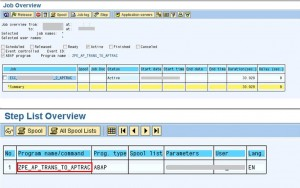
Before going for Background job not listed in transaction SM50. Here and there you might have a foundation work dynamic in your work sign in SM37 which you need to troubleshoot or do some examination at run time. However, shockingly, you probably won’t have the option to see it in Cycle Outline t-code SM50. Let’s get started on background job not listed in transaction SM50.

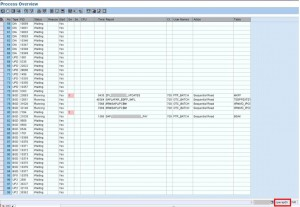
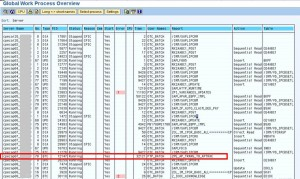
The above work/report isn’t in the SM50 list underneath.

Solution 1:
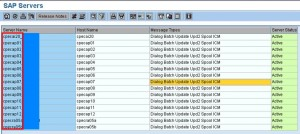
Your scene should have more than one application servers. So you want to investigate different servers other than the server where SM50 is running. Check the above screen shot. The SM50 was running in server 05. The rundown of servers should be visible from t-code SM51.

Check the work which you are chasing after is available in server 07.

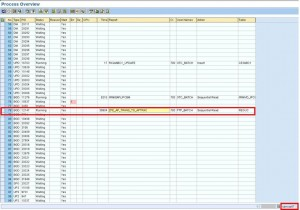
Solution 2: You can likewise see your work in the Worldwide Work Cycle Outline t-code SM66.
Check in the underneath screen, there are occupations from various servers(20/02/04/05/07 and so forth). You can see the positions which was absent in SM50 list.

Tip to debug active job:
You can investigate the completed foundation occupations planned by your own client id by utilizing order JDBG.

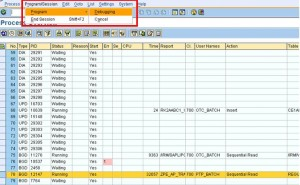
You can investigate the dynamic foundation occupations booked by any client id utilizing t-code SM50/SM51.
Select the work, Program/Meeting >Program->Debugging.

Much thanks for your time!!

YOU MAY LIKE THIS

Automatically Fill Test Data in FM & BAPIs for SE37 – The Lazy Way

SAP ABAP – From Basic to Advanced OData

Objects of Data Dictionary in SAP ABAP

SAP

Transport ABAP Report Variants into a Work Bench Request

A few times it is expected to move the determination variations (made for a report program) starting with one climate then onto the next. We will examine this prerequisite with an example situation. Transport ABAP Report Variants into a Work Bench Request.

Moves toward be followed are: Let’s get started with Transport ABAP Report Variants into a Work Bench Request.

Step 1) Execute exchange SE38 and give the name of the program as:

Step 2) In a similar screen really look at the radio button “Variations” and snap In plain view pushbuttonor follow menu way Goto – > Variations as:

Step 3) In the following screen follow the menu way Utilities – > Transport demand.. as:

Step 4) Execute (F8) the program accordingly shows up in the following screen as:

Step 5) Up on execution a spring up would seem requesting choosing the variations (saved against that report program) to be shipped as:

(We can choose the variations we want and avoid the others)

Stage 6) Up on squeezing Proceed, a next spring up shows up; requesting the vehicle subtleties as:

Here we can pick our own vehicle to move the choice variations for the report program starting with one climate then onto the next.

Trust this data would be helpful to all freshers. 

YOU MAY BE INTERESTED IN

Your Definitive Guide to Becoming a SAP ABAP Developer

Use of data elements in SAP ABAP

Top SAP ABAP Interview Questions (2024)

× How can I help you?