

SAP & Oracle partner and support companies

Loading

object type in sap b1
SAP

object type in sap b1

When working with SAP Business One (SAP B1), it is crucial to have a clear understanding of the concept of object type in SAP B1. Object types are essentially categories that help organize and structure data within the SAP B1 system. They provide a way to classify and differentiate various types of objects such as customers, items, vendors, and transactions.

Each object type is represented by a unique code number, which is assigned to a specific type of object. This code number serves as an identifier and allows for easy referencing and manipulation of data. For example, the object type for customers might be represented by the code number “2,” while the object type for items might be represented by the code number “4.”

By categorizing objects into different types, SAP B1 enables efficient data organization and retrieval. This means that you can quickly search for and access specific types of data without having to sift through a vast amount of unrelated information. It also allows for easier data analysis and reporting, as you can filter and group data based on object types.

Commonly used object types in SAP B1
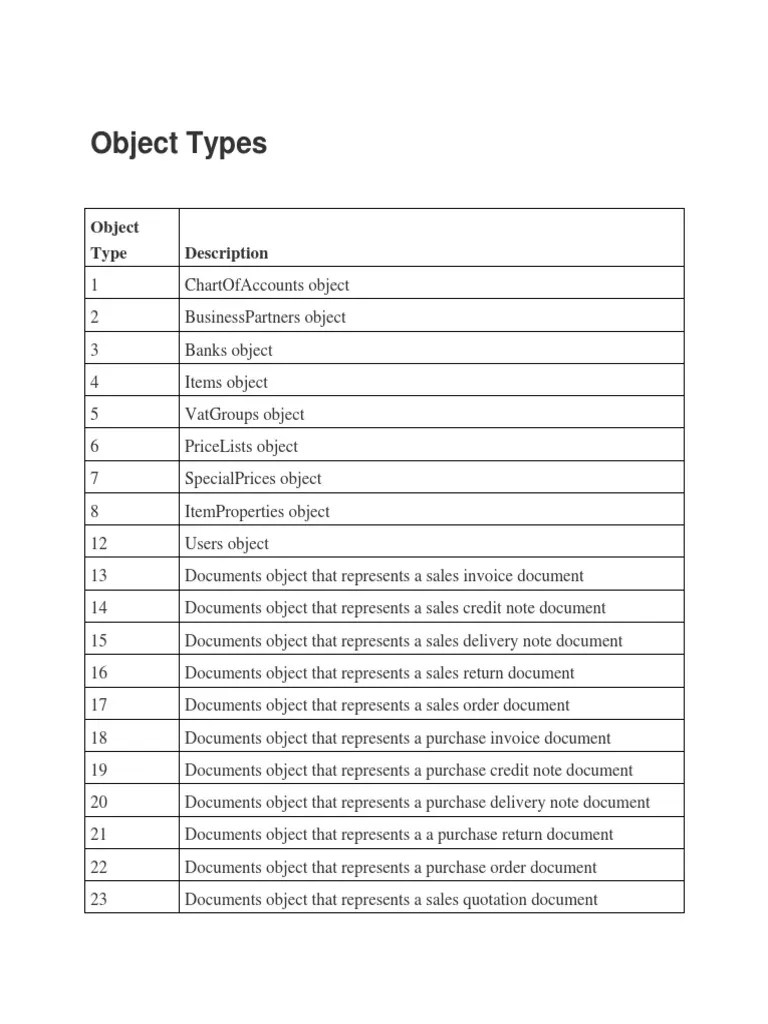
Commonly used object types in SAP B1

SAP B1 provides a wide range of object types that cover various aspects of business operations. Some of the commonly used object types include:

  1. Customers (Object Type 2): This object type represents customer records in SAP B1. It includes information such as customer name, contact details, payment terms, and credit limits.
  2. Items (Object Type 4): Items object type is used to manage inventory in SAP B1. It includes details about the items, such as item codes, descriptions, unit of measure, and pricing information.
  3. Vendors (Object Type 3): Vendors object type is used to store information related to suppliers or vendors. It includes details such as vendor name, contact information, payment terms, and tax information.
  4. Business Partners (Object Type 2 and 3): Business Partners object type is a combination of customers and vendors. It allows you to manage both customer and vendor records within a single object type.
  5. Sales Orders (Object Type 17): Sales Orders object type is used to manage customer orders. It includes details such as order number, customer information, item details, quantities, and pricing.
  6. Purchase Orders (Object Type 22): Purchase Orders object type is used to manage purchase orders from vendors. It includes details such as order number, vendor information, item details, quantities, and pricing.

These are just a few examples of the object types available in SAP B1. Depending on your business requirements, you may also come across other object types specific to certain modules or functionalities.

Oracle Java 11: Unveiling the Power of the Latest Java Release

How to create and configure object types

Creating and configuring object types in SAP B1 requires administrative access and knowledge of the system’s customization tools. Here are the steps to create and configure object types:

  1. Access the SAP B1 Administration module and go to the “Object Types” section.
  2. Click on the “Add” button to create a new object type.
  3. Enter the necessary details, such as the object type name, code, and description.
  4. Specify the object type properties and attributes based on your requirements. This includes defining fields, data types, validation rules, and default values.
  5. Configure the object type relationships and dependencies, if necessary. For example, you can define that a sales order must be linked to a customer and an item.
  6. Save the changes and exit the object type configuration.

Once the object type is created and configured, it becomes available for use within the SAP B1 system. You can start entering data and performing operations specific to that object type.

Object type properties and attributes
Object type properties and attributes

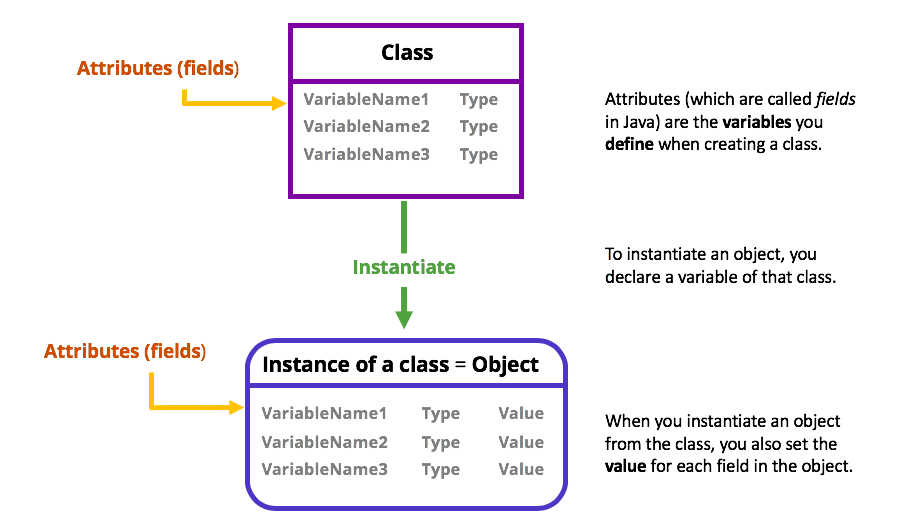
Each object type in SAP B1 has its own set of properties and attributes that define its characteristics and behavior. These properties and attributes determine how the object type interacts with other objects, as well as the data validation rules applied to the object type.

Some of the common properties and attributes of object types include:

  1. Fields: Fields are the data elements that make up an object type. They represent the various attributes or characteristics of the object type. For example, the “Customer Name” field in the customers object type represents the name of the customer.
  2. Data Types: Data types define the format or type of data that can be stored in a field. SAP B1 supports a wide range of data types, including text, numeric, date, and boolean.
  3. Validation Rules: Validation rules ensure that the data entered in a field meets certain criteria. For example, you can set a validation rule to ensure that the customer credit limit does not exceed a certain threshold.
  4. Default Values: Default values are predefined values that are automatically populated in a field when a new record is created. This helps streamline data entry and ensures consistency.
  5. Relationships: Relationships define the associations between different object types. For example, the relationship between a sales order and a customer ensures that each sales order is linked to a specific customer.

Understanding the properties and attributes of object types is crucial for effective data management and customization in SAP B1. It allows you to tailor the system to meet your specific business needs and ensure data integrity.

Object type relationships and dependencies

Object type relationships and dependencies play a vital role in establishing connections and dependencies between different types of objects in SAP B1. These relationships enable the system to maintain data integrity and ensure accurate data retrieval and reporting.

In SAP B1, relationships between object types are defined through key fields. These key fields serve as linking mechanisms, allowing you to establish connections between related objects. For example, a sales order object type may have a key field that links it to the corresponding customer object type.

By defining relationships between object types, you can enforce data dependencies and ensure that certain actions or operations are performed only when specific conditions are met. For example, you can configure SAP B1 to prevent the creation of a sales order without a corresponding customer.

Object type relationships can be categorized into the following types:

  1. One-to-One: In a one-to-one relationship, each instance of one object type is associated with only one instance of another object type. For example, one sales order is linked to one customer.
  2. One-to-Many: In a one-to-many relationship, each instance of one object type can be associated with multiple instances of another object type. For example, one customer can have multiple sales orders.
  3. Many-to-Many: In a many-to-many relationship, multiple instances of one object type can be associated with multiple instances of another object type. For example, multiple customers can have multiple sales orders.

Understanding and configuring object type relationships in SAP B1 allows you to establish data connections and dependencies that mirror your business processes. This ensures accurate data representation and facilitates efficient data retrieval and analysis.

What Does CRM Stand For and What Does it Mean for My Business?

Object type customization and extensions

SAP B1 provides a range of customization options that allow you to tailor the system to meet your specific business needs. Object type customization and extensions enable you to add new fields, modify existing fields, and define additional functionalities within the standard object types.

Customizing object types in SAP B1 can be done through the system’s customization tools, such as the SAP Business One Studio or the User-Defined Fields (UDF) functionality. These tools provide a user-friendly interface for adding, modifying, and removing fields, as well as defining custom behaviors and validations.

Here are some common customization options for object types:

  1. Adding User-Defined Fields (UDFs): User-Defined Fields allow you to add additional fields to an object type to capture specific information that is not included in the standard fields. For example, you can add a UDF to the customer object type to store additional contact information.
  2. Modifying Existing Fields: You can modify the properties of existing fields within an object type to better suit your business requirements. This includes changing the field labels, data types, validation rules, and default values.
  3. Defining Custom Behaviors: Custom behaviors allow you to define specific actions or workflows that are triggered based on certain conditions. For example, you can configure SAP B1 to automatically create a purchase order when a sales order is approved.
  4. Creating Custom Reports: Custom reports enable you to extract and analyze data from object types based on your specific reporting needs. You can design custom reports using SAP B1’s built-in reporting tools or third-party reporting solutions.

Object type customization and extensions empower you to adapt SAP B1 to your unique business processes, ensuring that the system aligns with your specific requirements. This flexibility allows for improved data management, streamlined workflows, and enhanced decision-making capabilities.

Best practices for managing object types in SAP B1

Efficient management of object types in SAP B1 is crucial for maintaining data integrity and optimizing system performance. Here are some best practices to consider when working with object types:

  1. Plan Object Type Structure: Before creating object types, carefully plan and define the structure of each object type. Identify the relevant fields, relationships, and dependencies to ensure accurate data representation and efficient data retrieval.
  2. Follow Naming Conventions: Establish naming conventions for object types, fields, and relationships to ensure consistency and ease of understanding. This helps users navigate the system and locate the required information quickly.
  3. Regularly Review and Update Object Types: Periodically review the existing object types and their configurations to ensure they align with the evolving business requirements. Update or remove any redundant or obsolete object types to streamline data management.
  4. Limit Customizations: While customization is beneficial, excessive customizations can lead to system complexity and maintenance challenges. Limit customizations to only what is necessary to avoid unnecessary complications.
  5. Provide User Training: Train users on the proper usage and understanding of object types in SAP B1. This includes educating them on how to enter data correctly, perform searches, and generate reports based on object types.
  6. Backup and Restore Object Types: Regularly backup object types and related configurations to ensure data security and disaster recovery. In case of any system issues or data loss, having a backup enables quick restoration of object types.

By following these best practices, you can ensure efficient data management, accurate reporting, and seamless integration of object types within your SAP B1 environment.

Release Strategy in SAP: A Comprehensive Guide

Troubleshooting common issues with object types

While SAP B1 provides robust object type management capabilities, you may encounter certain issues or challenges when working with object types. Here are some common issues and troubleshooting tips:

  1. Data Validation Errors: If you encounter data validation errors when entering or modifying object type data, check the validation rules defined for the respective fields. Ensure that the data entered meets the specified criteria.
  2. Relationship Errors: If you encounter errors related to object type relationships, verify the key fields and relationships defined for the respective object types. Ensure that the required dependencies are correctly configured.
  3. Performance Issues: If you experience performance issues when working with object types, review the object type configurations and the volume of data stored. Optimize the configurations and consider archiving or purging old data to improve system performance.
  4. Customization Conflicts: If you have customized object types and encounter conflicts or inconsistencies, review the customizations applied and ensure they are compatible with system upgrades or patches. Reapply any necessary customizations after system updates.
  5. Data Corruption: If you suspect data corruption within an object type, perform a data integrity check using SAP B1’s built-in data validation tools. These tools can identify and repair data inconsistencies or corruption within object types.

If you encounter persistent issues or challenges with object types in SAP B1, it is recommended to seek assistance from your system administrator or SAP support to resolve the problem promptly.

Conclusion and future developments in object types

In conclusion, object types play a crucial role in managing and structuring data within the SAP Business One system. They enable efficient data organization and retrieval by categorizing various types of objects such as customers, items, vendors, and transactions. Understanding the different object types and their functionalities is key to effectively navigating through the vast amount of data stored in SAP B1 and making informed decisions.

In the future, SAP is expected to continue enhancing the capabilities of object types in SAP B1. This includes introducing new object types, improving customization options, and providing more advanced reporting and analytics functionalities. Staying updated with these developments will enable businesses to leverage the full potential of object types in SAP B1 and further optimize their operations.

By following best practices, effectively managing object types, and leveraging customization options, businesses can maximize the benefits of SAP B1’s object-oriented system and ensure efficient data management, streamlined workflows, and informed decision-making. So, whether you are an SAP B1 user or someone interested in learning about object-oriented systems, understanding object types in SAP B1 is crucial for successful utilization of the system’s capabilities.

what is securities transaction tax
SAP

what is securities transaction tax (stt)

What is Security Transaction Tax?

STT or Security Transaction Duty is a kind of expense that is charged on the buy and offer of protections like stocks, common assets, and subsidiaries on perceived stock trades in India. The STT is an immediate duty, implying that it is collected straightforwardly on the exchange worth of protections. This implies that the STT is an extra expense that purchasers and merchants need to bear, making the exchange more costly. You have understood what is securities transaction tax.

The STT is administered by the Protections Exchange Expense Act, which records the different kinds of protections exchanges that are available. These incorporate value, subsidiaries, and unit of value arranged common assets. STT likewise applies to unlisted offers offered under a proposal available to be purchased to the public that is in this way recorded on stock trades.

The pace of STT is chosen by the public authority and can be altered occasionally. The purchaser or dealer of protections is answerable for paying the STT, contingent upon the worth of the exchange.

Concur Expense Management: A Comprehensive Guide

The STT is gathered by perceived stock trades or recommended people, for example, common assets or lead dealer investors, who should pay it to the public authority at the very latest the seventh of the next month. Assuming that they neglect to gather the expenses, they should in any case release an identical measure of assessment to the credit of the Focal Government inside the seventh of the next month. Inability to gather or dispatch the duty can bring about interest and punishments

How does Securities Transaction Tax work?

Now that we have covered what is STT, let’s see how it works.

As referenced over, the Protections Exchange Expense (STT) is a duty imposed on the buy and offer of protections like stocks, common assets, and subsidiaries in India. The STT was acquainted in India in 2004 with supplant the previous procedure for forcing an expense on protections exchanges called the “stamp obligation.”

The STT is imposed on both the purchaser and the merchant of protections, with the rate changing relying upon the kind of safety and whether the exchange is a buy or deal. For instance, the STT rate for trading value shares is at present 0.1% of the exchange esteem, while the rate for trading value situated common assets is 0.001%.

The STT is deducted and paid by the stock trade for the benefit of the purchaser and merchant, making it more straightforward for financial backers to conform to the expense necessities. The expense is likewise pertinent to exchanges that happen outside the stock trade, for example, those directed through off-market exchanges or unfamiliar trades.

The principal objective of the STT is to produce income for the public authority, however it likewise fills in as a disincentive for speculative exchanging as it builds the expense of exchanging. A few specialists contend that the STT can hurt market liquidity, as it might deter financial backers from exchanging specific protections or lead to an expansion in the bid-ask spread.

Generally, the Protections Exchange Duty is a significant wellspring of income for the public authority and controls the protections market in India.

ERP for FINANCIAL & ACCOUNTING MANAGEMENT

Effect of Protections Exchange Assessment on Financial backers
Now that we’ve covered STT significance, we should figure out its effect on financial backers.

The Securities Transaction Tax (STT) can fundamentally affect financial backers in India, as it is exacted on the buy and offer of protections like stocks, common assets, and subsidiaries. Here are a portion of the likely impacts of the STT on financial backers:

  1. Expanded exchange costs: The STT builds the expense of exchanging, which can diminish the profits for financial backers, particularly for the people who participate in regular exchanging or momentary speculations. This can make it hard for financial backers to procure a benefit and may influence their speculation choices.
  2. Decreased liquidity: The STT can lessen liquidity in the market as certain financial backers might decide to avoid exchanging protections that draw in higher STT rates. This can affect the general exchanging volumes and may influence the market effectiveness.
  3. Influence on venture system: The STT can affect the speculation technique of financial backers as they might decide to zero in on protections that draw in lower STT rates or shift their concentration to long haul speculations. This can influence the general market elements and lead to a lopsided dissemination of venture capital.
  4. Contortion in estimating: The STT can mutilate the evaluating of protections, as financial backers might pay less for protections that draw in higher STT rates. This can affect the general valuation of protections and lead to advertise failures.

In general, the effect of the STT on financial backers relies upon different variables, including the kind of safety being exchanged, the recurrence of exchanging, and the venture procedure of the financial backer. While the STT creates income for the public authority, it is critical to painstakingly consider its effect on financial backers and the general protections market.

Applicability of STT

Equity Transactions

STT is predominantly applicable to equity transactions, encompassing both delivery-based and intraday trades. Investors engaging in buying or selling equity shares need to be cognizant of the STT implications.

Derivatives Trading

For those involved in derivatives trading, STT is levied on the sale of an option in the securities market. Understanding the specific scenarios where STT applies in derivatives is crucial for accurate financial planning.

Calculating STT: A Deep Dive

The calculation of STT involves intricate formulas and considerations, directly impacting the overall transaction cost. Let’s break down the calculation process for a clearer understanding.

Equity Delivery Transactions

In equity delivery transactions, STT is calculated as a percentage of the total transaction value. The formula is straightforward:

STT=Transaction Value×STT RateSTT=Transaction Value×STT Rate

Options Trading

Options trading introduces a nuanced calculation. STT is applied only to the sale of an option contract and is computed as follows:

STT=Transaction Value×STT RateSTT=Transaction Value×STT Rate

Implications of STT on Investors

Understanding the impact of STT on investment returns is crucial. Incorporating STT into the overall cost structure enables investors to make well-informed decisions aligned with their financial goals.

When was STT introduced in India?

The Finance Act of 2004 introduced the Securities Transaction Tax (STT) as an efficient and clean method of collecting taxes on financial market transactions.

How is STT calculated?

The Securities Transaction Tax (STT) in India is calculated based on the type of security being traded and the type of transaction being carried out. The rates of STT are different for different types of securities and transactions, and they are expressed as a percentage of the transaction value. 

Which transactions are subject to STT?

In India, the Securities Transaction Tax (STT) is levied on a variety of transactions involving securities such as stocks, mutual funds, and derivatives. 

How is STT different from other taxes like capital gains tax?

The Securities Transaction Tax (STT) is a direct tax on securities transactions levied at the time of the transaction, while the Capital Gains Tax (CGT) is a tax on the profit arising from the sale of a capital asset and is levied at the time of the sale.

What are the consequences of non-payment of STT?

The consequences of non-payment of Securities Transaction Tax (STT) can include penalties, interest, and legal action by the tax authorities.

Types of Data Security
SAP

7 Types of Data Security

Introduction

In the dynamic landscape of Types of Data Security, staying ahead is not just a strategy; it’s a necessity. We, at Ayoshya Technology, present a comprehensive exploration of cutting-edge data security technologies that go beyond the conventional. Our focus is on getting you familiar with the top 7 types of data security.

A Comprehensive Guide to Oracle Security

Top 7 Types of Data Security Technology

1. Encryption Technology

Encryption stands as the sentinel of data protection. Our guide navigates through the intricacies of encryption algorithms, ensuring a robust shield against unauthorized access. The mermaid syntax diagram below illustrates the encryption process:

Here’s how encryption works: 

  • An algorithm culation changes over the first text, known as plaintext, into an elective structure known as ciphertext.
  • Just approved individuals who have the key can unravel the code and access the first plaintext data.
Types of Data Security - Encryption Technology

Some encryption procedures include:

  • Elliptic curve cryptography
  • Symmetric key encryption
  • Network-Bound Disk Encryption (NBDE)

Most present day encryption techniques, combined with great passwords, are impervious to beast force assaults. Be that as it may, quantum processing could be a danger to encryption security later on.

Some potential next big things in encryption technology include: 

  • Quantum Cryptography
  • Homomorphic Encryption
  • Biometric Encryption
  • Wearable Two-Factor Authentication
  • Peer-To-Peer Encryption
  • Widespread End-To-End Encryption
  • Search Engines With Free VPNs
  • Honey Encryption

Security Risks of Increased Mobility With S/4 Hana

2. Firewall Solutions

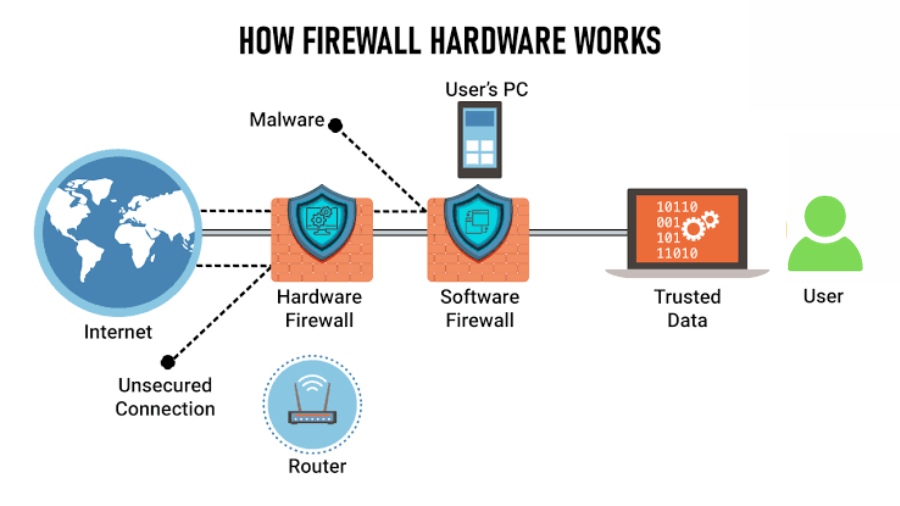
Firewalls are the guardians at the gate. Our guide dissects advanced firewall solutions, providing insights into next-gen firewalls, intrusion detection systems, and network segmentation. Learn how to construct an impenetrable defense against cyber threats.

A firewall is a PC network security framework that confines web traffic in to, out of, or inside a confidential organization. This product or committed equipment programming unit capabilities by specifically obstructing or permitting information parcels

How Firewall Solutions Works

3. Intrusion Detection and Prevention Systems (IDPS)

The eyes and ears of your security infrastructure. We delve into the realm of IDPS, unraveling the intricacies of anomaly detection, signature-based detection, and real-time threat response. Stay ahead in the cat-and-mouse game of cyber threats.

IDPS can: 

  • Monitor network traffic
  • Detect suspicious activity
  • Alert users of suspicious activity
  • Prevent intrusions by blocking or stopping activity

IDPS can detect signs of malicious activity, such as: 

  • Hacking attempts
  • Malware infections
  • Data breaches
  • Unauthorized access
  • Misuse
  • Modification
  • Denial of a computer or network

CRUD Operations in O DATA

4. Secure Access Control Measures

Controlling access with precision. Our guide explores biometric authentication, multi-factor authentication, and role-based access control. Implement a robust access control strategy to ensure only authorized personnel have entry.

Secure Access Control Measures

Here are some secure access control measures: 

  • Authentication: Ensures that only the right people are granted access
  • Encryption: Makes data unreadable without the right decryption keys
  • Security awareness training: Teaches staff about potential threats, best practices, and their role in security
  • Access control policy: Provides clear direction for security guards and clients
  • Network security: Prevents unauthorized users from accessing storage systems and data
  • Email security: Protects email accounts and content from external threats
  • Mandatory Access Control (MAC)
  • Role-Based Access Control (RBAC)
  • Discretionary Access Control (DAC)
  • Rule-Based Access Control (RBAC or RB-RBAC)

5. Data Loss Prevention (DLP) Technologies

Preventing leaks before they happen. We provide an in-depth understanding of DLP technologies, from content discovery to policy enforcement. Safeguard your sensitive data with proactive measures.

DLP technologies utilize a mix of standard network protection gauges and high level arrangements. Standard measures incorporate

Firewalls
Endpoint protection tools
Monitoring services
Antivirus software

Advanced solutions include:
Artificial intelligence (AI)
Machine learning (ML)
Automation

Exploring Fiori OData Integration

6. Endpoint Security Solutions

Securing the last line of defense. Our guide covers endpoint protection platforms, antivirus solutions, and advanced endpoint detection. Ensure a comprehensive defense strategy from every device.

Endpoint Security Solutions

Features of endpoint security solutions:

  • Centralized management
  • Cloud integration
  • Identity and access management (IAM)
  • Automated threat detection and remediation
  • User and entity behavior analytics (UEBA)

7. Security Information and Event Management (SIEM) Systems

The nerve center of cybersecurity. We unravel the functionalities of SIEM systems, from log collection to real-time analysis. Empower your security team with actionable insights for swift response.

SIEM technology gathers and examines security occasions and different information sources in close to ongoing and all things considered. It distinguishes movement that veers off from the standard and makes a proper move. SIEM arrangements permit associations to:

  • Recreate past incidents
  • Analyze new incidents
  • Investigate suspicious activity
  • Implement more effective security processes
  • Respond to threats faster

Some things to consider when buying SIEM systems include: 

  • Personal data discovery
  • Data inventory
  • Privacy program automation
  • Data processing inventory
  • Data subject request
  • Assessment automation
  • Third party management
  • Risk management
  • Consent and preference management

Advancing Beyond Conventional Wisdom

Integrating Technologies for a Unified Defense

The future of data security lies in the integration of technologies. Our guide explores how combining encryption, firewall solutions, and SIEM systems forms a unified defense. Leverage the strength of each technology for a cohesive security strategy.

Conclusion

In conclusion, our guide transcends the existing narrative on data security technologies. It equips organizations with actionable insights, advanced strategies, and a holistic approach to safeguarding information. Stay ahead in the data security game—implement the best practices outlined in our comprehensive guide. Elevate your data security posture with precision and confidence.

Common FAQs

What is the main function of encryption technology?
  • To protect data from unauthorized access.
What are some potential next big things in encryption technology?
  • Quantum Cryptography, Homomorphic Encryption, Biometric Encryption, Wearable Two-Factor Authentication, Peer-To-Peer Encryption, Universal End-To-End Encryption, Search Engines With Free VPNs, Honey Encryption.
What is the purpose of a firewall?
  • To restrict internet traffic to and from a private network.
What are some of the malicious activities that the IDPS can detect?
  • Hacking attempts, malware infections, data breaches, unauthorized access.
What is the role of access control measures in data security?
  • To ensure that only authorized personnel have entry to sensitive data.
SAP HANA Cloud
SAP

SAP HANA Cloud: A Comprehensive GuidE

Introduction

In the ever-evolving landscape of cloud computing, SAP HANA Cloud stands as a beacon of innovation and efficiency. At Ayoshya Technology, we understand the critical role this platform plays in transforming businesses. In this comprehensive guide, we delve into the intricacies of HANA Cloud, offering insights that go beyond the surface-level information provided by other sources.

Understanding SAP HANA Cloud

What Sets SAP HANA Cloud Apart?

It isn’t just a database; it’s a dynamic, integrated solution designed for the modern enterprise. Its in-memory computing capabilities empower organizations to process vast amounts of data in real-time, fostering unparalleled agility and decision-making.

Key Features at a Glance

  1. Scalability: It scales effortlessly to meet the growing needs of your business, ensuring performance remains optimal at all times.
  2. Multi-Cloud Flexibility: Harness the power of multi-cloud environments seamlessly, allowing for strategic flexibility in your IT infrastructure.
  3. Advanced Analytics: Dive into advanced analytics with ease, thanks to the platform’s native integration of machine learning and predictive analytics.

Getting Started with SAP HANA Cloud

System Requirements and Installation

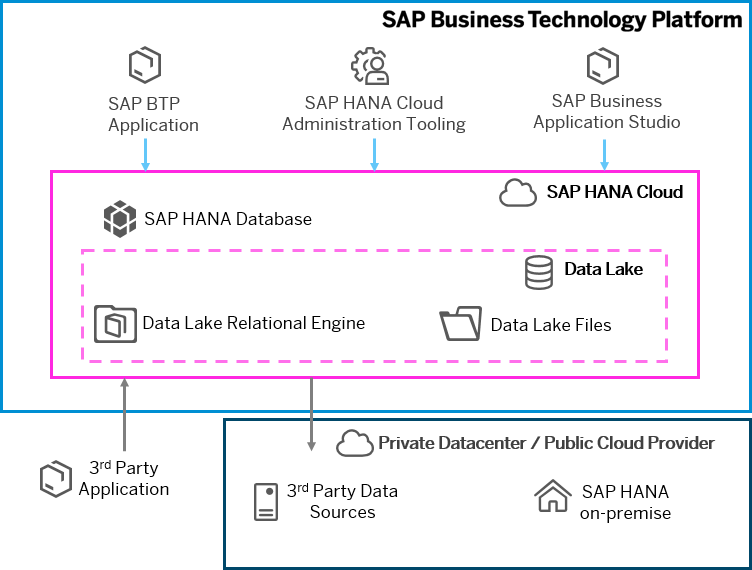
Before embarking on your HANA Cloud journey, it’s crucial to understand the system requirements. Ensure your infrastructure aligns with the specifications outlined in the official documentation.

mermaidCopy code

SAP Business technolgy platform

Advanced Configurations and Best Practices

Optimizing Performance

Achieving peak performance with HANA Cloud requires more than a standard setup. Dive into our recommended configurations and best practices to unlock the full potential of your system.

Security Measures for a Robust Implementation

Security is paramount in the digital age. Explore our detailed guide on implementing robust security measures within HANA Cloud, safeguarding your data and ensuring compliance with industry standards.

SAP HANA vs SAP S/4 HANA

Troubleshooting Common Issues

Even the most sophisticated systems encounter challenges. Arm yourself with the knowledge to troubleshoot common issues swiftly, minimizing downtime and optimizing your HANA Cloud experience.

Conclusion

As you embark on your SAP HANA Cloud journey, [Your Company Name] is your trusted companion, providing not just information but actionable insights. Our commitment is to empower businesses through unparalleled expertise, ensuring your success in the dynamic realm of HANA Cloud.

Discover the true potential of SAP HANA Cloud with Ayoshya Technology. Elevate your business to new heights—efficiently, securely, and with unparalleled agility.

Frequently Asked Questions

  1. What sets SAP HANA Cloud apart from other cloud databases? HANA Cloud distinguishes itself through its in-memory computing capabilities, enabling real-time data processing. Unlike traditional databases, it goes beyond storage, offering a dynamic, integrated solution for the modern enterprise.
  2. How scalable is HANA Cloud, and what benefits does scalability bring to businesses? HANA Cloud boasts effortless scalability, ensuring optimal performance as your business grows. This scalability translates into cost-effectiveness, agility, and the ability to handle increasing data volumes without compromising efficiency.
  3. Can it seamlessly integrate with multi-cloud environments? Absolutely. HANA Cloud is designed with multi-cloud flexibility in mind. This feature allows businesses to strategically leverage different cloud providers, optimizing their IT infrastructure for enhanced efficiency and resilience.
  4. What advanced analytics capabilities does it offer? HANA Cloud goes beyond basic analytics, integrating machine learning and predictive analytics natively. This empowers organizations to glean actionable insights from their data, facilitating informed decision-making and a competitive edge in the market.
  5. What are the key security measures to implement when using SAP HANA Cloud? Security is a top priority withHANA Cloud. Our guide emphasizes robust security measures to safeguard your data. From access controls to encryption protocols, we outline best practices to ensure compliance with industry standards and protect your business from potential threats.
SAP BTP Launches Low Code Experience
SAP

SAP BTP Launches Low Code Experience with SAP Build

SAP BTP introduces low code experience with SAP Build | Highlights from SAP TechEd

SAP BTP Launches Low Code Experience with SAP Build - Highlights from SAP TechEd
  • SAP BTP was created to address technical challenges in application development, such as integrating with S4HANA and automating processes.
  • SAP Build is a unified development environment that brings together previously disconnected products and includes solutions like process automation and powerful new functionalities.

SAP BTP ( Business Technology Platform)

SAP BTP offers a unified developer experience for building powerful applications from SAP TechEd

  • SAP BTP provides a beautiful user experience and powerful back-end capabilities.
  • It seamlessly integrates with workflows, RPA Bots, low code, and all other functionalities in S4.

SAP Business Technology Platform: Empowering Digital Transformation

SAP BTP offers cloud-ready extensions for S/4HANA

  • Partnership with Apple to provide best-in-class iOS tool sets
  • Focus on building powerful and compelling business apps that users love

Understanding SAP Intelligent Robotic Process Automation (RPA)

SAP Integration Suite is the logical choice for powerful and versatile integration solution from SAP TechEd

  • SAP Integration Suite supports a large variety of use cases such as process integration, event-based integration, and API management
  • You can find predefined integrations at api.sap.com to meet your integration needs across SAP and non-SAP systems

A Comprehensive Guide to SAP Analytics Cloud (SAC) in SAP

SAP BTP offering new capabilities to implement data driven strategy

  • Hana Cloud now supports mongodb’s wire protocol
  • Flexible core memory ratio for reduced total cost of ownership

BTP offers extended planning and analytics with a data marketplace

  • The data marketplace provides access to over 3,000 data products
  • SAP Analytics Cloud allows you to model planning models and create intelligent data apps

BTP offers endless possibilities for AI integration and overall business innovation.

  • SAP showcased over 130 AI scenarios for end-to-end business processes.
  • They announced new features in SAP Cloud and demonstrated the value of the SAP Integration Suite, unified story, and SAP Analytics Cloud. They also discussed the new class of enterprise intelligent data apps with Hana Cloud and major improvements in planning capabilities. Additionally, they expanded their learning offerings.

BTP is the choice for all technology related in an SAP context.

  • It is the preferred choice for SAP systems and SAP data.
  • It also works for non-SAP to non-SAP integrations and standalone applications.

Conclusion: SAP Business Technology Platform (BTP) is a comprehensive solution addressing technical challenges in application development. With tools like SAP Build, it provides a unified development environment, seamless integration with various functionalities, and cloud-ready extensions for S/4HANA. The platform emphasizes a beautiful user experience, strong back-end capabilities, and a focus on building compelling business apps. From low code to AI integration, It offers endless possibilities for innovation, showcasing over 130 AI scenarios for end-to-end business processes.

FAQs:

  1. What is SAP BTP’s role in application development?
    • BTP addresses technical challenges by providing a unified developer experience, integrating with S4HANA, and offering a range of tools like SAP Build for low code development.
  2. How does SAP BTP support integration with non-SAP systems?
    • It is not limited to SAP systems; it seamlessly integrates with non-SAP systems, supporting non-SAP to non-SAP integrations and standalone applications.
  3. What are the key features of SAP Integration Suite?
    • SAP Integration Suite offers powerful and versatile integration solutions, supporting use cases such as process integration, event-based integration, and API management.
  4. What does the data marketplace in BTP offer?
    • The data marketplace in BTP provides access to over 3,000 data products, supporting extended planning and analytics capabilities.

  5. How does SAP BTP contribute to AI innovation?
    • It offers endless possibilities for AI integration, showcasing over 130 AI scenarios for end-to-end business processes, demonstrating a commitment to overall business innovation.
Open Data Protocol
SAP

Open Data Protocol

Open Data Protocol (OData) is an information access convention at first characterized by Microsoft. Forms 1.0, 2.0, and 3.0 are delivered under the Microsoft Open Particular Commitment. Form 4.0 is being normalized at OASIS,[1] and was delivered in Spring 2014.[2]

The convention was intended to give standard Muck admittance to an information source through a site. It is like JDBC and ODBC despite the fact that OData isn’t restricted to SQL information bases.

What is OData?

OData stands as a key protocol for building and consuming RESTful APIs. In SAP, it serves as a bridge, enabling seamless communication between different systems and applications.

Key Advantages of OData

  1. Interoperability: OData acts as a universal language, promoting seamless interoperability across diverse systems and platforms.
  2. Simplicity in Data Access: Through a RESTful API model, OData simplifies data access, ensuring a streamlined and user-friendly experience.

Open Data Protocol Architecture

OData is based on the AtomPub convention and JSON where the Particle structure is the envelope that contains the information got back from each Open Data Protocol . An OData demand utilizes theREST model for all solicitations. Each REST order is a POST, GET, PUT, Fix, or Erase http demand (planning to Muck) where the particulars of the order are in the url.

  • GET: Get an assortment of elements (as a feed report) or a solitary entity(as a section record).
  • POST: Make another element from a passage record.
  • PUT: Update a current element with a passage record.
  • PATCH: Update a current element with an incomplete section record.
  • DELETE: Eliminate an element.

Any stage that offers help for HTTP and XML is sufficient to frame HTTP solicitations to associate with AtomPub. The OData particular characterizes how AtomPub is utilized to normalize a composed, asset situated Muck interface for controlling information sources.

Typical Workflow When Creating a New User Interface:-

For all program based application information needs to summon from secure

Open Data Protocol - SAP Business Suite

Service Builder – Data Model:-

Create / Model OData  

Artifacts —

  • Entity Types 
  • Entity Sets     
  • Complex Types
  • Associations
  • Association Sets
  • Function Imports    
Service Builder – Data Model Protocol

Can make relationship on guideline to subordinate element with the key field (ex : cardinality 0 :M keep up with )

Open Data Protocol

Generation of runtime objects :-

After age of odata antiques it will make 4 class (1 model supplier class and 2 information supplier class) and 2 assistance (specialized model and administration name) .

SAP Netweaver gateway service builder
Service builder - O data protocol

Service implementation – CRUD methods:-

Direct route into the CRUD –

Methods–

  • Create
  • Read and Query
  • Update
  • Delete

On assistance execution Node you can carry out your business rationale . (Open Data Protocol)

ABAP Workbench

Service Builder – runtime artifacts:-

ABAP classes for

  • Model definition
  • Service implementation

Service registration in the backend

Administration enlistment in the backend. You really want to keep up with framework moniker In exchange SPRO open theSAP Reference IMG and explore to Drain NetWeaver Entryway Administration Enablement – Backend OData Channel – Administration Advancement for Backend OData Channel-Keep up with Models and Keep up with Administrations.

Service Maintenance

/iwfnd/maint_service :-

Can call your administration straightforwardly on program and furthermore on passage client

System Aliases

Administration archive in the program and element types in

SEGW

There are 5 strategy you can use according to your business rationale and execute .

As you see in underneath result relationship on ID . for more data on Odata joins

you can open your administration on program

http://<host>:<port>/sap/opu/odata/sap/<Service Name >

HTTP Response

Synopsis – Exchanges you ought to be aware as an developer:-

Gateway Node ActivationSICFIncorporates different capabilities for checking, examination, and investigating in the ICF climate. You can likewise utilize the focal Application Server examination capabilities to recognize issues like execution issues in ICF applications.
Gateway Client/IWFND/GW_CLIENTSAP NetWeaver Gateway is an amazing asset that improves the current Mistake Log. Likewise permits you to mimic assistance execution. (Like instruments like RESTClient for Firefox)
Error Log/IWFND/ERROR_LOGThe Blunder Log for SAP NetWeaver Gateway center frameworks is a useful expansion to the current Application Log Watcher and gives itemized setting data about mistakes that have happened at runtime.
Gateway Service BuilderSEGWA totally new plan time exchange, which gives engineers a simple to-utilize set of devices for making administrations. It has been imagined for the code-based OData Channel and supports engineers all through the whole improvement life pattern of a help.
Register/Test Backend SystemSM59Your backend framework must be enrolled as a SAP framework nom de plume in the SAP NetWeaver Door Execution Guide (IMG) on your SAP NetWeaver Entryway framework. Moreover, a RFC objective must be characterized in exchange SM59.

Gateway Service Builder – development flow in detail

this picture reference : CD204 show Teched @ 2012

Service Generation

You may be interested in:

SAP vs. Other ERP Systems

What replaced SAP NetWeaver?

Power of Oracle ETL: A Comprehensive Guide

Transactional Data
SAP

Understanding Transactional Data

In the realm of data processing, understanding transactional data is paramount for businesses seeking operational efficiency and strategic decision-making. Today, we delve into the intricacies of transactional data, unraveling its significance and practical applications.

What is Transactional Data?

Transactional data, with regards to information the board, is the data recorded from exchanges.

An exchange, in this unique situation, is a grouping of data trade and related work, (for example, data set refreshing) that is treated as a unit for the reasons for fulfilling a solicitation. Transactional data can be monetary, calculated or business related, including everything from a buy request to delivery status to worker hours worked to protection expenses and claims.

As a piece of value-based records, conditional information is gathered with related ace information and reference information. Transactional data records a period and pertinent reference information required for a specific exchange record.

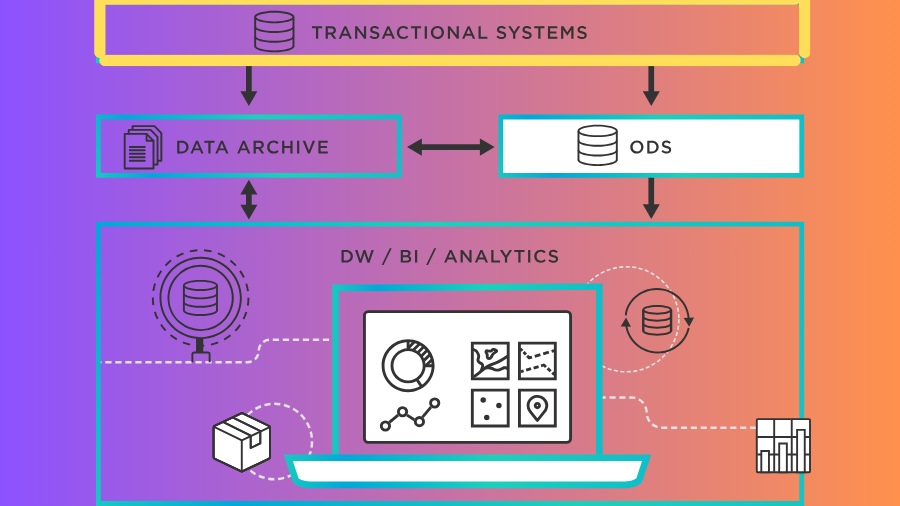
Bonus: Operational Data Store

Transactional Data

Importance of Transactional Data in Business

1. Real-time Insights

Transactional data provides real-time insights into the day-to-day operations of a business. By analyzing these data points, organizations can make informed decisions promptly, fostering agility in response to market changes.

2. Decision-Making Precision

In strategic decision-making, precision is key. Transactional data offers a granular view, allowing businesses to identify trends, patterns, and anomalies, enabling more accurate decision-making.

3. Operational Efficiency

Efficient business operations rely on a thorough understanding of transactional data. From inventory management to customer interactions, every operational facet benefits from a comprehensive grasp of transactional details.

Bonus: An Overview of SAP Material Management

Analyzing Transactional Data

1. Data Structure

Transactional data is often structured in a tabular format, with each row representing a specific transaction and columns detailing relevant attributes. The structure may vary based on the type of transaction and industry standards.

2. Granularity

The granularity of transactional data determines the level of detail captured. High granularity provides intricate details of each transaction, while lower granularity aggregates data for broader insights.

3. Integration with Business Intelligence

Integrating transactional data with robust business intelligence tools enhances analytical capabilities. Visualization tools and dashboards can transform raw data into actionable insights.

Instances of Transactional Data

Transactional Data regularly falls under the classification of organized information. A few models include:

  • Monetary Transactional Data: protection expenses and claims information, or a buy or deal; Stores or withdrawals if there should be an occurrence of banks
  • Calculated conditional information: delivering status, transporting accomplice information
  • Business related Transactional Data: representative hours following


In this specific situation, conditional information records the reference information, including time, to report a specific exchange. It is recorded as a feature of the data and applications frameworks that computerize the key business cycles of an association, for example, online exchange handling frameworks.

What do you mean by transactional RFC?

Contingent upon the idea of the exchange, the information gets gathered inside ace information with related item data and charging data.

Crude Transactional Data can be chaotic and should be cleaned for downstream investigation. Information enhancement devices are currently generally accessible for this reason.

Best Practices for Managing Transactional Data

1. Robust Database Management

Ensuring a robust and scalable database management system is essential for handling large volumes of transactional data. This includes optimizing data storage, retrieval, and processing capabilities.

2. Data Security Measures

Given the sensitive nature of transactional data, implementing stringent security measures is imperative. This includes encryption, access controls, and regular audits to safeguard against unauthorized access.

3. Regular Data Maintenance

Transactional data can accumulate rapidly. Regular data maintenance, including archiving and purging obsolete records, is crucial for system performance and data accuracy.

Who Utilizations Conditional Information in an Association?

In an association, the data innovation functional group and the information examination group are the principal overseers of Transactional Data. The advantages are two-crease:

1. Data innovation tasks screen exchanges progressively. They utilize the information and streaming items to find, analyze, and fix any exhibition gives that might cause serious help disturbances. This sets aside both cash and time.

2. Business directors and information examiners utilize continuous exchange information to grasp purchaser conduct and find out about how their items and administrations are embraced. In this occurrence, the exchange information yields significant bits of knowledge that assist with further developing the help offering. Exchange information conveys better client encounters, gain new business, and lift productivity of the business.

Ace and transactional data

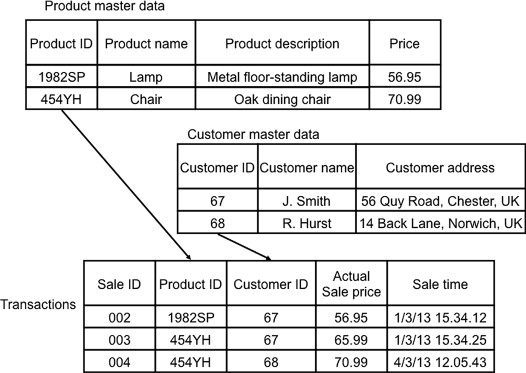
Transactional data connects with the exchanges of the association and incorporates information that is caught, for instance, when an item is sold or bought. Ace information is alluded to in various exchanges, and models are client, item, or provider information. By and large, ace information doesn’t change and needn’t bother with to be made with each exchange. For instance, on the off chance that one client buys numerous items at various times, an exchange record should be made for every deal, except the information about the client remains something similar. Figure 12.1 shows how ace information frames part of a conditional record. For this situation, when the light and seat items are sold, the exchange references the pertinent item IDs and client IDs. The item and client records, assuming they as of now exist, needn’t bother with to be reproduced or adjusted for this new exchange. Different information in the exchange, like the remarkable identifier for the exchange (i.e., deal ID) and deal time do, nonetheless, need to change. Exchange information is hence normally more unstable than ace information as it is made and changes all the more much of the time. Note that this straightforward model shows the real deal cost in the exchange and cost of the item in the expert information. There are various ways of demonstrating this, yet the model demonstrates the way that the genuine cost can change contingent upon the exchange and it might just be determined from the item cost in the expert information (in the wake of including limits, and so on.). Exchange 003 in Figure 12.1 shows that a markdown has been applied to the retail cost.

transactional data - Product master data

Sign in to download standard size picture
FIGURE 12.1. Ace and transactional data.

One more property of expert information is that it is many times shared and utilized by various specialty units. For instance, a client record will be utilized by promoting as well as deals. Issues emerge when one specialty unit refreshes the expert record and doesn’t illuminate the other specialty unit. For instance, the promoting division could refresh the location of a client and, on the off chance that they don’t illuminate the outreach group, requests could be shipped off an obsolete location.

Albeit these are the overall properties of expert and data, there are events when these information types act contrastingly and, subsequently, this differentiation becomes obscured. For instance, ace information can likewise have all the earmarks of being conditional when changes to a provider address, for example, are not overwritten in a record, however rather another record is made. An association might decide to hold all past locations of a provider, particularly on the off chance that they wish to investigate a provider’s development. It merits focusing on cases, for example, these, in light of the fact that it very well might be smarter to apply conditional answers for the issues in this information type so it is overseen accurately.

Action TIP
Try not to constantly accept that ace information should be treated with just expert information related arrangements, particularly assuming the expert information acts like conditional information.

Conclusion

In conclusion, a nuanced understanding of transactional data is pivotal for businesses navigating the complexities of modern commerce. From real-time insights to informed decision-making, the impact of data is far-reaching. By implementing best practices and leveraging advanced analytics, businesses can not only manage but thrive on the wealth of transactional information at their disposal.

FAQs related to Transactional Data

1. What is an example of a data transaction?

It is a structured data category that describes an internal or external event or transaction that takes place as an organization conducts its business. Examples include: 

Purchases, Returns, Invoices, Payments, Credits, Debits, Trades, Dividends, Sales orders, Shipping documents, Credit card payments, Insurance claims.

2. What is the difference between transactional data and operational data?

It captures the progress of specific business transactions, focusing on details such as item purchases, order modifications, status changes, purchases, payments, transfers, transaction dates, amounts, and instruments used to complete sales. On the other hand, operational data encompasses a broader scope, including all other data that supports day-to-day operations. This includes monitoring and managing ongoing transactions within the system, making decisions about resource allocation, and actively working towards improving overall business processes.

3. What is the difference between transactional data and non transactional data?

A non-transactional data set doesn’t ordinarily uphold transactions similarly as a transactional database. Many NoSQL databases are for the most part intended for high adaptability and adaptability, and may forfeit some value-based assurances to accomplish these objectives.

4. What is a transaction in data mining?

It will be data that is caught from transactions. It records the hour of the exchange, where it happened, the costs of the things purchased, the installment strategy utilized, limits if any, and different amounts and characteristics related with the exchange.

SAP Innovation
SAP

SAP Innovation

The world of business technology is ever-changing, and at the forefront of this revolution is SAP Innovation. From streamlining processes to driving efficiency, SAP has become synonymous with cutting-edge solutions that propel businesses into the future.

Introduction

In the fast-paced realm of business technology, the ability to adapt and innovate is not just an advantage—it’s a necessity. One of the key players in this technological evolution is SAP, or Systems, Applications, and Products in Data Processing. This article explores the dynamic landscape of SAP Innovation, shedding light on its historical journey, impact on industries, challenges, and future trends.

Understanding SAP

Understanding SAP Innovation

Before delving into the innovative strides of SAP, it’s essential to understand the basics. SAP is a comprehensive software suite that plays a pivotal role in managing business operations and customer relations. Its ability to integrate various business processes has made it a cornerstone for organizations worldwide.

Evolution of SAP Innovation

SAP’s journey of innovation is a testament to its commitment to staying at the forefront of technology. From its early days as a financial accounting system to its current status as a multifaceted solution, SAP has continually evolved to meet the ever-changing needs of businesses.

SAP was established in 1972 by five previous IBM representatives in Mannheim, Germany.
The organization’s underlying name was Framework Investigation Program Advancement, which was subsequently abridged to Drain.

SAP’s most memorable business item, SAP R/1, was delivered in 1973. SAP R/2, a centralized computer based business programming suite, was presented in 1979. SAP R/3, a client-server design, was sent off in 1992.
SAP developments help clients overall work together more productively and use business knowledge all the more actually. SAP advancements include:

  • Large information
  • The Web of Things
  • Versatile first innovation
  • Business organizations

SAP has developed from a little, five-man try to a global endeavor settled in Walldorf, Germany, with in excess of 105,000 workers around the world.

SAP BTP: A to Z of SAP Conversational AI

Key Features of SAP Innovation

What sets SAP apart is its array of cutting-edge features. Whether it’s advanced analytics, machine learning capabilities, or seamless integration with other systems, SAP’s features contribute significantly to the growth and efficiency of businesses.

One of the key features of SAP is its capacity to smooth out business processes. SAP gives preconfigured business processes in light of industry best works on, permitting associations to advance their activities.

SAP Logistics Business Network

SAP’s Impact on Industries

The impact of SAP innovations extends across various industries. From healthcare to manufacturing, SAP has transformed the way businesses operate. Real-world examples showcase how embracing SAP solutions leads to increased efficiency, better decision-making, and ultimately, business success.

Challenges and Solutions in SAP Innovation

However, the path to SAP innovation is not without challenges. Businesses often face hurdles in adopting new technologies. Common challenges include resistance to change, integration complexities, and security concerns. Proactive solutions involve thorough planning, effective communication, and continuous support.

Implementation Strategies

Successfully integrating SAP innovations into existing systems requires a strategic approach. Collaboration among different departments, a well-thought-out implementation plan, and ongoing communication are key components of a successful SAP adoption strategy.

Looking forward, the landscape of SAP innovation continues to evolve. From advancements in artificial intelligence to enhanced user interfaces, staying ahead of these trends is crucial for businesses aiming to maintain a competitive edge.

Enterprises can likewise fabricate buyer grade work points of interaction and encounters by utilizing point-and-snap customization devices and SAP Fiori In-Application extensibility. Furthermore, more prominent degrees of mechanization and insight can be imbued into business processes thanks to Drain Smart RPA and computer based intelligence arrangements.

SAP As The Central Component Of Digital Transformation

Benefits and ROI of SAP Innovation

Investing in SAP innovation yields tangible benefits. Increased efficiency, better data-driven decision-making, and streamlined processes contribute to a positive return on investment. Understanding and maximizing this ROI is essential for businesses leveraging SAP solutions.

The Assembling Wonder: An assembling organization embraced SAP S/4HANA Money, accomplishing a 30% decrease in functional costs inside the principal year. Further developed stock administration, smoothed out acquirement, and ongoing monetary bits of knowledge were key supporters of this astounding return on initial capital investment.

User Experience in SAP Innovation

A critical aspect often overlooked is the user experience. An intuitive and user-friendly interface enhances the overall adoption of SAP solutions. Prioritizing the human element in the design and functionality of SAP innovations contributes to their success.

SAP Innovation in Cloud Computing

As technology converges, SAP innovations seamlessly integrate with cloud computing. This synergy offers businesses flexibility, scalability, and accessibility. Exploring the advantages and challenges of this integration is essential for those considering SAP solutions.

Conclusion

In conclusion, SAP innovation is a dynamic force shaping the landscape of business technology. From its humble beginnings to its current state of cutting-edge solutions, SAP continues to drive efficiency and transformation. The journey of SAP is not just a technological evolution but a testament to adaptability and resilience in an ever-changing business environment.

FAQs

  1. Is SAP innovation only suitable for large enterprises, or can small businesses benefit as well?SAP innovations are scalable and adaptable, making them suitable for businesses of all sizes. While large enterprises often leverage the full spectrum of SAP solutions, smaller businesses can tailor their adoption to meet their specific needs and scale gradually.
  2. What role does user feedback play in the ongoing development of SAP innovations?User feedback is integral to SAP’s continuous improvement. SAP actively seeks input from users to enhance user experience, address pain points, and shape the direction of future innovations.
  3. How can businesses measure the success of their SAP innovation implementation?Success metrics in SAP innovation implementation include increased efficiency, improved decision-making, and a positive impact on the bottom line. Regular assessments and feedback mechanisms help businesses gauge their success.
  4. What are the potential risks associated with rapid adoption of SAP innovations, and how can they be mitigated?Rapid adoption may pose risks such as system integration challenges and potential disruptions. Mitigation involves thorough planning, phased implementation, and proactive identification and resolution of issues.
SAP Migration
SAP

What iS SAP Migration ?

Introduction to SAP Migration

A migration object is a bunch of related information that you really want to move from a source framework (existing heritage framework) to another objective framework (SAP Business ByDesign framework). It incorporates information for explicit business objects, like clients, providers, and materials.

In the fast-paced world of business technology, staying ahead is not just an advantage; it’s a necessity. One crucial aspect that enterprises often grapple with is SAP migration—moving from older, outdated SAP systems to newer, more efficient ones. In this article, we’ll explore the intricacies of SAP migration, from the initial planning stages to the post-migration benefits.

Understanding SAP

SAP, or Systems, Applications, and Products in Data Processing, is a cornerstone of many businesses, streamlining processes and facilitating data-driven decision-making. A comprehensive understanding of SAP and its components is vital before delving into the migration process.

Top Skills Required to Excel as a SAP MM Consultant

Need for Migration

Why do businesses embark on the challenging journey of SAP migration? This section will delve into the various reasons, emphasizing the drawbacks of sticking with outdated systems and the potential for transformative change through migration.

SAP Data Migration Process 

SAP Migration Process

Each step is made sense of beneath –

1. Extraction
This step is utilized to get the most important business information for relocation to new framework, underneath focuses are considered during this step.

  • In this, we pull the pertinent information from source in view of criterias given by business, these criterias are likewise called as “Pertinence Rules”
  • Importance rules can be dates, business values channels, plants scope channels and so on.
  • These circumstances shift from one item to another and these are utilized to get the inscope records for a specific article
  • The information which fulfills these circumstances are by and large called as inscope information and will be utilized as a source information for relocation and will be considered for subsequent stage
  • For the most part target tables made inside this step follows adding “Applicable ” catchphrase in table names with relating object/fragment name

2.Change
This step is most significant in information relocation and assumes exceptionally huge part, beneath focuses are considered during this step

  • Pertinent information which was removed in sync 1 will under go different changes to meet the objective framework prerequisites like primary, process arrangement and so forth.
  • Point by point extra business rationales, mappings are applied on inscope information
  • source fields are planned to target fields utilizing different change rules like
    • Duplicate – Coordinated planning from source to target
    • Default-Task of default worth to a field
    • Consistent – Condition based rules
    • Xref/Cross Reference – Cross reference tables will be utilized to switch the source esteem over completely to coordinate with target esteem and so forth
  • This step will ensure that all field values are lined up with target sap framework.
  • By and large objective tables made inside this step follows adding “Guide” catchphrase in table names with comparing object/fragment name

3.Preload Approval
This step is performed once you have your changed information prepared and before you endeavor to stack information, consequently called as ‘Preload Approvals’

  • Various approvals are acted in this move toward guarantee information you are stacking in the objective framework pass vital checks and framework prerequisites/setups
  • Approvals which are performed are –
    • Required – These are sort of approvals, which approves assuming all the framework and business compulsory fields are populated or not
    • Design – These approvals are performed to affirm information designs like date fields, length checks, design checks and so forth.
    • Setup check – These approvals are utilized to check in the event that all the important design is kept up with into the framework to stack the information like plant codes ought to be arranged in the framework to stack item ace
  • There can be more conceivable arrangement of approvals in view of business necessities
  • Preload approvals are applied on changed information to get Legitimate arrangement of records and Invalid arrangement of records
  • Substantial records are then enhanced to make level documents or straightforwardly load into target sap framework
  • Invalid records are shipped off utilitarian and business groups to survey and make an important move to fix them with relocation specialists

4.Information Burdens
This step is where we load information into target SAP framework utilizing different burden strategies

  • Information can be stacked to Drain target framework utilizing inbuilt SAP instrument or through ETL device
  • LSMW, Movement cockpit , SAP Bodies are a portion of the devices utilized
  • IDOCs, Accounts, Direct Information programs, layouts load procedures can be utilized for information loads

5.Postload information approvals
This step is performed whenever you have stacked information into the objective framework, consequently called as ‘Postload Approvals’. This is to ensure information has been stacked appropriately into framework and can be checked in tcodes and tables

  • Postload Pass report is made to report every one of the records which got stacked effectively with next to no blunders
  • Postload Bomb report is made to report every one of the records which got fizzled during load interaction and mistake log is downloaded for those records for additional examination
  • Postload change, this report can be kept up with now and again where field level qualities are contrasted among source and target information with ensure values didn’t get changed over/changed during load process

The Information relocation process certainly a thorough cycle and includes a lot further subtleties then what is canvassed in this blog yet the essential thought of this blog is to give clients a more extensive picture how it looks like extraordinarily for crowd who is new to process.

What Is SAP Data Services

Benefits of SAP Migration

What are the tangible benefits of investing time and resources into SAP migration? Improved performance, enhanced integration, and long-term cost savings are just a few of the advantages explored in this section.

Adaptability, Cost reserve funds, Adaptability, Further developed security, Dependability, Higher advancement ability, Information security, Availability, Speed.

SAP R3 to S4 HANA Migration

Conclusion

SAP migration is a multifaceted journey crucial for businesses aiming to stay technologically competitive. From understanding SAP intricacies to navigating the meticulous data migration process, the benefits are tangible—improved performance, enhanced integration, and long-term cost savings. The transition from SAP R3 to S4 HANA marks a significant shift, and businesses must anticipate ongoing updates. Proactive planning, employee involvement, and staying informed about SAP innovations are key to a successful migration. This comprehensive guide offers insights for both newcomers and experienced professionals in the dynamic landscape of SAP migration.

FAQs

  1. Is SAP migration a one-size-fits-all process, or does it vary based on business size?SAP migration strategies can be tailored to suit different business sizes. While certain principles remain constant, the specifics of the migration plan may vary based on the scale and complexity of the enterprise.
  2. How long does the typical SAP migration process take, and what factors influence the timeline?The duration of SAP migration varies, influenced by factors such as the size of the dataset, the chosen migration strategy, and the complexity of the existing SAP system. A thorough assessment during the planning phase helps estimate the timeline more accurately.
  3. What are the most common challenges faced during SAP migration, and how can they be mitigated?Common challenges include data integrity issues, system downtime, and resistance to change. Addressing these challenges proactively through detailed planning, robust testing, and effective communication can mitigate potential issues.
  4. Is SAP migration a one-time effort, or should businesses anticipate ongoing updates and adjustments?While the initial migration is a significant undertaking, businesses should anticipate ongoing updates and adjustments. Staying informed about SAP updates and innovations is crucial for maintaining the system’s efficiency and security.
  5. How can businesses ensure a smooth transition for employees during SAP migration?Employee training and communication are key to a smooth transition. Providing comprehensive training programs, addressing concerns, and actively involving employees in the process can contribute to a positive migration experience.
Empowering Businesses
SAP

Empowering Businesses: A Path to Success

Empowering Businesses

In the fast-paced and competitive world of business, the concept of Empowering Businesses has emerged as a transformative approach. This article delves into the multifaceted aspects of empowerment, exploring its impact on leadership, employees, the integration of technology, customer relationships, and the unique challenges faced. Through real-life examples and actionable insights, we uncover the power of empowerment in fostering success.

SAP Business Technology Platform: Empowering Digital Transformation

Examples of Business Empowerment

Workers
Numerous conversations of business strengthening rotate around recognizing ways of empowering workers to turn out to be more independent. An organization may, for instance, enable representatives to settle on additional choices themselves, rather than getting consent first from bosses, with an objective of creating free masterminds and self-starters who can ascend through the positions to become qualified supervisors.

Supervisors
Entrepreneurs can engage supervisors by giving them control. Much as enabling low-level representatives invigorates self-improvement, permitting administrators to deal with high level worries levels up authority abilities and creates independence, liberating the proprietor of certain obligations while at the same time further developing the manner in which the business capabilities. For instance, you could permit a boss to take point on a significant vital drive, for example, the plan of a showcasing effort or the development and staffing of another production line.

Clients
The business-client relationship could appear intrinsically antagonistic, as the two players rider to get the most incentive for the least speculation. In any case, engaging your clients by surrendering some command over the purchasing experience can reinforce your connections. For instance, make the purchasing system more intuitive by straightforwardly addressing inquiries regarding your estimating techniques. While showing your hand could feel awkward, enabled clients value the regard and thought they get. Your straightforwardness permits them to make informed buys, which can raise wild steadfastness to your image.

Industry
In some cases good sense would suggest that a business should save its serious impulses and work with contending associations to enable the business all in all. For instance, a gathering of contenders could join as an industry relationship to expand consciousness of another sort of item, trusting the public consideration builds request and benefit for a huge scope. This strategy can work for a gathering of makers of a solitary item type, like the dairy business, or for the makers of correlative items, like razors and shaving cream, as indicated by “Upper hand: Making and Supporting Unrivaled Execution,” by Harvard business teacher Michael E. Doorman.

The Role of Leadership

Empowering Businesses

Empowerment Starts at the Top

Effective business empowerment begins with leadership. A commitment to fostering a culture of trust, open communication, and autonomy sets the tone for the entire organization. Leaders must empower their teams to make decisions and take ownership of their work.

Employee Empowerment

Providing Tools and Resources

Empowering employees involves equipping them with the necessary tools and resources. This includes training programs, access to information, and a supportive environment that encourages creativity and innovation. When employees feel empowered, they are more likely to contribute ideas and solutions.

Technology as an Empowerment Tool

Leveraging Digital Tools for Efficiency

In the digital age, technology plays a pivotal role in business empowerment. Digital tools enhance efficiency, streamline processes, and facilitate seamless communication and collaboration. Businesses that leverage technology empower their teams to work smarter, not harder.

Customer Empowerment

Creating Personalized Experiences

Empowering businesses extend beyond internal dynamics to customer relationships. Providing personalized experiences and transparent communication builds trust and loyalty. Empowered customers feel more engaged and are likely to become advocates for the brand.

SAP SAC: Revolutionizing Data Analytics and Business Intelligence

Overcoming Challenges to Empowerment

Addressing Resistance to Change

Empowering businesses often face resistance to change. It’s crucial to address this resistance through effective communication, demonstrating the benefits of empowerment, and involving employees in the decision-making process. Balancing empowerment with accountability is essential for sustainable change.

Realizing the Benefits

Increased Productivity and Engagement

The benefits of empowerment are evident in increased productivity and employee engagement. When individuals feel empowered to contribute their best, the overall organizational culture thrives. Positive workplace environments lead to innovation, collaboration, and ultimately, business success.

Empowering Small Businesses

Tailoring Empowerment Strategies for Smaller Enterprises

Empowerment is not exclusive to large corporations. Small businesses can tailor empowerment strategies to suit their unique needs. Through case studies, we explore successful empowerment initiatives in small businesses and highlight the impact on growth and sustainability.

Numerous small companies would significantly benefit from admittance to, and preparing in, these imperative devices. A few answers for building abilities and organizations have included training camps, collaborating hatcheries, labor force and tutoring programs, obtainment stages and facilitated organizing occasions.

Sustainable Empowerment Practices

Integrating Empowerment into Long-term Business Strategies

Empowerment should be an integral part of long-term business strategies. Sustainable empowerment practices adapt to changing business landscapes, ensuring that businesses remain agile and resilient. It involves continuous learning, adaptation, and a commitment to growth.

GRC Security: Safeguarding Businesses in a Digital World

Measuring Empowerment Success

Key Performance Indicators for Empowerment

Measuring the success of empowerment requires identifying key performance indicators (KPIs). These may include employee satisfaction, innovation rates, and customer loyalty. Gathering feedback and making continuous improvements based on these metrics are crucial for sustained success.

Future Trends in Business Empowerment

The Evolving Role of AI and Automation

As businesses embrace artificial intelligence and automation, the landscape of empowerment evolves. Future trends involve leveraging these technologies to enhance decision-making processes and further empower employees. Additionally, embracing diversity and inclusion will play a crucial role in shaping the future of business empowerment.

Conclusion

In conclusion, empowering businesses is not just a buzzword; it’s a fundamental strategy for success in today’s dynamic business environment. From leadership practices to employee engagement, technology integration, customer relationships, and overcoming challenges, the impact of empowerment is far-reaching. As businesses embrace sustainable empowerment practices, measure success through meaningful KPIs, and adapt to future trends, they unlock a path to long-term success.

FAQs

  1. How can leaders foster a culture of trust for business empowerment?
    • Leaders can foster trust by promoting open communication, providing clear expectations, and involving employees in decision-making processes.
  2. What are some key technological tools for business empowerment?
    • Technological tools like project management software, collaboration platforms, and customer relationship management (CRM) systems empower businesses by enhancing efficiency and communication.
  3. Can small businesses benefit from employee empowerment strategies?
    • Absolutely. Small businesses can tailor empowerment strategies to their size, fostering a positive workplace culture, and driving growth.
  4. How do businesses measure the success of customer empowerment initiatives?
    • Success can be measured through customer satisfaction surveys, loyalty programs, and monitoring repeat business and referrals.
  5. What role does diversity and inclusion play in the future of business empowerment?
    • Embracing diversity and inclusion is crucial for future business empowerment trends, ensuring a holistic and equitable approach to employee engagement and innovation.
× How can I help you?