

SAP & Oracle partner and support companies

Loading

SAP Trainings
SAP

IMPORTANCE OF SAP TRAININGs AND CERTIFICATION FOR CONSULTANTS

Introduction

In the rapidly evolving world of technology, businesses are increasingly relying on sophisticated software solutions to streamline their operations and stay competitive. SAP (Systems, Applications, and Products) is one such leading enterprise resource planning (ERP) software that has become an indispensable tool for organizations across various industries. As businesses continue to adopt SAP to optimize their processes, the demand for skilled SAP consultants has grown significantly. This article delves into the crucial role of SAP trainings and certification for consultants and highlights its profound impact on both individual careers and business success.

The Significance of SAP Consultants in Today’s Business Landscape

In today’s fast-paced business environment, SAP consultants play a pivotal role in facilitating seamless business operations. They serve as the link between technology and business processes, analyzing, designing, and implementing SAP solutions to optimize various functions such as finance, human resources, supply chain, and customer relationship management. SAP consultants possess a deep understanding of business requirements, ensuring that SAP solutions align with the organization’s goals.

Understanding the Role of SAP Consultants

Responsibilities and Expertise

SAP consultants are responsible for providing expert advice and solutions throughout the different phases of a project, from initial planning to post-implementation support. They must possess a comprehensive knowledge of SAP modules, customizing functionalities, and integration methods. Additionally, effective communication and problem-solving skills are essential to collaborate with cross-functional teams and deliver successful outcomes.

Navigating Complex Business Processes

The complexity of modern business processes demands the expertise of SAP consultants. They analyze intricate workflows, identify areas for improvement, and recommend suitable SAP configurations. By streamlining processes, organizations can enhance efficiency, reduce manual efforts, and make data-driven decisions.

The Need for Comprehensive SAP Trainings

Mastering SAP Modules

For aspiring SAP consultants, comprehensive training in various SAP modules is critical. These modules cover specific business functions and processes, such as SAP Finance (FI), SAP Sales and Distribution (SD), SAP Human Capital Management (HCM), and more. Proper training ensures that consultants possess a strong foundation to deliver efficient solutions.

Hands-On Practical Experience

SAP TRAININGS programs should emphasize practical experience, allowing trainees to work on real-world scenarios and projects. Hands-on experience instills confidence and enables consultants to apply theoretical knowledge effectively, making them well-prepared for the challenges they will face in the field.

The Advantages of SAP Certification

Professional Credibility and Recognition

SAP certification validates a consultant’s expertise and knowledge in specific SAP modules. It serves as a mark of credibility and distinguishes certified consultants from non-certified ones, giving employers confidence in their skills.

Enhanced Career Opportunities

Certified SAP consultants enjoy a competitive edge in the job market. With certification, they open doors to various career advancement opportunities and higher earning potential.

How SAP Certification Elevates Consulting Expertise

Demonstrating Proficiency in SAP Technologies

SAP certification verifies that a consultant possesses a deep understanding of SAP technologies and best practices. It showcases their ability to implement solutions effectively, adding value to clients and organizations.

Keeping Up with Evolving SAP Solutions

As SAP solutions evolve, certified consultants are required to keep their knowledge up-to-date. Renewal requirements for SAP certifications encourage continuous learning, ensuring that consultants remain competent in the latest SAP developments.

SAP Trainings and Certification as a Business Investment

Improved Implementation and Optimization

Businesses that invest in SAP trainings and certification for their employees experience smoother SAP implementations and optimized system performance. Certified consultants contribute to successful projects with reduced risks of implementation failure.

Mitigating Risks and Ensuring Compliance

Compliance with industry standards and regulations is crucial for organizations. SAP trainings equips consultants with the knowledge to ensure that SAP solutions comply with legal and ethical standards, mitigating risks and potential legal issues.

Realizing Cost-Efficiency through Trained SAP Consultants

Reducing Implementation Errors

Poorly implemented SAP solutions can lead to costly errors and rework. Trained consultants are equipped to minimize errors during implementation, saving both time and money.

Increasing ROI and Project Success

Certified SAP consultants enhance project success rates by efficiently utilizing SAP functionalities, resulting in improved return on investment (ROI) for organizations.

The Evolving Role of SAP Consultants in Digital Transformation

Adapting to Changing Business Needs

As organizations undergo digital transformation, SAP consultants play a crucial role in integrating digital technologies and ensuring smooth transitions.

Integrating New Technologies

Certified consultants explore innovative SAP technologies and integrate them to enhance business processes and competitiveness.

Challenges and Solutions in SAP Trainings and Certification

Overcoming Time and Resource Constraints

Balancing work commitments with training can be challenging. Organizations can address this by offering flexible training options and encouraging continuous learning.

Leveraging Virtual Training Platforms

Virtual training platforms enable consultants to access training materials from anywhere, promoting self-paced learning and skill development.

Recommendations for Aspiring SAP Consultants

Continuous Learning and Upskilling

Aspiring SAP consultants should engage in continuous learning, attending workshops, webinars, and seeking mentorship to stay updated with the latest SAP trends.

Building Practical Experience and Soft Skills

Combining technical expertise with soft skills like communication and problem-solving enhances a consultant’s ability to deliver comprehensive solutions.

Conclusion

SAP trainings and certification form the foundation for successful careers in SAP consulting. With the growing demand for SAP solutions, trained and certified consultants are invaluable assets to organizations seeking optimized operations and sustainable growth. As the business landscape continues to evolve, the role of SAP consultants remains crucial in driving digital transformation and ensuring organizations’ success.

FAQs

  1. Is SAP training mandatory to become an SAP consultant?
    • While not mandatory, SAP training significantly enhances a consultant’s skills and marketability.
  2. How long does it take to complete SAP training?
    • The duration varies depending on the program, but it typically ranges from a few weeks to several months.
  3. What is the cost of SAP certification?
    • The cost of SAP certification varies based on the module and level of certification.
  4. Can I pursue SAP certification online?
    • Yes, SAP offers online certification exams for certain modules.
  5. Are there any prerequisites for SAP certification?
    • Prerequisites may vary depending on the certification, but generally, relevant experience or training is recommended.
SAP Integration
SAP

SAP Integration: How to Connect SAP with Other Systems

Introduction to SAP Integration:

SAP Integration is the process of connecting SAP systems with external applications and technologies to enable seamless data flow and collaboration. It plays a vital role in modern business ecosystems as organizations increasingly rely on multiple systems to manage different aspects of their operations.

Common Integration Scenarios:

SAP Integration with CRM Systems: Integrating SAP with Customer Relationship Management (CRM) systems allows businesses to have a unified view of customer data, enhancing customer service and relationship management.

SAP Integration with E-commerce Platforms: Connecting SAP with e-commerce platforms streamlines order processing, inventory management, and financial transactions, providing a holistic view of online sales operations.

Integration Technologies and Tools:

Application Programming Interfaces (APIs): APIs enable different applications, including SAP, to communicate and share data in a standardized and secure manner.

SAP Process Integration/Orchestration (PI/PO): SAP PI/PO is an integrations middleware that facilitates the seamless exchange of data between SAP and non-SAP systems.

Data Integration and Master Data Management:

Data Synchronization between Systems: SAP Integrations ensures that data is synchronized between SAP and external systems in real-time, preventing data discrepancies.

Master Data Governance: Implementing master data governance practices ensures that consistent and accurate master data is maintained across all integrated systems.

Security and Authorization in Integration:

Securing Data during Integration: SAP Integrations involves implementing robust security measures to protect sensitive data during data exchange.

Role-Based Access Control: Role-based access control ensures that only authorized users have access to specific data and functionalities during integration.

Benefits of SAP Integration:

Improved Data Accuracy and Consistency: SAP Integrations reduces manual data entry, minimizing errors and ensuring data consistency across systems.

Streamlined Business Processes: Integrated systems enable end-to-end automation of business processes, increasing efficiency and reducing manual intervention.

Challenges in SAP Integration:

Data Mapping and Transformation: Mapping data between different systems and ensuring its compatibility can be complex and challenging.

System Compatibility and Versioning: Integrating SAP with systems running on different versions or technologies requires careful planning to avoid compatibility issues.

Best Practices for Successful Integration:

Clearly Define Integration Requirements: Clearly defining integration requirements and objectives before starting the integration process helps in streamlining the implementation.

Test and Monitor Integration Processes: Rigorous testing and continuous monitoring of integration processes ensure that data flows seamlessly between systems.

Real-World Integration Use Cases:

Integrating SAP with Cloud Applications: Integrating SAP with cloud-based applications allows businesses to leverage the benefits of cloud computing and expand their capabilities.

SAP Integration with IoT Devices: Connecting SAP with Internet of Things (IoT) devices enables real-time data collection and analysis for improved decision-making.

Integration with Artificial Intelligence and Machine Learning: SAP Integrations with AI and ML technologies will enable intelligent data analysis and automation.

Advancements in Integration Technologies: Continuous advancements in integration technologies will lead to faster and more efficient data exchange between systems.

Conclusion:

SAP Integration is a critical aspect of modern business operations, enabling organizations to create a connected and streamlined ecosystem. By effectively integrating SAP with other systems, businesses can achieve data accuracy, process efficiency, and gain valuable insights for informed decision-making. As technology evolves, SAP Integrations will continue to play a pivotal role in shaping the future of enterprise processes and capabilities.

FAQs:

  1. Can SAP Integration be customized to suit specific business needs? Yes, SAP Integrations can be customized and configured to meet the unique requirements of each business.
  2. Is SAP Integrations only suitable for large enterprises? No, SAP Integrations can benefit businesses of all sizes, regardless of their scale and complexity.
  3. What are the key considerations for choosing the right integration technology? The key considerations include the complexity of data exchange, system compatibility, security requirements, and future scalability.
  4. How does SAP Integration impact data security and privacy? SAP Integrations incorporates security measures like encryption and role-based access control to ensure data security and privacy during data exchange.
  5. Can SAP Integrations improve customer experience? Yes, SAP Integrations enhances customer experience by providing a unified view of customer data, enabling personalized interactions and better service delivery.
SAP S/4HANA
SAP

SAP S/4HANA: EXPLORING THE LATEST FEATURES

Introduction to SAP S/4HANA:

SAP S/4HANA is the next-generation Enterprise Resource Planning (ERP) suite developed by SAP. It is designed to provide businesses with real-time, intelligent insights, and streamline processes for enhanced efficiency and decision-making. As an advanced ERP solution, SAP S/4HANA brings a host of innovative features that cater to various business needs across industries.

SAP S/4HANA: The Next-Generation ERP:

Evolution of SAP ERP: SAP S/4HANA is the successor of the traditional SAP ERP system. It leverages the power of the SAP HANA in-memory database, enabling businesses to process vast amounts of data in real-time.

Key Features of SAP S/4HANA: SAP S/4HANA offers several cutting-edge features, such as improved user experience through SAP Fiori, a simplified data model, embedded analytics, and advanced supply chain management capabilities.

SAP Fiori: Revolutionizing User Experience:

Intuitive User Interface: SAP Fiori provides a modern and intuitive user interface, enhancing user productivity and engagement. The Fiori apps are role-based, allowing users to access relevant information and tasks with ease.

Mobile and Cross-Platform Access: SAP Fiori apps are responsive and can be accessed on various devices, including desktops, tablets, and smartphones. This mobile accessibility ensures that users can stay connected and productive on the go.

Simplified Data Model: The Power of HANA:

In-Memory Database: SAP S/4HANA operates on the SAP HANA in-memory database, which accelerates data processing and analysis. This in-memory computing allows for real-time data access and analysis, enabling businesses to make data-driven decisions swiftly.

Real-Time Analytics: With the SAP HANA database, real-time analytics becomes a reality. Businesses can perform complex analytics on large datasets instantaneously, gaining valuable insights without any latency.

Embedded Analytics: Data-Driven Decision Making:

Integrated Reporting and Analytics: SAP S/4HANA embeds analytics directly into business processes, providing users with real-time insights at the point of action. This integration ensures that users can make informed decisions without toggling between different applications.

Predictive Analytics and Machine Learning: SAP S4HANA leverages predictive analytics and machine learning capabilities to offer intelligent insights. The system can predict outcomes, recommend actions, and automate repetitive tasks, improving overall efficiency.

Advanced Supply Chain Management:

Improved Planning and Forecasting: SAP S/4HANA’s advanced supply chain management features enable businesses to optimize demand planning and forecasting. This ensures that the right products are available at the right time and in the right quantities.

Enhanced Warehouse Management: The ERP suite enhances warehouse management with intelligent features such as automated stock tracking, optimized picking routes, and real-time inventory visibility.

Intelligent Finance and Controlling:

Real-Time Financial Insights: SAP S/4HANA provides real-time financial data, enabling finance teams to access up-to-date information for accurate financial reporting and analysis.

Automated Financial Processes: The ERP system automates routine financial processes such as accounts payable and receivable, streamlining financial operations and reducing manual effort.

Streamlined Procurement and Inventory Management:

Centralized Procurement: SAP S4HANA centralizes procurement activities, allowing businesses to negotiate better contracts, optimize purchasing processes, and achieve cost savings.

Efficient Inventory Optimization: The ERP suite offers sophisticated inventory management tools that help optimize stock levels, reduce carrying costs, and prevent stockouts.

Enhanced Sales and Customer Experience:

Integrated Sales Processes: SAP S4HANA integrates sales processes, enabling seamless quote-to-cash operations and providing a unified view of customer interactions.

Personalized Customer Interactions: With real-time customer data and analytics, businesses can offer personalized services and experiences, strengthening customer relationships.

Innovations in Manufacturing and Production:

Smart Manufacturing: SAP S4HANA enables smart manufacturing processes, integrating production with real-time data for better production planning and execution.

Agile Production Planning: The ERP system supports agile production planning, allowing businesses to respond quickly to market demands and changes in customer preferences.

SAP S/4HANA Cloud: The Future of ERP:

Cloud Deployment Benefits: SAP S4HANA Cloud offers the advantage of cloud-based deployment, ensuring easy scalability, automatic updates, and reduced infrastructure costs.

Scalability and Flexibility: The cloud-based ERP solution is highly scalable, allowing businesses to adapt to changing demands and quickly add new users and functionalities.

Migration to SAP S/4HANA:

Planning the Migration: Migrating to SAP S4HANA requires careful planning and assessment of the existing infrastructure and data.

Best Practices and Considerations: Following best practices, conducting a thorough impact analysis, and involving key stakeholders are essential for a successful migration.

Conclusion:

SAP S/4HANA is a game-changer in the world of enterprise resource planning. With its advanced features, real-time analytics, and user-friendly interface, it empowers businesses to embrace digital transformation and stay competitive in the dynamic market. By exploring the latest features in SAP S4HANA, organizations can unlock new possibilities and drive growth, efficiency, and innovation in their operations.

FAQs:

  1. Is SAP S/4HANA suitable for small businesses? Yes, SAP S4HANA offers different deployment options, including SAP S4HANA Cloud, which is well-suited for small and medium-sized businesses.
  2. What are the advantages of SAP S/4HANA’s in-memory computing? In-memory computing in SAP S4HANA enables real-time data access and analysis, accelerating business processes and decision-making.
  3. Can businesses choose specific SAP S4HANA modules based on their requirements? Yes, businesses can choose specific SAP S/4HANA modules that align with their operational needs and priorities.
  4. How does SAP S/4HANA support intelligent finance management? SAP S/4HANA’s intelligent finance management offers real-time financial insights and automates financial processes, enabling finance teams to work more efficiently.
  5. What are the benefits of migrating to SAP S4HANA Cloud? Migrating to SAP S4HANA Cloud offers benefits like easy scalability, reduced infrastructure costs, and automatic updates, making it an attractive option for businesses seeking flexibility and agility.
SAP Implementations
SAP

SAP Implementations Best Practices: Tips for a Smooth Deployment


Introduction to SAP Implementations:

SAP Implementations refers to the process of integrating SAP (Systems, Applications, and Products) software into an organization’s existing infrastructure to enhance operational efficiency, streamline processes, and gain valuable insights for decision-making. It is a significant undertaking that requires meticulous planning, strong leadership, and seamless execution to ensure a successful deployment.

Selecting the Right SAP Solution:

To start a successful SAP Implementations journey, businesses must carefully evaluate their unique requirements and select the appropriate SAP solution. This involves assessing various aspects of their operations and choosing the right SAP modules that align with their business needs.

Assessing Business Needs: Understanding the organization’s pain points, challenges, and growth objectives is crucial in determining which SAP modules will be most beneficial.

Evaluating SAP Modules: SAP offers a wide array of modules tailored to different business functions. Evaluating each module’s functionalities and mapping them to specific business processes helps in making informed decisions.

Building a Strong Project Team:

A robust project team is the backbone of a successful SAP Implementations . Identifying key stakeholders and appointing competent project managers are essential steps.

Identifying Key Stakeholders: Involving representatives from various departments ensures that all aspects of the business are considered during implementation.

Appointing Project Managers: Competent project managers with expertise in SAP implementation and strong leadership skills are vital for guiding the team effectively.

Comprehensive Planning and Preparation:

Thorough planning and preparation lay the foundation for a smooth SAP implementation. Defining project scope, objectives, and creating a realistic timeline are key components.

Defining Project Scope and Objectives: Clearly defining the project’s scope and objectives helps manage expectations and avoids scope creep during the implementation process.

Creating a Timeline and Milestones: Developing a detailed timeline with achievable milestones ensures that the project stays on track and progress can be monitored effectively.

Data Migration and Cleansing:

Data migration is a critical aspect of SAP implementation as it involves transferring existing data into the new system. Ensuring data accuracy and integrity is paramount.

Assessing Data Requirements: Identifying the necessary data for migration and determining data sources are crucial for a successful data migration process.

Ensuring Data Integrity: Cleansing data, removing duplicates, and validating data accuracy are vital to prevent data-related issues post-implementation.

Thorough Testing and Quality Assurance:

Comprehensive testing and quality assurance play a pivotal role in detecting and resolving issues before SAP deployment.

Unit Testing: Conducting unit testing to verify the functionality of individual components within the SAP system.

Integration Testing: Performing integration testing to ensure seamless communication between different modules and systems.

User Training and Change Management:

Preparing end-users for the transition to the new SAP system is crucial to ensure a smooth adoption process.

Preparing Users for the Transition: Providing comprehensive training to end-users, familiarizing them with the new SAP system, and addressing their queries.

Managing Resistance to Change: Implementing change management strategies to address resistance and ensure a positive transition experience for employees.

Gradual Deployment and Phased Approach:

A gradual and phased approach to SAP deployment allows organizations to minimize disruptions and manage risks effectively.

Piloting in a Controlled Environment: Starting with a pilot phase in a controlled environment to identify potential issues and fine-tune the system.

Expanding to Other Departments: Gradually expanding the implementation to other departments or business units to ensure a gradual and well-managed deployment.

Constant Monitoring and Support:

Continuous monitoring and providing ongoing support post-implementation are essential for the system’s smooth functioning.

Monitoring Key Performance Indicators: Tracking key performance indicators (KPIs) to evaluate the system’s performance and identify areas for improvement.

Providing Ongoing Support: Offering post-implementation support and resolving issues promptly to maintain system efficiency.

Post-Implementation Review and Optimization:

After SAP implementation, conducting a post-implementation review is vital to evaluate the project’s success and identify areas for further optimization.

Assessing Project Success: Conducting a thorough assessment of the project’s success against predefined objectives.

Identifying Areas for Improvement: Identifying opportunities for further optimization and continuous improvement.

Conclusion:

SAP implementation is a significant undertaking that requires careful planning, execution, and dedication. By following best practices, organizations can ensure a smooth deployment and reap the benefits of an integrated and efficient SAP system. The key lies in selecting the right SAP solution, building a strong project team, and embracing a comprehensive and phased approach to implementation.

FAQs:

  1. How long does an SAP implementation process typically take? The duration of SAP implementation varies based on the organization’s size, complexity, and scope of the project. It can range from several months to over a year.
  2. What are some common challenges during SAP implementation? Common challenges include data migration issues, resistance to change from employees, and integration complexities with existing systems.
  3. Is SAP implementation suitable for small businesses? Yes, SAP offers solutions tailored to the needs of small and medium-sized businesses, enabling them to streamline processes and improve efficiency.
  4. Can organizations customize SAP modules to meet specific requirements? Yes, SAP modules can be customized and configured to align with an organization’s specific workflows and processes.
  5. How can organizations ensure a successful post-implementation phase? Regularly monitoring system performance, providing ongoing support, and seeking feedback from end-users are essential for a successful post-implementation phase.

Bonuses:
SAP continues continuous testing continuity

SAP Modules:
SAP

Key SAP Modules and Their Benefits for Enterprises


Introduction to SAP Modules:

SAP Modules (Systems, Applications, and Products in Data Processing) offers a comprehensive suite of modules that cater to different aspects of business operations. Each module serves specific functions and provides unique benefits to enterprises, making SAP a leading provider of enterprise resource planning (ERP) solutions.

SAP Modules: Financial Accounting (FI)

Overview:

The SAP FI module handles financial accounting processes, including general ledger, accounts payable, accounts receivable, and asset accounting. It ensures accurate and real-time financial reporting for businesses.

Benefits for Enterprises:

  • Streamlined Financial Processes: SAP FI automates financial processes, reducing manual errors and improving efficiency.
  • Accurate Financial Reporting: The module provides real-time financial data, enabling timely and accurate financial reporting for informed decision-making.
  • Better Cash Flow Management: SAP FI helps businesses optimize cash flow by tracking incoming and outgoing payments efficiently.

Finance and Controlling (FICO) Module:

Overview:

The SAP FICO module integrates financial accounting (FI) with management accounting (CO) functions, providing comprehensive financial and cost control capabilities.

Benefits for Enterprises:

  • Comprehensive Financial Insights: SAP FICO offers a complete view of financial data, enabling better financial planning and analysis.
  • Enhanced Cost Management: The module facilitates effective cost control and variance analysis, aiding in better cost optimization strategies.
  • Efficient Financial Supply Chain Management: SAP FICO streamlines financial supply chain processes, ensuring smooth cash flow and reducing payment delays.

SAP Modules: Financial Supply Chain Management (FSCM)

Overview:

The SAP FSCM module focuses on optimizing the financial supply chain, including cash and liquidity management, credit management, and collections management.

Benefits for Enterprises:

  • Optimized Cash Flow: SAP FSCM helps businesses optimize cash flow by managing cash positions and forecasting cash flows accurately.
  • Reduced Credit Risks: The module aids in credit risk assessment and management, minimizing bad debts and improving credit control.
  • Efficient Collections Management: SAP FSCM streamlines collections processes, reducing outstanding receivables and improving working capital.

SAP Modules: Controlling (CO) Module:

Overview:

The SAP CO module is responsible for management accounting and cost controlling functions. It provides insights into cost and revenue structures to facilitate effective cost management.

Benefits for Enterprises:

  • Cost Optimization: SAP CO allows businesses to analyze and control costs, enabling better cost optimization strategies.
  • Variance Analysis: The module provides variance analysis to compare planned costs with actual costs, helping identify discrepancies.
  • Profitability Analysis: SAP CO assists in analyzing product and project profitability, aiding in better decision-making.

Materials Management (MM) Module:

Overview:

The SAP MM module handles procurement and inventory management processes, including purchase orders, inventory control, and material valuation.

Benefits for Enterprises:

  • Effective Procurement: SAP MM streamlines procurement processes, enhancing supplier management and reducing procurement lead times.
  • Optimized Inventory: The module provides real-time inventory data, enabling efficient inventory management and cost reduction.
  • Improved Material Valuation: SAP MM ensures accurate material valuation, aiding in better financial reporting.

SAP Modules: Logistics Execution (LE) Module:

Overview:

The SAP LE module focuses on logistics and distribution processes, including warehouse management, order fulfillment, and transportation management.

Benefits for Enterprises:

  • Efficient Warehouse Management: SAP LE streamlines warehouse operations, optimizing space utilization and reducing operational costs.
  • Optimized Order Fulfillment: The module ensures efficient order processing, leading to improved customer satisfaction.
  • Effective Transportation Management: SAP LE aids in optimizing transportation routes and costs, improving supply chain efficiency.

Production Planning (PP) Module:

Overview:

The SAP PP module handles production planning and execution, including material requirements planning and capacity planning.

Benefits for Enterprises:

  • Optimized Production: SAP PP aids in effective production planning, reducing production lead times and optimizing resources.
  • Better Demand Management: The module assists in aligning production with demand, minimizing excess inventory and stockouts.
  • Real-Time Production Monitoring: SAP PP provides real-time production status, enabling quick responses to production issues.

Quality Management (QM) Module:

Overview:

The SAP QM module focuses on quality control and assurance, ensuring products meet quality standards and regulations.

Benefits for Enterprises:

  • Quality Compliance: SAP QM helps businesses comply with quality standards and regulations, enhancing product quality and safety.
  • Effective Quality Inspections: The module streamlines quality inspection processes, reducing defects and ensuring consistent quality.
  • Supplier Quality Management: SAP QM facilitates supplier quality management, leading to improved supplier performance.

Plant Maintenance (PM) Module:

Overview:

The SAP PM module manages plant maintenance processes, including equipment maintenance, work orders, and maintenance planning.

Benefits for Enterprises:

  • Improved Equipment Maintenance: SAP PM enables proactive equipment maintenance, reducing downtime and increasing reliability.
  • Efficient Work Order Management: The module automates work order processing, optimizing maintenance tasks.
  • Enhanced Asset Management: SAP PM assists in managing and tracking assets, prolonging their lifespan and reducing costs.

Project System (PS) Module:

Overview:

The SAP PS module focuses on project management, including project planning, execution, and budgeting.

Benefits for Enterprises:

  • Effective Project Planning: SAP PS aids in comprehensive project planning, ensuring project goals are met within budget and timeline.
  • Project Cost Control: The module provides real-time project cost tracking, enabling better cost control and forecasting.
  • Resource Allocation: SAP PS facilitates efficient resource allocation for project execution.

Human Resources (HR) Module:

Overview:

The SAP HR module covers human resource management processes, including talent acquisition, performance management, and succession planning.

Benefits for Enterprises:

  • Talent Acquisition: SAP HR streamlines the recruitment process, attracting and retaining top talent.
  • Performance Management: The module facilitates performance appraisals, ensuring employee growth and development.
  • Succession Planning: SAP HR aids in succession planning, identifying and nurturing future leaders within the organization.

Conclusion:

SAP offers a diverse range of modules that cater to different functional areas within an enterprise. These modules play a crucial role in streamlining processes, enhancing efficiency, and providing valuable insights for informed decision-making. By leveraging the right combination of SAP modules, businesses can achieve operational excellence and gain a competitive edge in today’s dynamic market.

FAQs:

  1. Can businesses select specific SAP modules based on their requirements? Yes, businesses can choose specific SAP modules that align with their needs and priorities.
  2. How do SAP modules integrate with each other? SAP modules seamlessly integrate with each other, allowing for smooth data flow and process coordination across various functions.
  3. What are the benefits of implementing multiple SAP modules together? Integrating multiple SAP modules enables organizations to have a comprehensive ERP system, leading to improved collaboration and operational efficiency.
  4. Is SAP suitable for global enterprises with multiple locations? Yes, SAP’s scalable and flexible architecture makes it suitable for global enterprises with diverse locations and operations.
  5. Can businesses customize SAP modules according to their specific workflows? Yes, SAP modules can be customized and tailored to meet the unique workflows and requirements of businesses.

Bonuses:
What is SAP SD?

SAP ERP Modules: COMPLETE List (SAP ERP Components)

Role of SAP Consultants
SAP

Role of SAP Consultants in Modern Business Transformations


Introduction:

In the ever-evolving business landscape, SAP (Systems, Applications, and Products) Consultants play a pivotal role in driving modern business transformations. In this article, we will explore the significance of SAP Consultants and their impact on shaping businesses for success in today’s dynamic market.

Understanding the Role of SAP Consultants:

Responsibilities and Expertise:

SAP Consultants are highly skilled professionals equipped with in-depth knowledge of SAP solutions. They take on the responsibility of analyzing business processes and identifying areas for improvement and transformation.

Collaboration with Businesses:

SAP Consultants collaborate closely with businesses to understand their unique requirements and challenges. By aligning SAP solutions with these specific needs, they ensure a seamless integration that maximizes the benefits for the organization.

The Impact of SAP Consultants in Business Transformations:

Streamlining Business Processes:

One of the primary roles of SAP Consultants is to streamline business processes by configuring and customizing SAP solutions. This optimization leads to improved efficiency and productivity, enabling organizations to stay ahead of the competition.

Enhancing Efficiency and Productivity:

With SAP Consultants’ expertise, businesses can enhance their overall efficiency and productivity through automation, streamlined workflows, and real-time data access.

Key SAP Modules and Their Applications:

SAP S/4HANA:

SAP S/4HANA is a flagship product that offers cutting-edge capabilities for enterprise resource planning. It enables businesses to make data-driven decisions and respond swiftly to changing market demands.

SAP CRM:

SAP CRM focuses on customer relationship management, helping businesses provide exceptional customer experiences and build lasting relationships.

SAP SCM:

SAP SCM (Supply Chain Management) optimizes supply chain processes, enabling businesses to deliver products and services efficiently while minimizing costs.

SAP Implementation Best Practices:

Planning and Analysis:

SAP Consultants begin by meticulously planning and analyzing the organization’s existing processes. This step helps identify gaps and opportunities for improvement.

Configuration and Customization:

SAP Consultants configure and customize the SAP solution to meet the specific needs of the organization. This tailored approach ensures that the solution aligns perfectly with the business’s goals.

Overcoming Challenges in SAP Implementations:

Change Management:

SAP implementations often involve significant changes in processes and workflows. SAP Consultants play a critical role in managing this transformation by addressing resistance to change and promoting adoption.

Data Migration and Integration:

Migrating data from legacy systems to SAP and ensuring seamless integration with existing platforms can be complex. SAP Consultants navigate these challenges with expertise and precision.

The Role of SAP Consultants in Training and Support:

Training End-Users:

SAP Consultants provide comprehensive training to end-users, empowering them to navigate and utilize the new SAP system effectively.

Post-Implementation Support:

Even after the SAP implementation, SAP Consultants continue to offer support and guidance to address any issues that may arise.

Leveraging SAP Analytics for Data-Driven Decisions:

Utilizing SAP Business Intelligence:

SAP Business Intelligence tools enable businesses to analyze data and gain valuable insights into their operations, customers, and market trends.

Data Visualization and Reporting:

SAP Consultants utilize data visualization techniques to present complex information in an easily understandable manner, aiding decision-making processes.

SAP Consultants in Digital Transformation Initiatives:

Integrating Cloud Solutions:

SAP Consultant help businesses embrace the cloud, facilitating seamless integration with cloud-based solutions and services.

Implementing IoT and AI in SAP:

With the rise of the Internet of Things (IoT) and Artificial Intelligence (AI), SAP Consultant guide organizations in incorporating these intelligent technologies into their SAP systems.

Advantages of Hiring SAP Consultants:

Expertise and Knowledge:

SAP Consultant possess specialized knowledge and experience that brings immense value to the implementation process.

Cost and Time Savings:

By optimizing the implementation process and avoiding potential pitfalls, SAP Consultant save organizations time and resources.

SAP Consultants in Industry-Specific Solutions:

Healthcare:

SAP Consultant tailor solutions for the healthcare industry, improving patient care, and operational efficiency.

Manufacturing:

In the manufacturing sector, SAP Consultant optimize supply chain processes, reducing lead times and inventory costs.

Finance:

SAP Consultant assist financial institutions in enhancing financial management, compliance, and risk assessment.

Measuring Success in SAP Business Transformations:

Key Performance Indicators (KPIs):

SAP Consultant defines and measure KPIs to evaluate the success of SAP implementations and ensure continuous improvement.

Continuous Improvement:

The journey of business transformation is ongoing, and SAP Consultant play a pivotal role in identifying areas for improvement and growth.

Real-Life Success Stories: SAP Consulting Transformations:

Case Study 1: Streamlining Supply Chain with SAP SCM

A manufacturing company streamlined its complex supply chain with SAP SCM, resulting in reduced lead times and increased customer satisfaction.

Case Study 2: Improving Customer Experience with SAP CRM

A retail giant implemented SAP CRM, enabling personalized customer experiences, leading to a significant rise in customer loyalty and repeat purchases.

SAP Leonardo and Intelligent Technologies:

The future of SAP Consulting lies in embracing SAP Leonardo, an integrated portfolio of intelligent technologies like AI, machine learning, and blockchain.

Embracing Mobility and User Experience:

SAP Consultants will focus on enhancing mobility solutions and delivering seamless user experiences to meet evolving customer expectations.

Conclusion:

The expertise and guidance of SAP Consultant plays an integral role in modern business transformations. By streamlining processes, enhancing efficiency, and leveraging SAP solutions, these professionals enable organizations to thrive in a dynamic and competitive market.

FAQs:

  1. What qualifications do SAP Consultants need? SAP Consultant typically hold a degree in computer science, information technology, or a related field, coupled with relevant SAP certifications.
  2. Can SAP Consultant work remotely? Yes, many SAP Consultant offer remote consulting services, providing support and guidance to businesses worldwide.
  3. How long does it take to implement SAP in a company? The duration of SAP implementation varies depending on the size and complexity of the business. It can take several months to a year or more.
  4. What are the costs involved in hiring SAP Consultants? The costs of hiring SAP Consultant depend on factors such as project scope, duration, and the level of expertise required.
  5. How can SAP solutions improve customer experience? SAP CRM (Customer Relationship Management) solutions help businesses manage customer interactions, enhance customer service, and personalize the customer experience.

Bonuses:
What Does Oracle Consulting Do?

WHAT DOES AN ORACLE TECHNICAL CONSULTANT DO?

Financial Functional Consultant Roles and Responsibilities

SAP S/4HANA
SAP

WHAT IS SAP S/4HANA?

Introduction to SAP S/4HANA

SAP S/4HANA is the next-generation enterprise resource planning (ERP) suite developed by SAP, a global leader in business software solutions. It represents a significant advancement from its predecessor, SAP ERP Central Component (ECC), and offers a range of powerful features and capabilities to drive digital transformation and streamline business processes.

Understanding the Evolution of SAP S/4HANA

It is built on an in-memory computing platform, allowing organizations to process vast amounts of data in real-time. It incorporates advanced technologies such as artificial intelligence (AI), machine learning (ML), and predictive analytics to enable intelligent decision-making and improve operational efficiency. The shift to S/4HANA marks a strategic move towards a simplified, agile, and intelligent ERP system.

Key Features and Benefits of S/4HANA

It offers numerous features and benefits that empower organizations to thrive in the digital age. It provides a simplified data model, enabling faster data processing and improved reporting capabilities. The real-time analytics and predictive capabilities of SAP S/4HANA allow businesses to gain actionable insights and make data-driven decisions. Furthermore, the modern user interface and enhanced user experience contribute to increased productivity and user satisfaction.

Migration from SAP ECC to S/4HANA

Migrating from SAP ECC to S/4HANA requires careful planning and execution. The process involves data migration, system conversion, or a new implementation depending on the organization’s requirements. SAP provides tools, methodologies, and best practices to facilitate a smooth transition. Organizations must assess their existing landscape, perform system readiness checks, and engage in comprehensive testing and training to ensure a successful migration.

Industries Leveraging S/4HANA

SAP S/4HANA is being adopted by organizations across various industries to optimize their business processes and gain a competitive edge. Industries such as manufacturing, retail, healthcare, finance, and professional services are leveraging the power of S/4HANA to transform their operations, improve customer experiences, and drive innovation. The flexibility and scalability of S/4HANA make it suitable for organizations of all sizes, from small businesses to large enterprises.

Implementation and Customization of S/4HANA

Implementing S/4HANA requires careful planning and customization to align with an organization’s specific needs and processes. Businesses can choose from different deployment options, such as on-premises, cloud, or hybrid models. Customization involves configuring S/4HANA modules to meet industry-specific requirements and integrating with other systems to ensure seamless data flow. Successful implementation requires collaboration between business and IT teams, supported by experienced consultants and partners.

Training and Certification for SAP S/4HANA

To maximize the benefits of SAPS/4HANA, organizations and individuals can undergo training and certification programs. SAP offers a comprehensive range of courses and certifications specifically designed for SAP S/4HANA. These programs cover various aspects of implementation, customization, administration, and business process optimization. By acquiring the necessary skills and certifications, professionals can demonstrate their expertise in S/4HANA, enhancing their career prospects and enabling organizations to leverage the full potential of the ERP suite.

Impact of SAP S/4HANA on Business Processes

It brings significant transformations to business processes. Its real-time capabilities allow for faster decision-making and enable organizations to respond swiftly to changing market dynamics. With integrated analytics and predictive capabilities, businesses can gain valuable insights and proactively identify opportunities or risks. The simplified data model and user-friendly interface streamline processes, improve efficiency, and drive productivity across departments, resulting in enhanced customer experiences and better business outcomes.

Conclusion

In conclusion, It represents a significant leap forward in ERP technology, empowering organizations to embrace digital transformation and drive innovation. Its advanced features, real-time capabilities, and simplified user experience enable businesses to optimize processes, gain valuable insights, and stay ahead in a rapidly evolving business landscape. By harnessing the power of S/4HANA, organizations can unlock new opportunities, enhance their competitiveness, and embark on a transformative journey towards future-proof operations.

FAQs about S/4HANA

  1. What is the difference between SAP S/4HANA and SAP ECC?
    • It is the next-generation ERP suite, built on an in-memory computing platform, offering real-time capabilities, advanced analytics, and a simplified data model. SAP ECC is the previous version of SAP’s ERP suite, based on traditional database technologies.
  2. Can organizations directly upgrade from SAP ECC to SAP S/4HANA?
    • The upgrade process from SAP ECC to SAP S/4HANA involves careful planning and consideration of factors such as data migration, system conversion, and compatibility with existing customizations. Organizations should engage with SAP experts and partners to determine the most suitable upgrade path.
  3. Is SAP S/4HANA available as a cloud-based solution?
    • Yes, SAP offers SAP S/4HANA as a cloud-based solution, allowing organizations to leverage the scalability, flexibility, and cost-efficiency of cloud computing. This option provides easier access to the latest innovations and reduces the burden of managing on-premises infrastructure.
  4. How does SAP S/4HANA contribute to intelligent decision-making?
    • It integrates advanced technologies such as AI, ML, and predictive analytics, enabling businesses to generate real-time insights, make data-driven decisions, and automate processes. The intelligent capabilities of SAP S/4HANA help organizations identify trends, forecast outcomes, and proactively respond to market dynamics.
  5. Is training available for S/4HANA implementation and customization?
    • Yes, SAP offers comprehensive training programs for S/4HANA implementation and customization. These programs cover various aspects of configuration, integration, and optimization, empowering professionals to successfully implement and tailor S/4HANA to their organization’s requirements.
sap hana cloud training
SAP

SAP HANA CLOUD TRAINING

Introduction to SAP HANA Cloud Training

In today’s digital landscape, businesses are constantly seeking ways to leverage cutting-edge technologies for enhanced efficiency and improved decision-making. SAP HANA Cloud emerges as a powerful solution that empowers organizations to harness the potential of intelligent enterprise operations. This article serves as a comprehensive guide to SAP HANA Cloud training, equipping you with the necessary knowledge to excel in this domain.

Understanding SAP HANA Cloud

SAP HANA Cloud is a cloud-based, in-memory computing platform that enables businesses to process large volumes of data in real-time. It integrates seamlessly with existing systems, providing a unified view of data and facilitating data-driven insights. This innovative solution offers a wide range of functionalities, including advanced analytics, machine learning capabilities, and application development tools.

Benefits of Cloud Training

Acquiring SAP HANA Cloud skills through training offers numerous advantages. Firstly, it equips professionals with the ability to harness the full potential of SAP HANA Cloud, enabling them to make informed business decisions based on real-time data analysis. Additionally, training opens up exciting career opportunities as organizations across various industries increasingly adopt this technology to drive their digital transformation.

Course Curriculum for SAP HANA Cloud Training

Our comprehensive training curriculum covers all essential aspects of the platform. The course begins with an introduction to SAP HANA Cloud, explaining its architecture and key features. Participants will gain hands-on experience with various tools and techniques for data modeling, data integration, and advanced analytics. Additionally, the curriculum focuses on application development on SAP HANA Cloud and explores best practices for managing and securing data in the cloud.

Getting Started with SAP HANA Cloud Training

To embark on your training journey, it is essential to have a basic understanding of cloud computing concepts and familiarity with SAP technologies. Our training program caters to both beginners and experienced professionals, ensuring that individuals from diverse backgrounds can benefit from the course. By the end of the training, you will have gained a solid foundation in SAP HANA Cloud and be equipped to apply your skills in real-world scenarios.

Hands-on Exercises and Practical Examples

Our training program emphasizes practical learning through hands-on exercises and practical examples. Participants will have the opportunity to work on real-life projects, allowing them to apply their newly acquired skills and reinforce their understanding of the concepts. This practical approach ensures that you gain the confidence and expertise required to tackle complex business challenges using SAP HANA Cloud.

Real-world Applications of SAP HANA Cloud

The versatility of SAP HANA Cloud opens up a plethora of real-world applications across industries. Organizations can leverage its powerful analytics capabilities to gain actionable insights from vast amounts of data, enabling them to make data-driven decisions and drive business growth. Additionally, SAP HANA Cloud facilitates the development of intelligent applications, enabling businesses to deliver personalized experiences to their customers and drive innovation.

Career Opportunities in SAP HANA Cloud

Professionals with expertise in SAP HANA Cloudcan explore a wide range of career opportunities. As organizations increasingly adopt SAP HANA Cloud, the demand for skilled professionals in this field continues to grow. Some potential career paths include SAP HANA Cloud consultant, data analyst, cloud architect, and application developer. With the right training and expertise, you can position yourself as a valuable asset to organizations seeking to leverage the power of SAP HANA Cloud for their digital transformation initiatives.

Conclusion

In conclusion, SAP HANA Cloud training provides you with the knowledge and skills to unlock the power of intelligent enterprise operations. Through comprehensive courses and practical exercises, you can gain hands-on experience with SAP HANA Cloud, enabling you to harness the potential of real-time data analytics, machine learning, and application development. By embarking on this training journey, you open doors to exciting career opportunities and contribute to the digital transformation of businesses worldwide.

FAQs about SAP HANA Cloud Training

  1. What are the prerequisites for SAP HANA Cloud training?
    • To benefit from SAP training, it is helpful to have a basic understanding of cloud computing concepts and familiarity with SAP technologies. Some knowledge of database management and analytics can also be advantageous.
  2. How long does SAP HANA Cloud training typically take?
    • The duration of training can vary depending on the program and the individual’s prior experience. It can range from a few weeks to a few months, with intensive programs offering accelerated options.
  3. Is SAP HANA Cloud certification available?
    • Yes, SAP offers certification exams for SAP HANA Cloud. Achieving certification can enhance your credibility and demonstrate your proficiency in SAP HANA Cloud to potential employers.
  4. Can I pursue SAP HANA Cloud training online?
    • Yes, many training providers offer online HANA Cloud courses. This provides flexibility and convenience, allowing you to learn at your own pace and from anywhere in the world.
  5. What are the job prospects for SAP HANA Cloud professionals?
    • The demand for SAP HANA Cloud professionals is on the rise as organizations recognize the value of real-time data analytics and intelligent enterprise operations. Skilled professionals in this field can explore a wide range of career opportunities in industries such as finance, healthcare, retail, and manufacturing.
SAP BTP
SAP

SAP BTP: EMPOWERING DIGITAL TRANSFORMATION

Introduction to SAP BTP

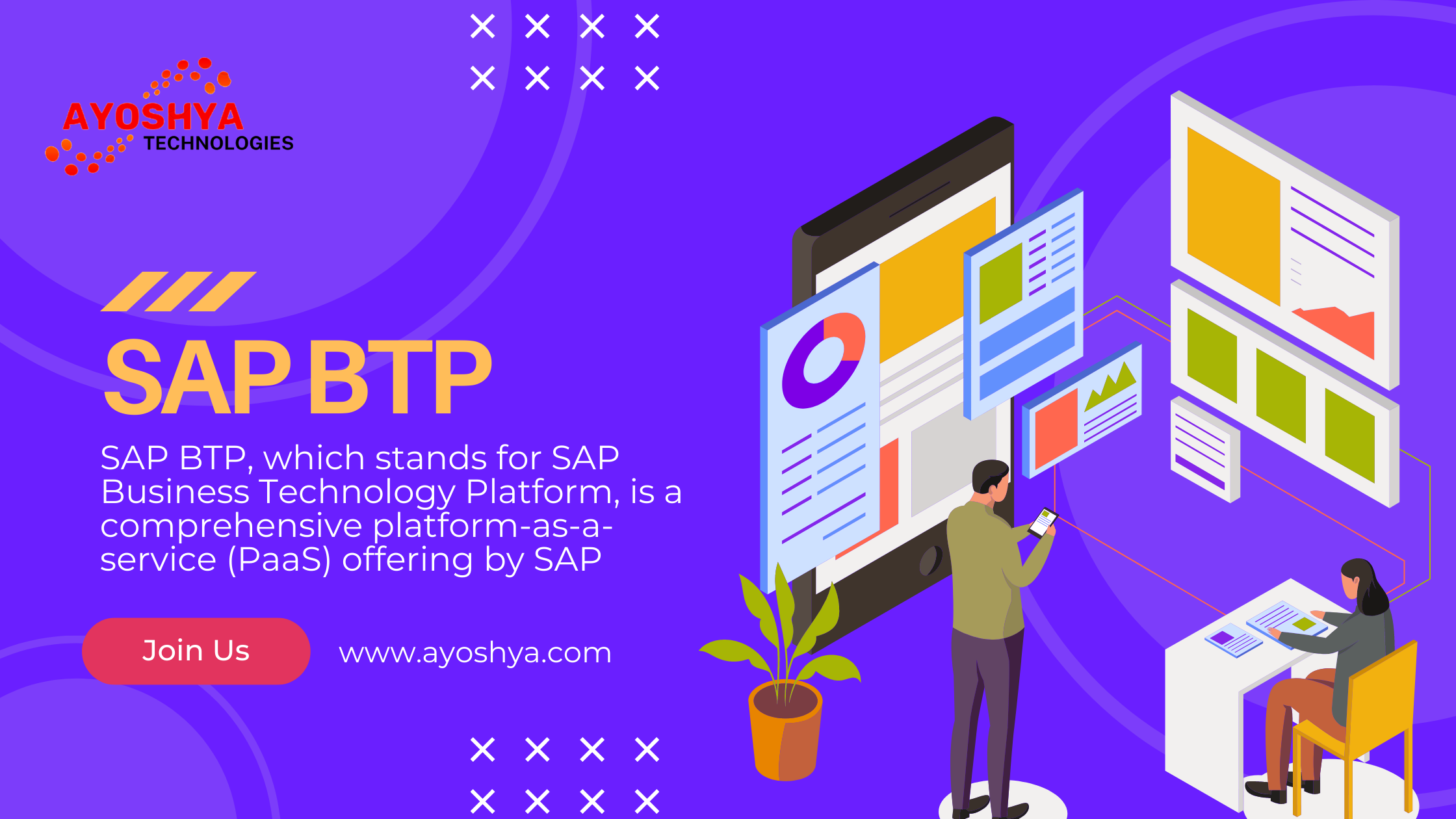
SAP BTP, which stands for SAP Business Technology Platform, is a comprehensive platform-as-a-service (PaaS) offering by SAP. It serves as the foundation for developing, integrating, and extending enterprise applications in the cloud. BTP provides organizations with the tools and services they need to drive digital transformation, innovation, and business agility.

Understanding the Cloud Platform

It operates in the cloud, leveraging the power of scalable infrastructure and services. It offers a secure and flexible environment for building and running applications, enabling organizations to take advantage of cloud benefits such as scalability, elasticity, and cost-efficiency. With SAP BTP, businesses can focus on developing innovative solutions without worrying about infrastructure management.

Key Features and Capabilities of SAP BTP

It encompasses a wide range of features and capabilities that support various aspects of application development, integration, and data management. Let’s explore some of its key features:

Application Development and Integration

It provides developers with a rich set of tools, frameworks, and services to build enterprise applications. It supports popular programming languages like Java, Node.js, and Python, allowing developers to work with their preferred languages. Additionally, SAP BTP offers integration services to connect different systems and applications seamlessly.

Data Management and Analytics

Data is at the core of digital transformation, and SAP BTP offers robust data management and analytics capabilities. It provides services for data integration, data warehousing, and data quality, allowing organizations to consolidate and manage their data effectively. Furthermore, BTP enables advanced analytics, including machine learning and predictive analytics, to gain valuable insights from data.

Security and Compliance

Security is a top priority for organizations when adopting cloud solutions. BTP incorporates industry-leading security measures to safeguard data and applications. It ensures data encryption, identity and access management, and compliance with regulatory requirements. With SAP BTP, organizations can trust that their data and systems are protected against threats.

Industry-Specific Solutions

It caters to various industries by offering industry-specific solutions and services. It provides preconfigured templates, industry best practices, and ready-to-use applications tailored to specific sectors. Whether it’s retail, manufacturing, finance, or healthcare, SAP BTP offers industry-specific tools to address unique business needs.

Benefits of SAP BTP

By leveraging SAP BTP, organizations can unlock a plethora of benefits:

  • Accelerated Innovation: It enables rapid application development, allowing organizations to bring innovative solutions to market faster.
  • Scalability and Flexibility: The cloud-based nature of SAP BTP ensures scalability and flexibility to meet changing business demands.
  • Cost Optimization: Organizations can optimize costs by paying for the resources and services they need, avoiding upfront infrastructure investments.
  • Improved Collaboration: It facilitates collaboration among development teams, stakeholders, and business users, promoting cross-functional alignment.
  • Enhanced Customer Experience: With BTP, organizations can deliver personalized and engaging experiences to their customers, driving customer satisfaction and loyalty.

BTP Adoption and Success Stories

Many organizations have embraced SAP BTP and witnessed significant benefits. For example, Company X, a global retail giant, utilized BTP to develop a mobile application that enhanced the in-store shopping experience for its customers. The application allowed customers to browse products, receive personalized recommendations, and seamlessly complete purchases, resulting in increased sales and customer satisfaction.

Conclusion

It plays a crucial role in empowering organizations’ digital transformation journeys. With its robust features, scalability, and industry-specific solutions, BTP provides the foundation for developing innovative applications, integrating systems, and managing data effectively. By embracing SAP BTP, businesses can unlock new opportunities, enhance agility, and stay ahead in today’s rapidly evolving digital landscape.

FAQs

Q1. Is SAP BTP suitable for small and medium-sized businesses?

Yes, It caters to businesses of all sizes. Its flexible pricing models and scalable infrastructure make it accessible to small and medium-sized enterprises (SMEs) as well as large organizations.

Q2. Can SAP BTP integrate with on-premises systems?

Yes, It offers integration services to connect cloud-based applications with on-premises systems. It ensures seamless data exchange and process integration across hybrid landscapes.

Q3. How does BTP ensure data security and compliance?

It follows industry-standard security practices and complies with various data protection regulations. It provides features such as data encryption, secure authentication, and access controls to protect sensitive information.

Q4. Can BTP support custom application development?

Yes, It provides tools and services for custom application development. Developers can utilize the platform’s capabilities to build tailored applications that meet specific business requirements.

Q5. Can BTP be integrated with other SAP solutions?

Yes, It seamlessly integrates with other SAP solutions, such as SAP S/4HANA, SAP SuccessFactors, and SAP Customer Experience. This integration enables end-to-end business processes and data flow across the SAP ecosystem.

SAP Fiori
SAP

What is SAP Fiori used for?

Introduction to SAP Fiori

SAP Fiori is a user experience (UX) and design system developed by SAP, the leading provider of enterprise software solutions. It offers a collection of applications, design guidelines, and user interface (UI) patterns that provide a modern, intuitive, and responsive user experience for SAP software users. SAP Fiori is designed to simplify and streamline complex business processes, enabling users to perform their tasks efficiently and effectively.

The Purpose and Benefits of SAP Fiori

It serves several purposes and offers a range of benefits to organizations and end users. Let’s explore some of the key advantages of using SAP Fiori:

User-Centric Design and Enhanced User Experience

It follows a user-centric design approach, prioritizing the needs and expectations of end users. Its visually appealing and intuitive interface makes it easy for users to navigate and interact with enterprise applications. By improving the user experience, SAP Fiori enhances user satisfaction, productivity, and adoption of SAP software.

Mobile-First Approach and Cross-Device Compatibility

In today’s mobile-driven world, SAP Fiori embraces a mobile-first approach. It provides responsive designs and supports cross-device compatibility, allowing users to access SAP applications seamlessly on various devices such as smartphones, tablets, and desktops. This mobility empowers users to stay connected and productive while on the go.

Role-Based Applications and Personalized Experience

It offers role-based applications tailored to specific user roles and responsibilities. It presents users with personalized dashboards and relevant information, enabling them to focus on tasks that are most relevant to their roles. This personalization improves efficiency and reduces the time spent searching for relevant data and features.

Integration and Seamless Connectivity

One of the key strengths of SAP Fiori is its seamless integration with other SAP solutions, including SAP S/4HANA, SAP Business Suite, and SAP Cloud Platform. It leverages the power of SAP’s underlying technologies, such as SAPUI5 and OData services, to provide real-time data access and enable smooth interoperability between applications. This integration ensures data consistency and enables end-to-end business processes.

Simplified Business Processes and Increased Productivity

It simplifies complex business processes by offering streamlined and user-friendly interfaces. It eliminates unnecessary steps and provides guided workflows, reducing user errors and increasing overall productivity. With it, users can accomplish tasks efficiently, enabling them to focus on value-added activities and strategic decision-making.

Customizability and Extension Capabilities

It allows organizations to customize and extend the standard applications according to their specific business needs. It provides a robust framework for creating bespoke applications and adapting existing Fiori apps. This flexibility enables organizations to align SAP with their unique processes and requirements, ensuring a tailored user experience.

SAP Implementation and Adoption

Implementing SAP Fiori involves a combination of technical configuration, UX design, and business process alignment. Organizations can leverage SAP Fiori apps directly from the SAP launchpad, which serves as a central entry point for all Fiori applications. The implementation process includes activities such as app activation, configuration, and user role assignment.

To drive successful adoption, organizations should provide comprehensive training and change management initiatives to familiarize users with SAP Fiori’s features and benefits. This ensures a smooth transition and helps users maximize the potential of SAP in their day-to-day work.

Conclusion

It revolutionizes the user experience for SAP software users, offering a modern and intuitive interface that simplifies complex business processes. With its user-centric design, mobile-first approach, and seamless integration capabilities, SAP enhances productivity, efficiency, and user satisfaction. By adopting SAP Fiori, organizations can unlock the full potential of their SAP solutions and empower users to achieve optimal results.

FAQs

Q1. Can SAP Fiori be used with any SAP solution?

Yes, it can be used with various SAP solutions, including SAP S/4HANA, SAP Business Suite, SAP ERP, and SAP Cloud Platform. It provides a consistent and unified user experience across different SAP products.

Q2. How can SAP Fiori improve user productivity?

It simplifies business processes, reduces the number of steps required to complete tasks, and offers role-based applications. By providing an intuitive and personalized experience, SAP Fiori enhances user productivity and reduces the time spent on navigating complex interfaces.

Q3. Is SAP compatible with mobile devices?

Yes, SAP Fiori is designed to be mobile-friendly and supports cross-device compatibility. It offers responsive designs that adapt to various screen sizes, allowing users to access SAP applications on smartphones, tablets, and desktops.

Q4. Can Fiori be customized to match specific business requirements?

Yes, SAP can be customized and extended to align with specific business needs. Organizations can adapt existing Fiori apps or develop custom applications using the SAP framework and tools.

Q5. How can organizations ensure successful Fiori adoption?

Successful SAP Fiori adoption requires proper training, change management initiatives, and user engagement. Organizations should provide comprehensive training programs, communicate the benefits of Fiori, and involve users in the implementation process to drive acceptance and maximize its potential.

Read More Blogs:

What is SAP Service Cloud?

Security Risks of Increased Mobility With S/4 Hana

SAP S/4HANA Logistics

SAP in the Automobile Industry

SAP BO: Unlocking Business Insights with SAP Business Objects

× How can I help you?