SAP & Oracle partner and support companies

Loading

Google using Oracle
SAP

Is Google using Oracle?

Introduction

Google, one of the world’s leading technology companies, has recently made a significant decision regarding its internal financial software. After years of utilizing Oracle’s finance software, Google has chosen to transition to SAP, a renowned enterprise software provider. Google using Oracle. In this article, we will delve into the details of Google’s transition and explore the reasons behind this strategic move.

Google’s Finance Software Transition

Google has announced its intention to migrate its internal financial software from Oracle to SAP in the coming weeks. This transition will involve replacing Oracle’s finance software, which has been used by Google for a considerable period of time. While the exact timeline and specific reasons for this move have not been disclosed publicly, it signifies a significant change in Google’s internal financial operations.

The Decision to Adopt SAP

The decision to adopt SAP as the new finance software for Google showcases the company’s strategic shift towards exploring alternative solutions. SAP, a widely recognized and trusted enterprise software provider, offers comprehensive financial management solutions that cater to the needs of large organizations like Google. By embracing SAP, Google aims to leverage the capabilities of their software to streamline financial processes and enhance operational efficiency.

Benefits of Migrating to SAP

Migrating from Oracle to SAP brings several potential benefits to Google’s financial operations. Some key advantages include:

  1. Enhanced Functionality: SAP provides a range of advanced features and modules that can empower Google’s finance teams with improved capabilities, such as real-time reporting, automation, and analytics.
  2. Integration Opportunities: SAP’s software ecosystem offers seamless integration with various business functions, enabling Google to consolidate its operations and achieve greater cross-functional collaboration.
  3. Scalability and Flexibility: As Google continues to grow, SAP’s scalable architecture can accommodate the expanding needs of the organization, ensuring a robust financial management system for the future.
  4. Industry Best Practices: SAP incorporates industry-specific best practices, allowing Google to align its financial processes with global standards and regulations.

Implications for Oracle

While Google’s decision to migrate its finance software to SAP is significant, there is no indication at this point that Google plans to move other systems off Oracle. It is important to note that Google’s adoption of SAP for financial management does not necessarily indicate a complete severance of ties with Oracle. Google may continue to use Oracle for other aspects of its operations, such as databases or other enterprise software solutions.

Conclusion

Google’s transition from Oracle’s finance software to SAP marks a strategic move aimed at enhancing its internal financial operations. By embracing SAP’s comprehensive financial management solutions, Google aims to leverage advanced functionality, integration opportunities, scalability, and industry best practices. While the transition signifies a significant change, it is important to recognize that Google’s relationship with Oracle may extend beyond finance software. The move showcases Google’s commitment to exploring alternative solutions to meet its evolving business needs.

FAQs (Frequently Asked Questions)

Q1: Why is Google transitioning from Oracle to SAP for its finance software?

A1: Google’s decision to adopt SAP stems from the desire to leverage SAP’s advanced functionality, integration capabilities, scalability, and industry best practices to enhance its financial operations.

Q2: Will Google completely sever ties with Oracle after adopting SAP for finance software?

A2: There is no indication at this point that Google plans to move other systems off Oracle. The transition to SAP specifically applies to Google’s internal finance software.

Q3: What benefits does SAP offer compared to Oracle in the financial management space?

A3: SAP provides enhanced functionality, integration opportunities, scalability, and industry best practices, enabling organizations to streamline financial processes and achieve operational efficiency.

Q4: Is this transition limited to Google’s finance software, or will it extend to other areas?

A4: Currently, the transition to SAP applies specifically to Google’s internal finance software. It does not indicate a complete shift away from Oracle for other systems or solutions.

Q5: How will Google ensure a smooth transition from Oracle to SAP?

A5: Google will likely have a well-defined implementation plan in place, including training and support for employees, data migration, and thorough testing to ensure a successful transition.

Financial Functional Consultant
SAP

Financial Functional Consultant Roles and Responsibilities

As businesses strive to optimize their financial operations and maximize profitability, the role of a Financial Functional Consultant becomes increasingly crucial. These professionals specialize in implementing financial management systems and providing expert guidance to organizations. In this article, we will delve into the roles and responsibilities of a Financial Functional Consultant, exploring the value they bring to businesses.

Introduction

Financial Functional Consultants play a vital role in the successful implementation and utilization of financial management systems within organizations. They possess a deep understanding of financial processes, industry best practices, and the capabilities of software solutions. Let’s explore their roles and responsibilities in more detail.

What is a Financial Functional Consultant?

A Financial Functional Consultant is an expert in financial management systems, often specializing in a specific software or platform. They work closely with clients to understand their financial requirements, analyze existing processes, and recommend suitable solutions. These consultants possess a combination of financial knowledge, technical expertise, and business acumen.

Implementation and Configuration

One of the primary responsibilities of a Financial Functional Consultant is the implementation and configuration of financial management systems. They work closely with clients to understand their unique business requirements and configure the software accordingly. This involves setting up modules, defining financial workflows, and customizing the system to align with the organization’s processes.

Business Process Analysis

Financial Functional Consultants conduct in-depth analysis of existing financial processes within an organization. They identify areas for improvement, streamline workflows, and propose enhancements to optimize efficiency. By understanding the client’s business objectives, they align the financial management system with the organization’s goals, ensuring seamless integration and effective utilization.

System Testing and Validation

To ensure the accuracy and reliability of the financial management system, Financial Functional Consultants perform rigorous testing and validation. They verify the system’s functionality, data integrity, and adherence to regulatory requirements. Consultants collaborate with stakeholders to identify and resolve any issues or discrepancies, ensuring a smooth and error-free system implementation.

User Training and Support

Financial Functional Consultants provide comprehensive user training to ensure that the organization’s finance team can effectively utilize the system. They conduct training sessions, create user documentation, and offer ongoing support to address user queries and concerns. By empowering users with the necessary knowledge and skills, consultants enable organizations to maximize the benefits of the financial management system.

Data Migration and Integration

When implementing a financial management system, data migration from legacy systems is often necessary. Financial Functional Consultants are responsible for mapping and migrating data to ensure a seamless transition. They also oversee the integration of the financial management system with other software applications, such as CRM or ERP systems, enabling data flow and process synchronization.

Continuous System Improvement

Financial management systems require continuous improvement to adapt to evolving business needs and industry changes. Financial Functional Consultants proactively identify opportunities for system enhancement, monitor system performance, and recommend upgrades or updates. They stay up to date with the latest trends and best practices to provide valuable insights and guidance to their clients.

Conclusion

Financial Functional Consultants play a pivotal role in helping organizations optimize their financial management systems. From implementation and configuration to user training and support, they ensure the effective utilization of financial software solutions. By leveraging their expertise, businesses can streamline financial processes, enhance data accuracy, and drive financial success.

FAQs (Frequently Asked Questions)

Q1: What is the role of a Financial Functional Consultant?

A1: Financial Functional Consultants specialize in implementing financial management systems and providing expert guidance to organizations.

Q2: What are the primary responsibilities of a Financial Functional Consultant?

A2: The primary responsibilities include implementation and configuration, business process analysis, system testing and validation, user training and support, data migration and integration, and continuous system improvement.

Q3: What skills are required to be a successful Financial Functional Consultant?

A3: Successful Financial Functional Consultants possess a combination of financial knowledge, technical expertise, business acumen, and strong analytical and communication skills.

Q4: How do Financial Functional Consultants ensure the successful implementation of financial management systems?

A4: They work closely with clients to understand their requirements, configure the system accordingly, conduct thorough testing and validation, provide user training and support, and continuously improve the system based on evolving business needs.

Q5: Can Financial Functional Consultants work with specific financial management software?

A5: Yes, Financial Functional Consultants often specialize in specific software or platforms and leverage their expertise in implementing and optimizing those systems.

Oracle Consulting
SAP

What Does Oracle Consulting Do?

In the realm of enterprise resource planning (ERP) software, Oracle stands as a leading provider, offering a comprehensive suite of solutions to streamline business operations. To ensure successful implementation and utilization of their ERP software, Oracle provides consulting services to assist customers throughout their journey. In this article, we will explore the role of Oracle consulting and how it helps customers implement and optimize Oracle ERP software solutions.

Introduction

Oracle consulting plays a vital role in helping organizations achieve their business goals by providing expert guidance and support in the implementation of Oracle ERP software. These consultants possess in-depth knowledge of Oracle products and leverage their expertise to ensure a smooth and successful deployment.

Understanding Oracle Consulting

Oracle consulting teams consist of highly skilled professionals who specialize in various aspects of Oracle software implementation. They collaborate closely with customers, understanding their unique requirements, and devising tailored solutions that align with their business objectives.

Implementation Support

One of the primary responsibilities of Oracle consultants is to offer implementation support. They work closely with customers, guiding them through the entire implementation process. This includes activities such as requirement gathering, system configuration, data migration, testing, and training. By providing comprehensive support, consultants ensure that Oracle ERP software is effectively deployed, configured, and customized to meet the specific needs of each organization.

Cloud Expertise

With the increasing popularity of cloud-based solutions, Oracle consultants possess expertise in cloud deployment models. They assist customers in leveraging the benefits of the cloud by providing guidance on selecting the right cloud infrastructure and implementing Oracle ERP software in a cloud environment. Consultants ensure seamless integration between on-premises and cloud solutions, enabling organizations to optimize their operations and scale efficiently.

Customer Loyalty

Oracle consultants strive to build long-term relationships with customers by delivering exceptional service and support. They understand the importance of customer satisfaction and work diligently to exceed expectations. By providing top-class support and demonstrating the value of Oracle ERP software, consultants foster customer loyalty and drive customer success.

Software Solutions Implementation

Oracle consultants lead the implementation of Oracle software solutions, working alongside customers to deploy various modules and functionalities within the ERP system. They ensure that the software is properly configured, workflows are optimized, and integrations with other systems are seamless. Consultants also provide ongoing support post-implementation, addressing any issues and helping customers unlock the full potential of Oracle ERP software.

Conclusion

Oracle consulting plays a crucial role in helping customers implement and optimize Oracle ERP software solutions. With their expertise in software implementation, cloud deployment, and customer support, consultants guide organizations throughout their ERP journey. By leveraging Oracle consulting services, businesses can streamline their operations, maximize the value of their software investments, and drive long-term success.

FAQs (Frequently Asked Questions)

Q1: What is the role of Oracle consulting?

A1: Oracle consulting provides expert guidance and support in the implementation and optimization of Oracle ERP software solutions.

Q2: What services does Oracle consulting offer?

A2: Oracle consulting offers implementation support, cloud expertise, customer loyalty initiatives, and ongoing software solutions implementation.

Q3: How do Oracle consultants ensure customer success?

A3: Oracle consultants prioritize customer satisfaction by delivering top-class support, addressing customer needs, and helping organizations maximize the value of Oracle ERP software.

Q4: Can Oracle consultants assist with cloud deployment?

A4: Yes, Oracle consultants possess expertise in cloud deployment models and assist customers in leveraging the benefits of the cloud for ERP implementation.

Q5: How do Oracle consultants contribute to long-term customer relationships?

A5: By providing exceptional service, support, and demonstrating the value of Oracle ERP software, consultants foster customer loyalty and drive long-term success.

SAP AND ORACLE WORK TOGETHER
SAP

DO SAP AND ORACLE WORK TOGETHER?

In today’s digital age, businesses rely heavily on enterprise resource planning (ERP) systems to streamline their operations and enhance productivity. Two prominent players in the ERP market are SAP and Oracle. SAP offers a comprehensive suite of software solutions, while Oracle specializes in database management systems. Many organizations wonder if SAP and Oracle can work together seamlessly. In this article, we will explore the compatibility and integration possibilities between SAP applications and Oracle databases.SAP AND ORACLE WORK TOGETHER

Table of Contents

  1. Introduction
  2. Understanding SAP and Oracle
  3. SAP and Oracle Integration
  4. Benefits of SAP and Oracle Integration
  5. Challenges in Integrating SAP and Oracle
  6. Best Practices for Successful Integration
  7. Case Studies: Successful SAP and Oracle Integration
  8. Future Trends and Possibilities
  9. Conclusion
  10. FAQs (Frequently Asked Questions)

Introduction

In the realm of ERP systems, SAP and Oracle have established themselves as industry leaders. SAP offers a wide range of modules that cover various aspects of business operations, including finance, supply chain, human resources, and customer relationship management. On the other hand, Oracle specializes in providing robust and reliable database management systems that support large-scale enterprise applications.

Understanding SAP and Oracle

SAP’s ERP software, often referred to as SAP ECC (ERP Central Component), is designed to integrate various business processes into a unified system. It provides a comprehensive suite of modules that can be tailored to meet the specific needs of different industries. SAP ECC runs on a variety of operating systems, including Unix, Linux, and Windows.

Oracle, on the other hand, offers a range of database management systems, including Oracle Database, which is widely used in enterprise environments. Oracle Database provides a scalable and secure platform for storing and managing vast amounts of data.

SAP and Oracle Integration

Organizations that utilize SAP applications and Oracle databases often seek ways to integrate the two systems effectively. Integration allows seamless data flow between SAP and Oracle, enabling businesses to leverage the strengths of both platforms. Fortunately, SAP and Oracle can work together harmoniously.

By leveraging specific integration technologies and tools, such as SAP NetWeaver, Oracle Database Gateway, and Oracle GoldenGate, organizations can establish a robust and reliable integration framework. These tools facilitate data exchange, synchronization, and real-time updates between SAP and Oracle systems, ensuring consistent and accurate information across the enterprise.

Benefits of SAP and Oracle Integration

The integration of SAP and Oracle offers several benefits to organizations. Firstly, it enables streamlined business processes by eliminating data silos and redundant data entry. This integration ensures that data entered in one system is immediately available in the other, eliminating the need for manual data transfer.

Secondly, SAP and Oracle integration enhances reporting and analytics capabilities. By combining data from both systems, organizations can gain a holistic view of their operations, enabling better decision-making and strategic planning.

Furthermore, integration allows organizations to leverage the advanced features and functionalities offered by both SAP and Oracle. It maximizes the value of investments in these systems and provides a unified user experience for employees.

Challenges in Integrating SAP and Oracle

While SAP and Oracle integration offers numerous advantages, it is not without its challenges. Organizations must carefully plan and execute the integration process to avoid potential pitfalls.

One common challenge is the complexity of the integration landscape. Both SAP and Oracle systems have intricate structures, and aligning them requires in-depth technical knowledge and expertise. Additionally, differences in data models and business processes between SAP and Oracle may pose integration challenges that need to be addressed.

Data consistency and synchronization are also critical aspects to consider during integration. Ensuring that data remains consistent and up-to-date across both systems requires robust data integration and validation mechanisms.

Best Practices for Successful Integration

To achieve successful integration between SAP and Oracle, organizations should follow best practices:

  1. Thoroughly assess integration requirements and align them with business goals.
  2. Engage experienced consultants and experts in SAP and Oracle integration.
  3. Develop a comprehensive integration plan that covers all aspects, including data mapping, process flows, and security.
  4. Conduct rigorous testing and validation to ensure data integrity and system stability.
  5. Provide proper training and support to end-users to facilitate a smooth transition.

Case Studies: Successful SAP and Oracle Integration

Numerous organizations have successfully integrated SAP and Oracle systems to optimize their operations and achieve greater efficiency. Case studies highlight the benefits of such integration, including improved process automation, enhanced data visibility, and reduced IT complexity.

For example, a global manufacturing company integrated its SAP ERP system with Oracle Database to streamline its production planning and inventory management processes. This integration enabled real-time data synchronization and improved decision-making, resulting in cost savings and improved customer satisfaction.

As technology continues to evolve, the integration possibilities between SAP and Oracle are expected to expand. The emergence of cloud-based solutions and advancements in artificial intelligence and machine learning offer new avenues for integration and collaboration between these two systems.

Conclusion

In conclusion, SAP and Oracle can indeed work together harmoniously, allowing organizations to leverage the strengths of both systems. Through effective integration, businesses can streamline processes, enhance data visibility, and make informed decisions. However, it is essential to consider the challenges and follow best practices to ensure a successful integration outcome.

FAQs (Frequently Asked Questions)

Q1: Can I integrate SAP and Oracle without third-party tools?

A1: While it is possible to integrate SAP and Oracle using custom-built solutions, third-party tools like SAP NetWeaver and Oracle Database Gateway simplify the integration process.

Q2: Is SAP or Oracle better for my business?

A2: The choice between SAP and Oracle depends on various factors, such as your industry, specific business requirements, and budget. It is recommended to consult with ERP experts to determine the best fit for your organization.

Q3: What are the potential risks of SAP and Oracle integration?

A3: Some potential risks include data inconsistency, system instability, and the need for ongoing maintenance and support. Proper planning and execution can mitigate these risks.

Q4: Can SAP and Oracle integration improve data security?

A4: Yes, integration allows organizations to implement centralized security measures across SAP and Oracle systems, enhancing overall data security.

Q5: Where can I find more information on SAP and Oracle integration?

A5: For more information, you can refer to official documentation, online forums, and consult with SAP and Oracle integration experts.

oracle technical consultant
SAP

WHAT DOES AN ORACLE TECHNICAL CONSULTANT DO?

I. Introduction to Oracle technical consultant

Oracle technical consultant plays a vital role in organizations by leveraging their expertise to implement, customize, and optimize Oracle software solutions. With a deep understanding of Oracle technologies and tools, these professionals provide valuable guidance in ensuring efficient and effective use of Oracle systems. In this article, we will explore the responsibilities, skills required, benefits, and career opportunities associated with the role of an Oracle technical consultant.

II. Responsibilities of an Oracle Technical Consultant

Oracle technical consultants are responsible for various tasks throughout the software development lifecycle. Let’s take a closer look at their key responsibilities:

Requirement Gathering and Analysis

Oracle technical consultants work closely with clients to understand their business needs and objectives. They conduct thorough requirement gathering sessions, analyze existing systems and processes, and identify areas where Oracle solutions can be implemented to improve efficiency and productivity.

Designing and Developing Oracle-Based Solutions

Based on the gathered requirements, Oracle technical consultants design and develop customized solutions using Oracle technologies. They create technical specifications, configure Oracle software, and develop extensions or integrations to meet specific business requirements.

Implementing and Configuring Oracle Software

Once the design phase is complete, Oracle technical consultants oversee the implementation and configuration of Oracle software. They ensure that the system is set up correctly, modules are integrated seamlessly, and data is migrated accurately. They collaborate with cross-functional teams and stakeholders to ensure a smooth transition to the new Oracle environment.

Conducting System Testing and Troubleshooting

Oracle technical consultants perform comprehensive system testing to verify the functionality, performance, and reliability of Oracle solutions. They identify and address any issues or bugs that arise during testing, ensuring that the system meets the desired quality standards. In case of technical problems or errors, they troubleshoot and provide solutions to minimize disruptions.

Providing Technical Support and Maintenance

Oracle technical consultants offer ongoing technical support to clients, assisting with system enhancements, updates, and maintenance activities. They promptly address any user concerns or issues, ensuring the smooth operation of Oracle software. They also provide guidance on best practices, performance optimization, and security measures.

III. Skills and Qualifications Required to Oracle technical consultant

To excel as an Oracle technical consultant, individuals need to possess a specific set of skills and qualifications. These include:

Strong Knowledge of Oracle Technologies and Tools

Oracle technical consultants should have a deep understanding of Oracle’s software suite, including Oracle Database, Oracle E-Business Suite, Oracle Fusion Middleware, and Oracle Cloud Applications. They should stay updated with the latest Oracle releases, features, and industry trends.

Proficiency in Programming Languages and SQL

A strong foundation in programming languages like Java, PL/SQL, and SQL is essential for Oracle technical consultants. They should be able to write efficient queries, develop scripts, and customize Oracle applications using these languages.

Analytical and Problem-Solving Skills

Oracle technical consultants need to have excellent analytical and problem-solving abilities. They should be able to analyze complex business requirements, identify potential challenges, and propose effective solutions. Strong critical thinking skills and attention to detail are crucial in this role.

Effective Communication and Collaboration Abilities

As Oracle technical consultants work closely with clients and cross-functional teams, effective communication and collaboration skills are essential. They should be able to translate technical concepts into non-technical terms, clearly communicate project updates, and foster positive relationships with stakeholders.

IV. Benefits of Hiring Oracle technical consultant

Hiring Oracle technical consultants brings several benefits to organizations implementing Oracle solutions. Some of the key advantages include:

Expertise and Specialized Knowledge

Oracle technical consultants possess extensive knowledge and expertise in Oracle technologies. Their specialized skills enable them to provide valuable insights, best practices, and guidance throughout the implementation and optimization process.

Efficient Implementation and Customization

Oracle technical consultants ensure a smooth and efficient implementation of Oracle software. They have experience in configuring and customizing Oracle solutions to align with specific business requirements, minimizing potential delays and ensuring a tailored solution.

Enhanced System Performance and Reliability

By leveraging their technical expertise, Oracle consultants optimize system performance, ensuring that Oracle software operates smoothly and efficiently. They fine-tune configurations, monitor system health, and make necessary adjustments to maximize performance and reliability.

Ongoing Support and Maintenance

Oracle technical consultants offer ongoing support and maintenance services, providing organizations with the assurance that they can rely on expert assistance when needed. They address system issues, perform updates, and provide recommendations to optimize the usage of Oracle software.

V. Industries and Sectors that Utilize Oracle technical consultant

Oracle technical consultants are in demand across various industries and sectors. Some of the sectors that commonly utilize Oracle solutions and, consequently, rely on Oracle technical consultants include:

  • IT and software development companies
  • Financial and banking institutions
  • Manufacturing and supply chain organizations
  • Healthcare and pharmaceutical sectors
  • Retail and e-commerce industries

In these sectors, Oracle technical consultants play a vital role in optimizing business processes, ensuring data integrity, and enabling efficient decision-making.

VI. Challenges Faced by Oracle technical consultant

Being an Oracle technical consultant comes with its own set of challenges. Some common challenges include:

Keeping up with Technological Advancements

Oracle continuously releases updates, new features, and enhancements to its software suite. Staying updated with these technological advancements requires consultants to continuously learn and adapt to changes to provide the best solutions to their clients.

Adapting to Changing Business Requirements

Organizations’ business needs and requirements can change over time. Oracle technical consultants need to be flexible and adaptable, adjusting their strategies and solutions to align with evolving business goals.

Handling Complex Integration Projects

Integrating Oracle software with existing systems and applications can be complex, requiring careful planning and execution. Oracle technical consultants need to navigate through integration challenges, ensuring seamless data flow and compatibility between different systems.

Managing Stakeholder Expectations

Oracle technical consultants work closely with stakeholders, including business users, IT teams, and management. Managing diverse expectations, balancing priorities, and effectively communicating project progress are crucial for successful outcomes.

VII. Career Path and Growth Opportunities

The role of an Oracle technical consultant offers promising career opportunities and growth potential. Individuals can start their careers as junior consultants or associates, and with experience and skill development, progress to senior consultant or managerial roles. Continuous learning, obtaining Oracle certifications, and expanding domain knowledge are key to advancing in this field.

VIII. Conclusion

Oracle technical consultants play a crucial role in implementing, customizing, and optimizing Oracle software solutions for organizations. With their expertise in Oracle technologies, programming languages, and problem-solving, they contribute to efficient system implementation, improved performance, and ongoing support. Hiring Oracle technical consultants brings significant benefits and ensures organizations can leverage the full potential of Oracle solutions.

IX. FAQs

  1. What is the average salary of an Oracle technical consultant?
    • The average salary of an Oracle technical consultant varies based on factors such as experience, location, and industry. However, on average, it can range from $70,000 to $120,000 per year.
  2. How long does it take to become an Oracle technical consultant?
    • The timeline to become an Oracle technical consultant depends on individual circumstances, such as prior experience and education. Generally, it takes several years of relevant experience and acquiring Oracle certifications to establish oneself as a proficient Oracle technical consultant.
  3. Can Oracle technical consultants work remotely?
    • Yes, many Oracle technical consultants have the flexibility to work remotely, especially with the rise of remote work trends and advancements in technology that enable effective virtual collaboration.
  4. Are there any specific certifications for Oracle technical consultants?
    • Oracle offers various certifications for technical consultants, such as Oracle Certified Professional (OCP) certifications for Oracle Database, Oracle Cloud, and Oracle E-Business Suite. These certifications validate an individual’s expertise in specific Oracle technologies.
  5. How does an Oracle technical consultant collaborate with other teams in an organization?
    • Oracle technical consultants collaborate closely with cross-functional teams, including business users, IT teams, and project managers. They work together to gather requirements, design solutions, and ensure successful implementation and integration of Oracle software. Effective communication and collaboration skills are essential for seamless teamwork.

oracle consulting
SAP

Oracle Consulting: the Power of Digital Transformation

Introduction to oracle consulting

In today’s dynamic business landscape, organizations across industries are constantly striving to stay ahead of the competition, drive innovation, and achieve sustainable growth. To succeed in this digital era, companies need robust and agile systems that can streamline their operations, optimize performance, and enable data-driven decision-making. Oracle, a global leader in enterprise software solutions, offers a comprehensive suite of products designed to meet these needs. Oracle consulting services play a pivotal role in helping businesses unlock the full potential of Oracle software and navigate the path to digital transformation. In this blog, we will explore the world of Oracle consulting and discover how it can revolutionize businesses.

1.Understanding Oracle Consulting

Oracle consulting services encompass a wide range of expertise and support, empowering organizations to leverage Oracle’s powerful suite of products effectively. These services are delivered by experienced consultants who possess deep knowledge of Oracle’s offerings and best practices across various industries.

a) Strategic Planning: Oracle consultants collaborate with businesses to understand their unique goals, challenges, and requirements. They help develop a comprehensive strategic plan to align Oracle solutions with the organization’s long-term vision, ensuring maximum value and return on investment.

b) Implementation and Integration: Oracle consultants guide organizations through the implementation process, ensuring smooth deployment of Oracle software and modules. They configure and customize the software to meet specific business needs, seamlessly integrating it with existing systems and applications.

c) System Optimization: Oracle consulting services go beyond implementation. Consultants analyze the performance of Oracle systems, identifying areas for improvement and recommending optimizations. They help organizations maximize efficiency, enhance user experience, and achieve optimal system performance.

d) Training and Support: Oracle consultants provide comprehensive training programs to equip employees with the necessary skills to leverage Oracle software effectively. They offer ongoing support, troubleshooting assistance, and knowledge transfer, ensuring a smooth transition and long-term success.

2.Key Benefits

a) Streamlined Operations: Oracle consulting helps organizations streamline their business processes by leveraging Oracle’s robust suite of products. From financial management and supply chain optimization to customer relationship management and human resources, Oracle software integrates key functions, eliminating redundancies and improving overall operational efficiency.

b) Data-Driven Decision-Making: Oracle’s advanced analytics and reporting capabilities enable organizations to gather and analyze vast amounts of data in real-time. Oracle consultants help businesses harness the power of data, enabling informed decision-making and strategic planning. This empowers organizations to gain actionable insights, identify trends, and stay ahead of the competition.

c) Scalability and Flexibility: Oracle solutions are designed to scale with growing businesses and adapt to changing requirements. Oracle consulting services assist organizations in designing flexible systems that can accommodate future growth and evolving business needs. Consultants ensure that Oracle software is configured to support scalability, enabling businesses to expand without disruption.

d) Improved Customer Experience: Oracle’s customer experience (CX) solutions provide organizations with tools to deliver personalized and seamless interactions across various touchpoints. Oracle consultants help businesses optimize their CX strategies, enabling them to enhance customer satisfaction, build brand loyalty, and drive revenue growth.

3.Realizing the Potential of Oracle Consulting

Partnering with Oracle consultants can be a game-changer for organizations aiming to embark on a successful digital transformation journey. By leveraging the expertise and experience of Oracle consulting services, businesses can:

  • Unlock the full potential of Oracle software and modules
  • Optimize operations, reduce costs, and increase productivity
  • Gain real-time insights for data-driven decision-making
  • Improve customer experience and build lasting relationships
  • Drive innovation and stay ahead of the competition

Conclusion

Oracle consulting services provide organizations with the expertise, guidance, and support needed to unleash the power of Oracle software and drive successful digital transformations. By leveraging Oracle’s comprehensive suite of products and the knowledge of experienced consultants, businesses can optimize their operations, make informed decisions, and achieve sustainable growth in the rapidly evolving digital landscape.

SAP Consulting
SAP

SAP & Oracle Consulting: A Winning Combination

Introduction to SAP Consulting

In today’s rapidly evolving business landscape, organizations face increasing challenges in managing their complex operations efficiently and effectively. This is where enterprise resource planning (ERP) systems like SAP and Oracle step in, offering comprehensive solutions to streamline processes, optimize productivity, and drive sustainable growth. To maximize the benefits of these robust platforms, many companies turn to specialized SAP and Oracle consulting services. In this blog, we will delve into the world of SAP and Oracle consulting and explore how they can revolutionize businesses across industries.

1.Understanding SAP Consulting

SAP, a global leader in ERP software, offers a suite of powerful solutions that integrate various business functions and enable seamless data flow across an organization. However, implementing and customizing SAP systems requires expertise and experience. SAP consulting firms bring in-depth knowledge and specialized skills to assist businesses in implementing, configuring, and optimizing SAP software to meet their unique requirements.

a) Tailored Implementation:

SAP consultants work closely with organizations to understand their specific needs and objectives. They guide the implementation process, ensuring that SAP modules are configured to align with business processes, resulting in streamlined operations and improved efficiency.

b) Customization and Integration:

Every business has unique workflows and systems. SAP consultants leverage their expertise to customize SAP software, integrating it seamlessly with existing infrastructure and applications. This enables data synchronization, enhances decision-making capabilities, and improves overall performance.

c) Training and Support:

SAP consultants also provide comprehensive training programs to equip employees with the necessary skills to utilize the SAP system effectively. They offer ongoing support, ensuring a smooth transition and addressing any issues that may arise during and after implementation.

2.Exploring Oracle Consulting

Oracle is another industry giant renowned for its ERP solutions, designed to simplify complex business processes and increase organizational agility. Oracle consulting services play a crucial role in helping businesses unlock the full potential of Oracle software, enabling them to stay ahead of the competition.

a) Strategy and Roadmap:

Oracle consultants collaborate with organizations to develop a strategic roadmap that aligns Oracle solutions with business objectives. They analyze existing processes, identify areas for improvement, and design a tailored Oracle implementation plan.

b) Implementation and Integration:

Oracle consultants possess extensive knowledge of Oracle’s vast product suite, enabling them to implement and integrate various Oracle modules seamlessly. This includes functionalities such as financial management, supply chain management, human resources, customer relationship management, and more.

c) Performance Optimization:

Oracle consulting services go beyond implementation. Consultants continuously monitor and analyze system performance, identify bottlenecks, and recommend optimizations to enhance efficiency and deliver maximum value from Oracle investments.

3.Benefits of SAP and Oracle Consulting

a) Enhanced Efficiency:

SAP and Oracle consulting streamline business processes, eliminate redundancies, and automate workflows, resulting in improved efficiency and productivity. Organizations can reallocate resources to strategic initiatives, driving growth and innovation.

b) Seamless Integration:

SAP and Oracle consulting facilitate seamless integration with existing systems and applications, enabling data synchronization and providing a unified view of operations. This empowers businesses to make informed decisions based on real-time insights.

c) Tailored Solutions:

SAP and Oracle consultants work closely with organizations to understand their unique requirements and develop customized solutions. This ensures that businesses can leverage the full potential of these ERP systems, optimizing their operations and achieving competitive advantages.

d) Expertise and Support:

SAP and Oracle consultants bring deep knowledge and experience in implementing and managing ERP systems. They provide training, support, and guidance throughout the implementation process, ensuring a smooth transition and long-term success.

Conclusion

In a fast-paced and highly competitive business environment, SAP and Oracle consulting services have become invaluable for organizations seeking to harness the power of ERP systems. By leveraging the expertise of SAP and Oracle consultants, businesses can unlock the full potential of these robust platforms, optimize operations, and pave the way for sustainable growth. Whether it’s SAP’s comprehensive suite or Oracle’s extensive product portfolio, the collaboration between organizations and specialized consultants creates a winning combination for digital transformation and business success.

Release Strategy Configuration
SAP

Streamlining Approvals: Release Strategy Configuration in SAP S/4HANA

In large organizations, efficient approval processes are crucial for maintaining control over various business operations. SAP S/4HANA provides a robust solution for configuring release strategies, enabling organizations to define and automate approval workflows. In this blog post, we will explore the concept of release strategy configuration in SAP S/4HANA and understand how it helps streamline approvals and ensure compliance.

  1. Understanding Release Strategy configuration:

Release strategy refers to the defined sequence of approvals required for specific business transactions, such as purchase orders or requisitions. It ensures that appropriate stakeholders review and authorize critical decisions, providing a checks-and-balances system within the organization. Release strategies typically involve multiple levels of approvals based on predefined criteria, such as monetary value, document type, or specific conditions.

  1. Configuration Steps:

To configure release strategies in SAP S/4HANA, several key steps need to be followed:

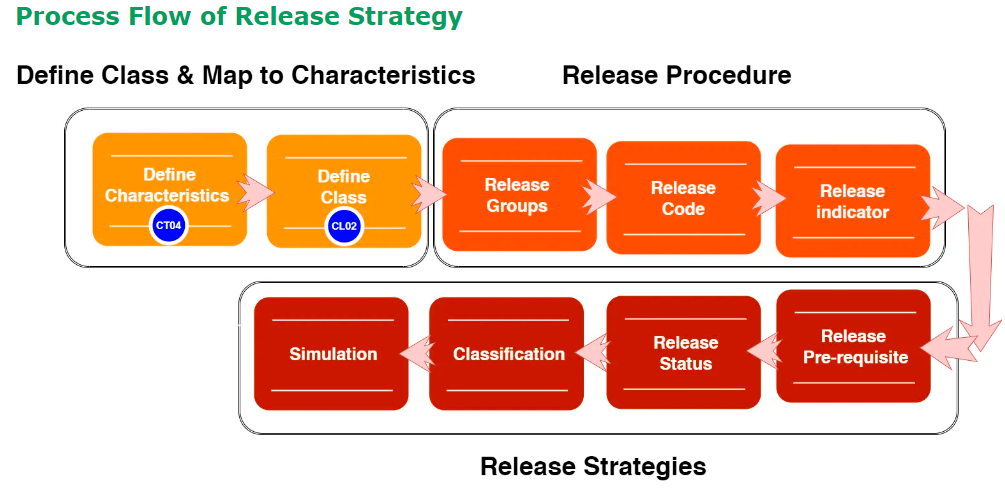
Release Strategy Configuration

a. Define Release Groups: Release groups categorize documents based on common characteristics. For example, purchase orders for specific departments or cost centers can be grouped together.

b. Assign Release Codes: Release codes represent individual approvers or groups responsible for granting approvals within each release group. These codes can be linked to specific users, positions, or organizational units.

c. Define Release Indicator: The release indicator is a field in the document that determines whether the document is subject to release strategy. It helps identify which documents require approvals based on the predefined criteria.

d. Set Release Prerequisites: Release prerequisites define the conditions that must be met for a document to be released. These conditions can include factors such as the total value of the document, specific material groups, or the document’s urgency.

e. Configure Release Strategy: The release strategy itself is defined by assigning release codes to specific release groups and setting the sequence and prerequisites for each level of approval.

  1. Workflow and Automation:

SAP S/4HANA offers robust workflow capabilities to automate the release strategy process. Workflows define the routing and notification process for approvals, ensuring that the appropriate individuals or groups receive notifications when their approval is required. Workflows can be configured to trigger based on predefined conditions, such as document type, total value, or specific business rules. Automation eliminates manual intervention, reduces processing time, and increases efficiency in the approval process.

  1. Flexibility and Adaptability:

SAP S/4HANA’s release strategy configuration provides flexibility to accommodate diverse business requirements. Organizations can configure multiple release strategies for different document types, customize approval levels, and define alternative approvers in case of absence or unavailability. The system also allows for dynamic adjustments to release strategies, ensuring adaptability to evolving business needs and compliance requirements.

  1. Audit Trails and Compliance:

Release strategy configuration in SAP S/4HANA ensures compliance and provides a clear audit trail of approvals. Each approval action is recorded in the system, including the approver, timestamp, and any comments or notes added during the process. This audit trail helps organizations maintain transparency, meet regulatory requirements, and facilitate internal or external audits.

Conclusion:

Release strategy configuration in SAP S/4HANA enables organizations to streamline approval processes, ensuring compliance, control, and efficiency. By defining release groups, assigning release codes, and configuring workflow automation, businesses can establish robust approval workflows tailored to their specific needs. The flexibility and adaptability of release strategy configuration allow organizations to evolve and adjust their approval processes as required. With SAP S/4HANA, businesses can enhance governance, reduce manual effort, and improve the overall efficiency of their approval workflows.

Automatic Extraction
SAP

Simplify Sales Order Creation: Automatic Extraction for SAP S/4HANA (OP/PCE)

Sales order creation is a critical process in any business, but manually entering order data can be time-consuming and prone to errors. To streamline this process, SAP S/4HANA offers Automatic Extraction functionality, specifically in the Operational Procurement (OP) and Product Compliance Engine (PCE) modules. In this blog post, we will explore how Automatic Extraction simplifies sales order creation in SAP S/4HANA, improving efficiency and accuracy.

Understanding Automatic Extraction:

It is a feature in SAP S/4HANA that automates the extraction of sales order data from various sources. It leverages advanced technologies such as machine learning and natural language processing to interpret and extract relevant information from unstructured documents, such as purchase requisitions, quotations, or customer emails. This automated extraction eliminates the need for manual data entry, reducing errors and accelerating the sales order creation process.

Data Extraction from Unstructured Documents:

It enables the system to intelligently extract key data elements from unstructured documents. For example, it can identify and extract customer details, product information, quantities, pricing, and delivery dates from purchase requisitions or customer emails. This extracted data is then used to automatically populate the relevant fields in the sales order, saving significant time and effort.

Machine Learning and Natural Language Processing:

The power behind Automatic Extraction lies in machine learning algorithms and natural language processing capabilities. The system learns from historical data and patterns to accurately interpret and extract information from unstructured documents. It continuously improves its extraction accuracy over time, adapting to specific business requirements and document variations. Natural language processing techniques enable the system to understand and process human language, extracting data even from complex or varied document formats.

Streamlined Sales Order Creation:

With Automatic Extraction, the sales order creation process becomes streamlined and efficient. Instead of manually copying and entering data from various documents, users can simply upload or forward the documents to the system. Automatic Extraction then performs the data extraction, populates the relevant fields, and creates the sales order automatically. This not only saves time but also reduces errors associated with manual data entry.

Integration with Business Workflows:

Automatic Extraction seamlessly integrates with existing business workflows in SAP S/4HANA. The extracted data is validated and mapped to the appropriate fields, ensuring data consistency and integrity. It also triggers any necessary follow-up actions, such as checking product compliance or initiating procurement processes. By integrating with existing workflows, Automatic Extraction enhances end-to-end process automation and eliminates silos in the sales order creation process.

Conclusion:

Automatic Extraction for SAP S/4HANA (OP/PCE) revolutionizes the sales order creation process, making it more efficient, accurate, and hassle-free. By leveraging machine learning and natural language processing, the system intelligently extracts relevant data from unstructured documents, eliminating the need for manual data entry. This not only saves time but also reduces errors, enhances data accuracy, and streamlines business workflows. With Automatic Extraction, businesses can optimize their sales order creation process, freeing up valuable resources to focus on more strategic activities and delivering an exceptional customer experience.

Advanced Production Integration
SAP

SAP S/4HANA EWM-Advanced Production Integration

In the realm of supply chain management, efficient production planning and execution are vital for optimizing operations and meeting customer demands. SAP S/4HANA Extended Warehouse Management (EWM) offers a comprehensive solution for integrating advanced production processes, enabling seamless coordination between production and warehouse management. In this blog post, we will explore the benefits and capabilities of SAP S/4HANA EWM-Advanced Production Integration and provide coding examples to illustrate its implementation.

Coding examples of SAP S/4HANA EWM-Advanced Production Integration 

  1. Streamlining Production Processes:

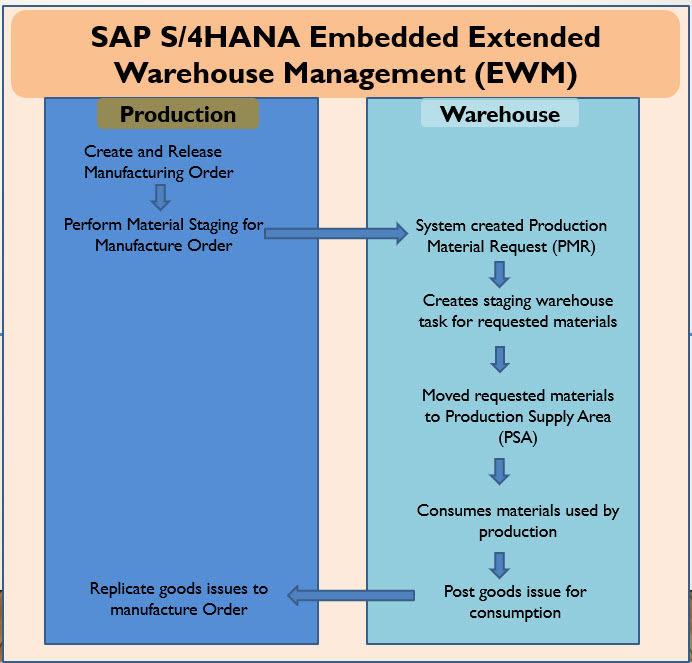
SAP S/4HANA EWM-Advanced Production Integration enables real-time visibility and control over production processes, enhancing efficiency and reducing lead times. With this integration, you can synchronize material requirements planning (MRP) with production orders, automatically generate warehouse tasks, and optimize resource utilization. By streamlining production processes, you can minimize bottlenecks, improve throughput, and ensure timely delivery of products.

  1. Integration with Advanced Production Integration Models:

SAP S/4HANA EWM supports various production integration models, such as Advanced Production Integration (APOC), Manufacturing Execution System (MES), and Production Integration Cockpit (PIC). These models facilitate seamless data exchange and process integration between production and warehouse management systems, enabling real-time visibility and control over inventory, materials, and production orders.

SAP S/4HANA EWM-Advanced Production Integration
  1. Automatic Warehouse Task Creation:

To illustrate the integration between SAP S/4HANA EWM and advanced production, let’s consider an example of automatic warehouse task creation when a production order is released. In this scenario, we can use a user exit or Business Add-In (BAdI) to trigger the creation of warehouse tasks based on the production order’s material requirements.

DATA: lv_production_order TYPE afpo-aufnr.

lv_production_order = <production_order_number>.

CALL FUNCTION ‘BAPI_TRANSACTION_COMMIT’

  EXPORTING

    wait = ‘X’.

CALL FUNCTION ‘BAPI_PRODORD_RELEASE’

  EXPORTING

    order = lv_production_order.

 lv_production_order.

  1. Updating Warehouse Task Status:

Another essential aspect of this is updating the status of warehouse tasks based on production progress. The following example demonstrates how you can update the warehouse task status once the production order is confirmed.

DATA: lv_production_order TYPE afpo-aufnr,

      lt_warehouse_tasks TYPE TABLE OF ltap,

      ls_warehouse_task TYPE ltap.

lv_production_order = <production_order_number>.

SELECT * FROM ltap INTO TABLE lt_warehouse_tasks

  WHERE production_order = lv_production_order.

LOOP AT lt_warehouse_tasks INTO ls_warehouse_task.

  ls_warehouse_task-status = ‘C’.

  MODIFY ltap FROM ls_warehouse_task.

ENDLOOP.

CALL FUNCTION ‘BAPI_TRANSACTION_COMMIT’

  EXPORTING

    wait = ‘X’.

  1. Real-Time Visibility and Analytics:

It provides real-time visibility into inventory, materials, and production orders. This real-time data can be leveraged for advanced analytics and reporting, enabling proactive decision-making, optimization of resource allocation, and identification of bottlenecks or inefficiencies in production and warehouse processes.

Conclusion:

SAP S/4HANA EWM-Advanced Production Integration offers a powerful solution for streamlining production processes and optimizing warehouse management. By integrating production orders, materials, and inventory data, businesses can achieve real-time visibility, improve operational efficiency, and enhance customer satisfaction. The coding examples provided in this blog post demonstrate how SAP S/4HANA EWM seamlessly integrates with advanced production systems, enabling automated warehouse task creation and real-time updates. Embracing SAP S/4HANA EWM-Advanced Production Integration can help businesses unlock new levels of efficiency and agility in their supply chain operations.

× How can I help you?